St. Patrick’s Day Paper Decorations Wholesale: Building a Focused Green Collection
Sourcing for seasonal events can feel like a mad dash, and St. Patrick's Day is no exception. Many buyers get trapped in the mindset of "just find anything green," leading to a cha
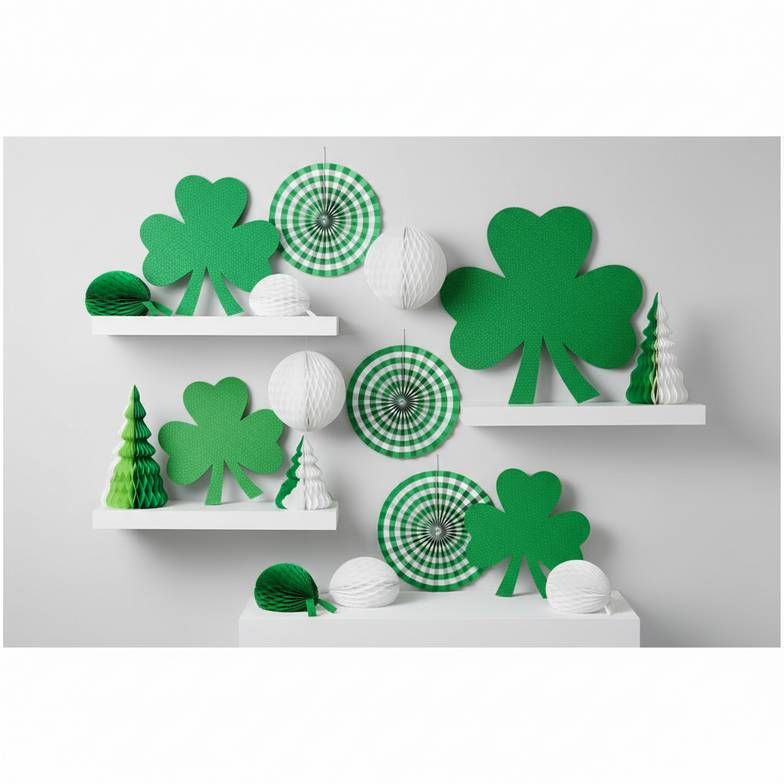
Sourcing for seasonal events can feel like a mad dash, and St. Patrick's Day is no exception. Many buyers get trapped in the mindset of "just find anything green," leading to a chaotic mix of products. This approach often results in visual clutter, sourcing headaches from mismatched colors, and a collection that doesn't tell a clear story. The solution is to think more strategically about your St. Patrick’s Day paper decorations wholesale assortment, treating "green" as a cohesive strategy rather than just a color to find.
Building a focused green collection for St. Patrick's Day involves strategically selecting 2-3 complementary shades of green paired with a neutral accent like white or gold. You should then map specific paper decoration formats—like large honeycomb fans for windows or smaller tabletop pieces for shelves—to their intended retail zones. Finally, structure your buy into a tiered assortment with hero, supporting, and volume-driving products to maximize visual impact and simplify sourcing.
Now that you understand the core strategy, you're probably wondering how to put it into practice. Moving beyond a simple checklist of "green items" to a well-planned collection is what separates a forgettable display from a profitable one. Let's break down the practical steps to build an assortment that is both visually stunning and easy to source.
How Can You Develop a Cohesive Color Palette Beyond Just "Green"?
It’s a common starting point: your team asks for "green decorations." The problem is that one supplier’s kelly green is another’s forest green, and a third’s is a lime green. When these products land in your warehouse, you suddenly realize they clash, creating a display that looks messy and unprofessional. To avoid this, you need to define your color story before you even send out your first inquiry.
Developing a cohesive palette means choosing 2-3 complementary shades of green and pairing them with a strong accent color. This approach creates visual harmony, looks more sophisticated, and makes it much easier to ensure consistency when sourcing from one or multiple manufacturing partners.
Dive Deeper: From Color Swatch to Sourcing Strategy
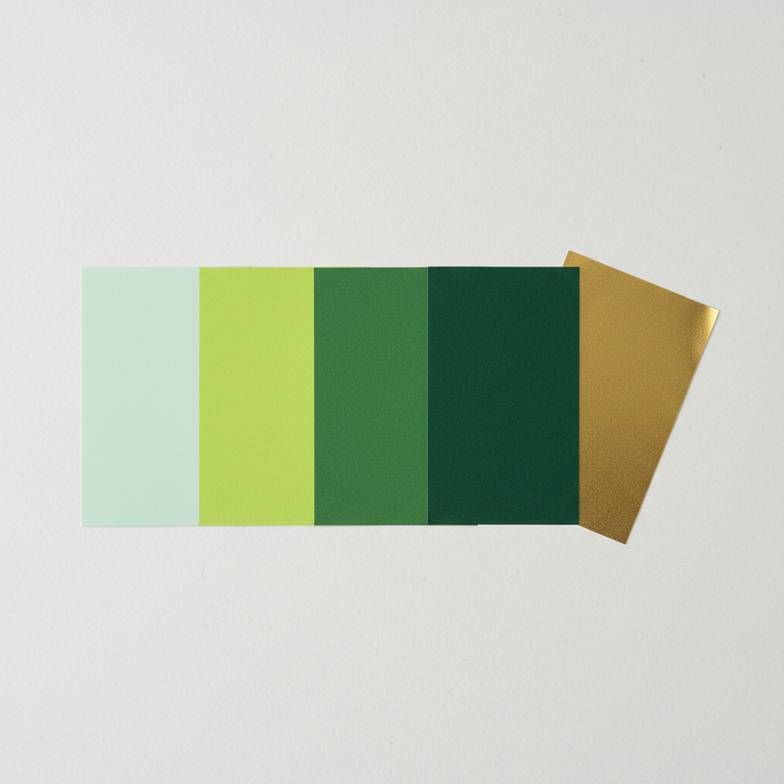
A common question we help buyers solve is how to create a palette that feels both festive and modern. Instead of grabbing every shade available, think in terms of a color story. This not only guides your product selection but also simplifies your communication with suppliers.
Establish Your Core Greens Your first step is to select your primary and secondary greens. This choice will define the overall mood of your collection.
- Traditional Look: A classic combination of kelly green and a darker emerald green feels timeless and instantly recognizable. It’s a safe and effective choice for a broad audience.
- Modern Look: For a fresher, more contemporary feel, you might pair a vibrant lime green with a softer mint green. This can appeal to a younger demographic and works well in brighter retail environments.
- Monochromatic: A very sophisticated approach is to use different tones of a single green, creating depth through light and shadow.
Select a Powerful Accent Once you have your greens, choose one accent color to make the collection pop.
- Gold: Adds a touch of elegance and festivity. Gold foil accents or metallic paper can elevate simple honeycomb shapes.
- White: Creates a clean, crisp contrast that makes your greens look even more vibrant. It's excellent for breaking up dense color and adding breathing room to a display.
- Rainbow: A playful accent that leans into the "end of the rainbow" folklore, working especially well for children's sections or more whimsical displays.
From a production standpoint, it's far more effective to manage color consistency across a limited palette. When you provide clear color targets—ideally with Pantone references—we can dye paper stock to match your specification. This ensures your honeycomb balls, fans, and garlands all share the exact same hue, creating a polished, high-end look that a mismatched collection can never achieve.
Here is an example of how you could structure your color palettes:
| Palette Style | Primary Green | Secondary Green | Accent Color | Application/Mood |
|---|---|---|---|---|
| Classic | Kelly Green | Emerald Green | Gold | Traditional, festive, and slightly upscale. |
| Modern | Lime Green | Mint Green | White | Bright, fresh, and contemporary. |
| Playful | Kelly Green | Rainbow | White | Fun, family-friendly, and whimsical. |
By defining this upfront, you turn a vague request for "green" into an actionable sourcing brief.
Which St. Patrick’s Day Paper Decorations Wholesale Work Best for Each Retail Zone?
Have you ever seen a beautiful, large decoration get lost on a tiny shelf, or a small item completely disappear in a massive storefront window? This happens when the product format isn't matched to the display location. A successful collection is planned around the physical spaces in a store, ensuring every item serves a specific purpose. Thinking in "zones" helps you source St. Patrick’s Day paper decorations wholesale that are perfectly scaled for maximum impact.
The most effective assortments are planned by mapping decoration types to their intended display zones. Use large, eye-catching formats for windows and entrances, medium-sized pieces for key focal points and endcaps, and smaller, volume-driving items for shelves and checkout counters.
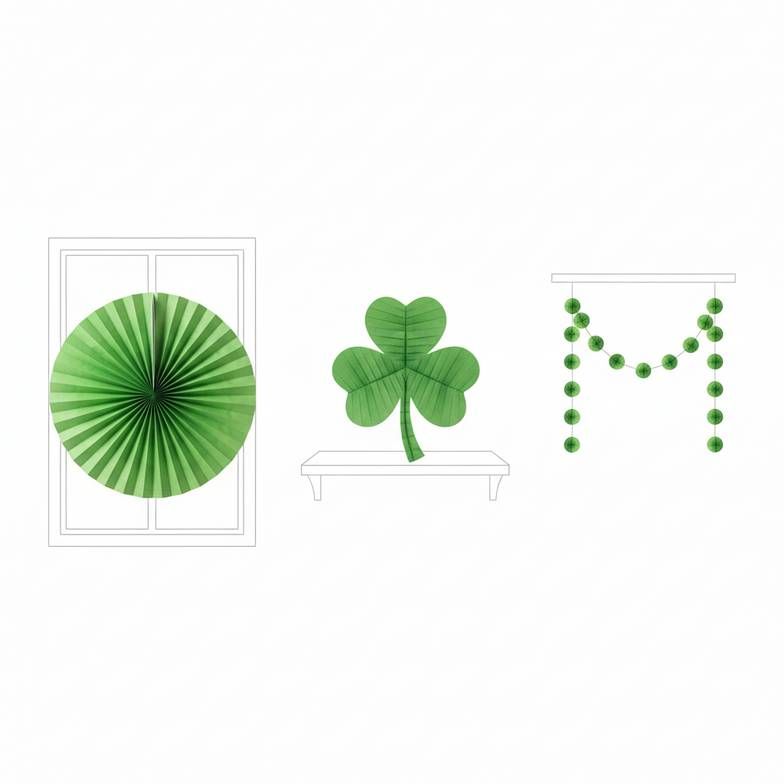
Dive Deeper: A Zone-Based Sourcing Plan
Instead of creating a flat list of SKUs, I always encourage buyers to draw a rough map of a typical store layout and plan their assortment visually. This helps you think like a merchandiser and buy with purpose. Here’s a breakdown of key retail zones and the honeycomb paper decorations that work best for each.
1. The "Wow" Zone: Store Windows & Entrances This is your first impression. The goal is high visibility and stopping power.
- Hero Products: Large format decorations are essential here. Think 3D honeycomb shamrocks that are 24-36 inches (60-90 cm) tall, or oversized honeycomb fans and balls in your primary green.
- Sourcing Considerations: Pay close attention to the folded vs. open dimensions. These items need to be large when expanded but ship as compactly as possible to manage freight costs. We design our larger pieces to fold down flat, often to less than 5% of their open volume.
2. The Immersion Zone: Ceilings & Overhead Space This zone makes the theme feel immersive and carries it throughout the store.
- Volume Drivers: This is the perfect place for paper garlands and clusters of hanging honeycomb balls in various sizes (e.g., 6, 8, and 12 inches).
- Sourcing Considerations: These are often high-volume SKUs. Focus on efficient packaging (e.g., multiple garlands per pack) and lightweight paper to keep shipping costs down. Check the length of garlands and the quality of the string to ensure they hang correctly without sagging.
3. The Focus Zone: Endcaps & Promotional Tables This is where you tell a product story and drive sales of related merchandise.
- Supporting & Tabletop Items: Use mid-sized decorations to create a focal point. Honeycomb tabletop trees, decorative spheres, and smaller standing shamrocks work well. Our foldable paper stools and display plinths can also be used here to create temporary, themed risers for other products.
- Sourcing Considerations: For these items, stability is key. Check the base design and paper weight to ensure they won't tip over easily. This is also where texture and detail are more visible, so quality is paramount.
4. The Impulse Zone: Shelves & Checkout Counters These are your final touchpoints to add on a small, festive purchase.
- Small & Miniature Items: Think small honeycomb ornaments, miniature shamrocks, or simple paper toppers.
- Sourcing Considerations: Cost-effectiveness and retail-ready packaging are critical. These items are often sold in multi-packs, so clear, attractive packaging that shows the product well is a must.
Here’s a quick-reference table for planning your zones:
| Retail Zone | Decoration Goal | Recommended Formats | Key Sourcing Check |
|---|---|---|---|
| Window/Entrance | High Impact | Large Honeycomb Shamrocks, Fans (24"+) | Folded dimensions for shipping efficiency. |
| Ceiling/Overhead | Immersive Feel | Paper Garlands, Hanging Honeycomb Balls (mixed sizes) | Lightweight paper, garland length, and packaging. |
| Endcaps/Tables | Storytelling | Tabletop Trees, Mid-Sized Shapes, Foldable Paper Furniture | Stability, paper quality, and visual detail. |
| Shelves/Checkout | Impulse Purchase | Small Ornaments, Miniatures | Cost per unit and retail-ready packaging. |
What Structural Qualities Matter More Than the Perfect Shade of Green?
Buyers often get fixated on finding the "perfect" Pantone match for their green. While color is important, I've seen many collections fail because the physical products were flimsy or difficult to use. A decoration that sags, tears easily, or can't be reused is a sourcing failure, no matter how perfect its color is. Focusing on structural quality is essential for ensuring your decorations perform as expected in a real-world retail environment.
More important than the exact shade of green are the structural qualities of the decoration: the paper's weight (GSM), the consistency of the honeycomb cells for a full and even opening, and the type of closure mechanism, which determines if the item can be reused.
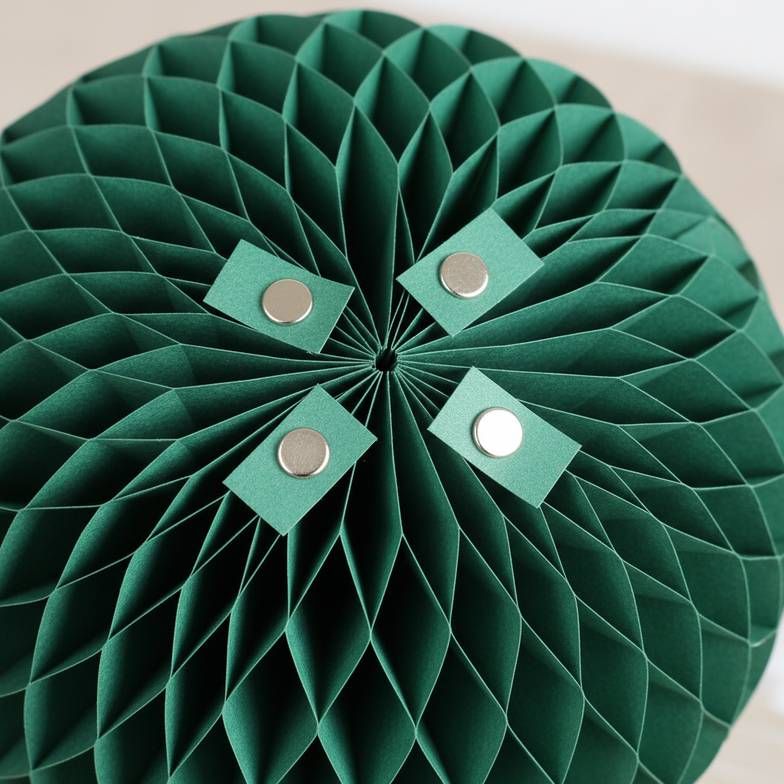
Dive Deeper: The Anatomy of a High-Quality Paper Decoration
From a manufacturing perspective, the true quality of a paper decoration lies in details you can see and feel. When evaluating samples for your St. Patrick’s Day paper decorations wholesale program, here are the critical elements to inspect.
1. Paper Weight and Finish The grams per square meter (GSM) of the paper determines its rigidity and durability.
- Lightweight Paper (60-80 GSM): Suitable for smaller, hanging items like garlands where weight is a concern. However, for larger standing pieces, this paper may sag or lose its shape.
- Heavier Paper (100-120+ GSM): Provides the structure needed for large honeycomb fans, balls, and freestanding shapes. It holds its form better, looks more substantial, and is more resistant to tearing.
- Finish: Check how the color looks under different lighting conditions. Some papers have a slight sheen that catches light beautifully, while others are matte for a more subdued, modern look. Always review samples under lighting similar to your stores, not just in a meeting room.
2. Honeycomb Structure Consistency The "magic" of a honeycomb decoration is its ability to expand from flat to a full 3D shape. This only works if the internal gluing is precise.
- Look for: Evenly spaced glue lines and consistent cell shapes. When you open the decoration, it should form a full, symmetrical shape without any gaps or compressed areas.
- Red Flags: Uneven openings, sections that don't fully expand, or a lopsided appearance are signs of poor quality control during assembly.
3. The Closure Mechanism: Magnet vs. Adhesive This is one of the most overlooked but critical features, especially for visual merchandising teams who may want to reuse decorations.
- Adhesive Tape: This is a permanent, one-time closure. It's a cost-effective solution for single-use displays or items sold directly to consumers. The downside is that you can't collapse the item for storage without damaging it.
- Magnets: Small, embedded magnets allow the decoration to be opened and closed repeatedly. This is the preferred choice for retail display kits that are used annually or across multiple locations. While slightly more expensive, the reusability offers significant long-term value. We find that most of our B2B clients sourcing for their own store displays insist on magnetic closures.
4. Hanging and Mounting Points For hanging decorations, check the attached string or loop. Is it securely fastened to the decoration? Is the string strong enough to hold the item's weight without snapping? For tabletop pieces, inspect the base. Is it wide and stable enough to prevent the item from tipping over in a busy store?
Don't let a perfect color distract you from these fundamental quality checks. A slightly different shade of green on a well-made, durable, and reusable product is always a better investment than the "perfect" green on a product that fails on display.
Frequently Asked Questions
What are the most common shades of green for St. Patrick's Day decorations?
The most popular shades are a bright, classic kelly green and a deeper emerald green. In recent years, more modern palettes have incorporated lime green and mint green for a fresher look. The best choice depends on whether you're aiming for a traditional or contemporary feel for your collection.
How important is a magnetic closure on honeycomb decorations?
For B2B buyers like retail visual merchandising teams, magnetic closures are extremely important. They allow decorations to be easily collapsed for compact storage and reused for future seasons or across multiple store locations. For items sold directly to consumers for a single party, a permanent adhesive closure can be a more cost-effective option.
What's a typical MOQ for custom St. Patrick’s Day paper decorations wholesale?
The Minimum Order Quantity (MOQ) varies significantly based on product complexity, materials, and the level of customization. A simple, standard-sized honeycomb ball in a stock color will have a lower MOQ than a large, custom-designed shamrock shape with a specific Pantone color. It's always best to confirm the MOQ directly with your supplier for each specific product.
How can I ensure color consistency across different paper decoration types?
The best way is to provide your supplier with a Pantone (PMS) color reference for your chosen green(s). This gives the production team a universal standard to match. When sourcing a collection, request pre-production samples of each item (e.g., the garland, the fan, the tabletop piece) to verify in person that all colors match under your typical store lighting.
Conclusion
Building a successful seasonal program is about more than just finding products; it's about building a strategy. When sourcing St. Patrick’s Day paper decorations wholesale, moving past the simple "find green things" mindset is the most important step you can take. By developing a tight color palette, matching product formats to specific retail zones, prioritizing structural quality over the perfect color swatch, and building a tiered assortment, you create a collection that is not only visually powerful but also minimizes sourcing risks and simplifies merchandising. This focused approach ensures your display looks cohesive, professional, and ultimately, drives better results for your business.
If you're ready to build a strategic seasonal collection with a manufacturing partner who understands these details, our team at Mypaperbloom is here to help. Contact us to discuss your assortment needs and let's plan a successful St. Patrick's Day program together.