Reusable Honeycomb Paper Decorations: What Determines Whether a Product Can Be Folded and Reopened?
Sourcing decorations for a seasonal retail program or event comes with a nagging worry. You need something that looks stunning, but you also need it to last, especially if the plan
Sourcing decorations for a seasonal retail program or event comes with a nagging worry. You need something that looks stunning, but you also need it to last, especially if the plan is to store and reuse it. The big problem with many paper products is that their beauty is fleeting. This anxiety is real—will the reusable honeycomb paper decorations you invested in tear, sag, or refuse to close properly after just one use? The solution lies in looking past the marketing claims and understanding the specific features that truly determine a product's lifespan.
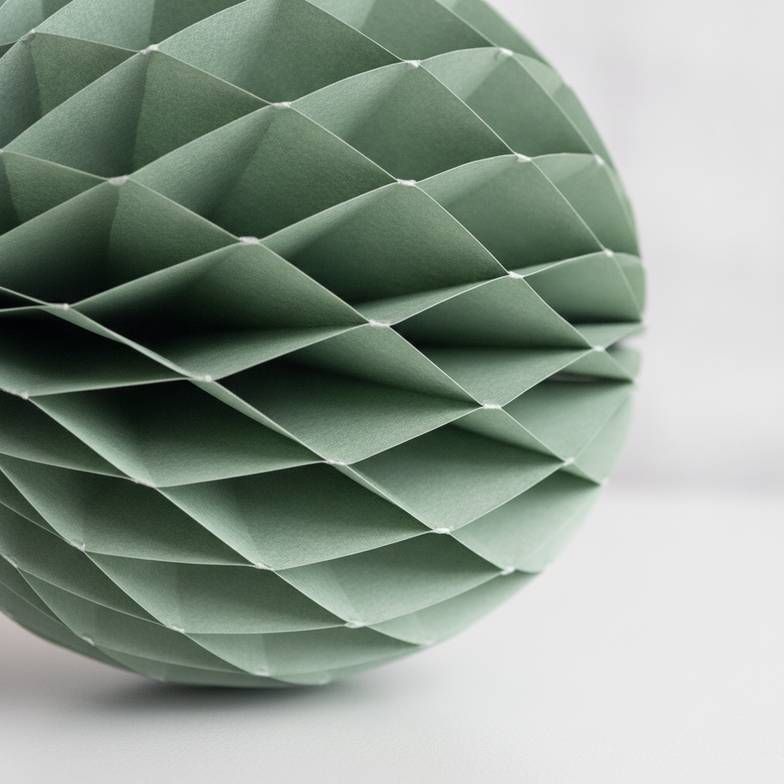
The reusability of a honeycomb paper decoration is not determined by a single feature, but by a combination of three key factors: the quality and weight of the paper (measured in GSM), the integrity of the honeycomb structure itself, and the type and quality of the closure mechanism (like magnets or adhesive tape). A truly reusable product is one where these three elements are properly matched to the intended application and expected frequency of use.
Now that you know the core trifecta—paper, structure, and closure—let's dive deeper. Understanding how to evaluate each of these elements is what separates a smart, long-lasting purchase from a one-time-use disappointment. It’s about learning to ask the right questions.
How Does Paper Quality Affect Reusable Honeycomb Paper Decorations?
You’ve found the perfect shape and color for your display, but you’re hesitant. Will the paper actually hold up? Choosing a decoration made with flimsy paper is a recipe for disaster; it can lead to torn edges during setup, sagging shapes on display, and a product that's impossible to store and reuse.
Paper quality, most easily measured by its weight in Grams per Square Meter (GSM), is a fundamental factor in durability. A higher GSM generally means the paper is thicker, stiffer, and more resistant to tearing and moisture, which is critical for products that will be folded and unfolded multiple times.
What is Paper GSM and Why Does It Matter for Buyers?
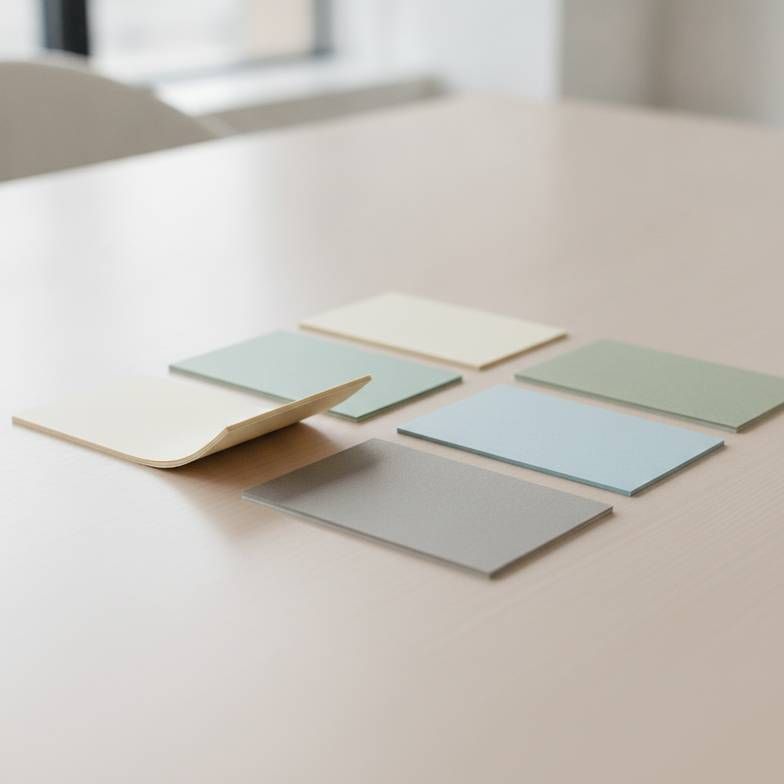
Think of GSM as a shorthand for paper density. Standard office paper is around 80 GSM, while a business card might be 300 GSM or higher. For honeycomb decorations, the GSM directly impacts performance.
- Low GSM (e.g., 100-120 GSM): This paper is lighter and more delicate. It can create beautiful, airy decorations but is more susceptible to tearing. It's best suited for single-use events or displays where the decorations are hung high and left untouched.
- Medium GSM (e.g., 140-170 GSM): This is a versatile middle ground. It offers a good balance of durability and cost, making it a common choice for general seasonal displays. It can withstand some handling and careful storage.
- High GSM (e.g., 200+ GSM): This is where true reusability starts. This heavier paper is much more robust. It resists creasing and tearing during the open/close cycle and helps the decoration hold its shape perfectly over time. For any tabletop piece or decoration in a high-traffic area, a higher GSM is essential.
From my experience working with buyers, the conversation about reusability always starts with GSM. For a recent project involving a multi-store holiday rollout, the client needed decorations that could be installed by retail staff, displayed for six weeks, then packed away for next year. We specified a 210 GSM paper to ensure the products could withstand the entire cycle without damage.
Matching Paper to Your Application
The right paper grade is entirely dependent on how and where the decoration will be used. You wouldn't use the same tires for a city car and an off-road truck. The same logic applies here.
| Intended Use | Key Risk | Recommended Paper Weight |
|---|---|---|
| Single-use event decor | Tearing during setup | Low to Medium GSM |
| Hanging window display | Sagging or fading over time | Medium to High GSM |
| Seasonal retail program (reused yearly) | Wear from storage and handling | High GSM |
| High-touch tabletop pieces | Damage from customer interaction | High to Very High GSM |
Don't just ask a supplier, "Is the paper good?" Instead, ask, "What is the GSM of the paper?" This shifts the conversation from a subjective opinion to a verifiable specification, allowing you to make a much more informed decision about whether a product meets the demands of your specific project.
Are Magnetic Closures a Guarantee for Reusable Honeycomb Paper Decorations?
It's a common belief in our industry: if it has magnets, it's reusable. But this is a dangerous oversimplification. You might invest in a magnetic option only to find the magnets are too weak to hold the piece together, leaving an ugly gap, or they are poorly aligned and damage the paper when you try to close it.
Magnets are an excellent indicator of potential reusability, but they are not a guarantee. The true reliability of a magnetic closure depends on the strength, quantity, and placement of the magnets. A poorly executed magnetic system can be just as frustrating as single-use adhesive tape.
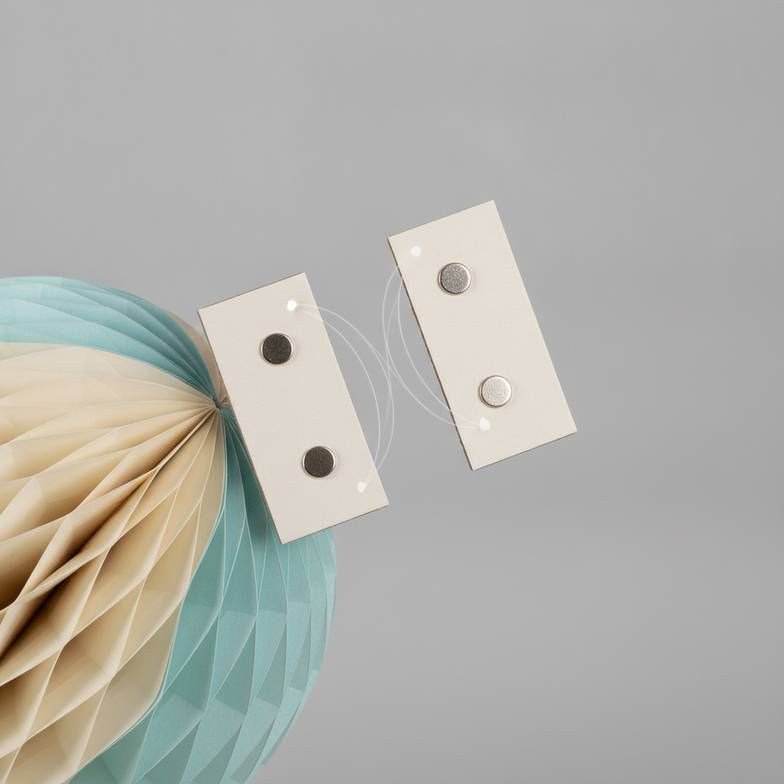
The Difference Between Good and Bad Magnets
Not all magnets are created equal. In our product development, we've seen firsthand how cutting corners on magnets can compromise an entire design.
- Strength & Grade: Magnets have different strength grades (like N35, N52, etc.). A stronger magnet will create a more secure, seamless closure. Weak magnets may allow the decoration to pop open or sag, especially on larger pieces.
- Quantity: A small decoration might only need two pairs of magnets. A large, heavy 3-foot ball might need six or eight pairs strategically placed around the edge to distribute the tension and ensure a perfect sphere. Not using enough magnets is a common cost-cutting measure that kills reusability.
- Placement & Embedding: The best closures have magnets that are precisely aligned and embedded within the paperboard endcaps. This creates a smooth surface and prevents the magnet from tearing the delicate honeycomb paper over time. Surface-glued magnets can sometimes peel off or snag the paper.
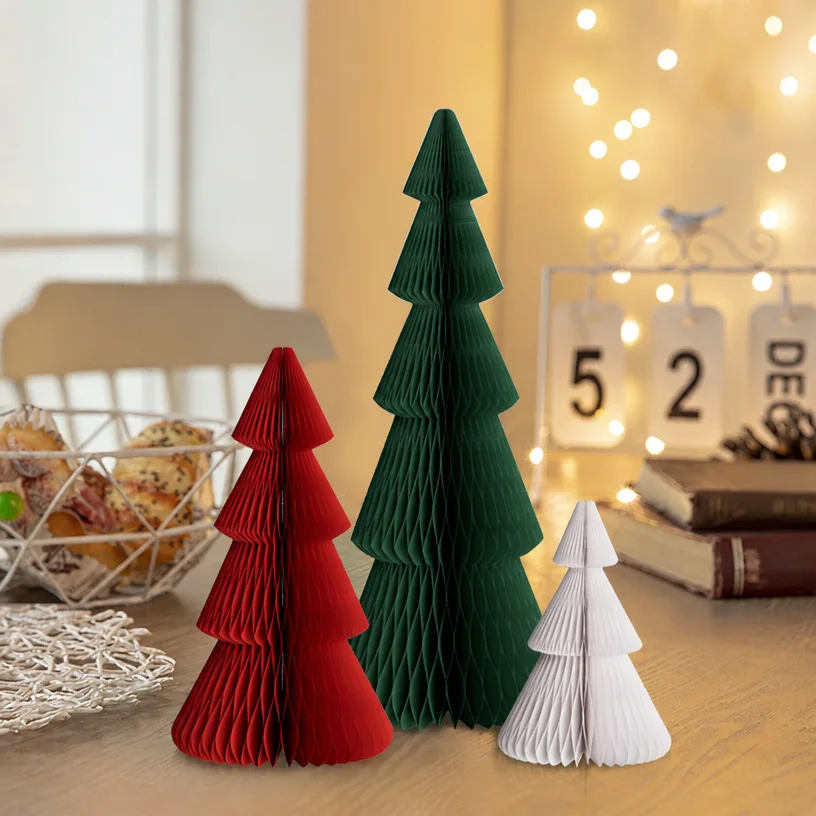
A few years ago, a sourcing team for a home goods brand came to us with a sample they'd received from another factory. It was a beautiful tabletop Christmas tree, but the magnetic closure was weak. In the climate-controlled showroom, it held. But in their mock store setup under warm display lights, the paper relaxed slightly, and the weak magnets couldn't hold it. The trees all had a slight gap. For their bulk order, we used stronger magnets and added an extra pair near the top, solving the problem completely.
Questions to Ask Your Supplier About Closures
To avoid this risk, you need to dig deeper than a simple "yes/no" on magnets. Here’s what you should ask:
- What is the strength/grade of the magnets you use? While you may not be a magnet expert, asking the question signals that you understand quality varies.
- How many magnet pairs are used for this specific design and size?
- Are the magnets embedded in the end panel or surface-glued?
- Can you provide a sample so I can test the open-and-close cycle myself?
Testing it yourself is the ultimate check. Open and close it 10-15 times. Does it snap shut securely every time? Does the paper show any signs of stress near the magnets? This simple test tells you more than any spec sheet can.
How Does Your Intended Use Define the Best Reusable Honeycomb Paper Decorations?
It's easy to get lost in the technical details of paper and magnets. But if you choose a product without first clearly defining its job, you're setting yourself up for failure. A delicate, beautiful paper star might be perfect for a quiet corner but will be destroyed in a busy store entryway.
Your intended application is the single most important filter for selecting the right reusable honeycomb paper decorations. The physical environment and demands of the display context should guide your choice of materials and construction, not the other way around.
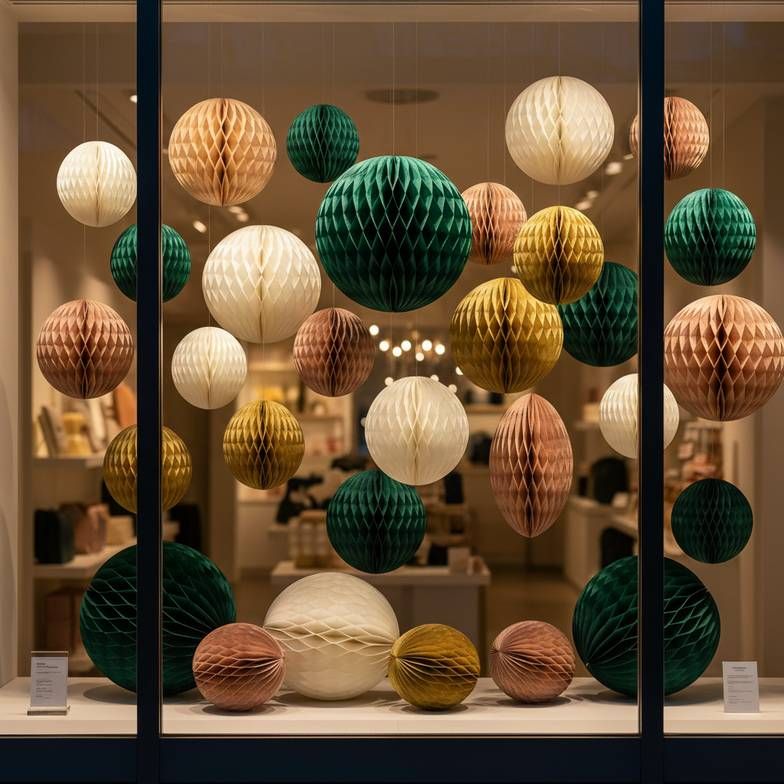
Scenario 1: Large, High-Hanging Installations
For large decorations in a store window or atrium, the main concerns are visual impact and structural integrity over time.
- Challenge: Gravity. Over weeks, a poorly constructed large piece can sag, losing its shape.
- What to Look For:
- Structural Reinforcement: Check for sturdy cardboard endcaps and a strong hanging loop or string that is well-anchored.
- Paper Weight: Medium-to-high GSM paper is crucial to prevent the cells from stretching and deforming.
- Closure: The closure must be secure enough to hold the weight, but since it won't be opened and closed frequently, it's less about cycle life and more about initial holding power.
Scenario 2: Tabletop and Shelf Decor
These pieces are often within arm's reach of customers, so they face a different set of challenges.
- Challenge: Handling, tipping, and close-up scrutiny.
- What to Look For:
- Durability: This is where high GSM paper (200+) is non-negotiable. It needs to resist bumps and curious hands.
- Stability: The base must be flat and wide enough to prevent it from tipping over easily.
- Seamless Closure: A strong, perfectly aligned magnetic closure is a must. Any gap will be immediately obvious and look cheap.
Scenario 3: Multi-Store Seasonal Rollouts
This is one of the most demanding applications. The product must not only perform on display but also survive a complex supply chain.
- Challenge: Shipping, storage, and ease of setup by non-specialist store staff.
- What to Look For:
- Robustness: High GSM paper and strong magnetic closures are standard. The product must withstand being packed, shipped, unpacked, and potentially repacked.
- Compactness: The "foldable" aspect is key. The product must fold down into a compact, flat shape for efficient shipping and storage.
- Ease of Use: An intuitive design with a simple, frustration-free closure is vital. Including a small instruction card is a best practice.
A common request we get is for a single product that works for all these scenarios. While we can create versatile designs, it's always a game of trade-offs. Being clear about the primary application from the start ensures you get a product that's fit-for-purpose, not a compromise that fails everywhere.
Frequently Asked Questions
How many times can you reuse a honeycomb decoration?
This completely depends on the product's quality and how you care for it. A high-quality decoration made with heavy GSM paper and strong magnets can last for several seasons if stored properly. A lower-quality item might only survive one or two uses before showing wear.
Can you repair a torn honeycomb paper decoration?
For minor tears on the outer surface, a small amount of clear craft glue can work. However, damage to the delicate inner honeycomb structure is very difficult to repair effectively. The best strategy is prevention by choosing a durable product and handling it with care.
What's the best way to store honeycomb paper decorations?
Always fold them back to their original flat state. Store them lying flat in a sturdy box, in a dry, cool place away from direct sunlight, which can cause colors to fade. Avoid stacking heavy items on top of them to prevent crushing the honeycomb cells.
Does the shape of the decoration affect its reusability?
Yes, absolutely. Simple, symmetrical shapes like balls, bells, and fans are inherently more robust than complex shapes with fine, intricate details. The more delicate a design is, the higher the paper quality and more careful the handling needs to be to ensure it can be reused.
Conclusion
Ultimately, choosing truly reusable honeycomb paper decorations is less about finding a "reusable" label and more about conducting a thoughtful risk assessment. The durability you get is a direct result of the specifications you choose. By shifting your focus from vague marketing claims to concrete technical details, you empower yourself to make a smarter investment. Remember the three pillars: the paper's GSM dictates its toughness, the closure mechanism (especially the quality of the magnets) determines its ease of use and longevity, and your specific application is the ultimate guide for all your decisions.
When you're ready to source a collection of paper decorations that delivers both stunning visual impact and the long-term value your business requires, our team is here to help. Contact us to discuss your project, and we can guide you through the specifications and provide samples so you can see and feel the quality for yourself.