Custom Honeycomb Paper Decorations: What Retail Brands Should Prepare Before Requesting a Quote
You’ve got a stunning vision for your next seasonal display, but now you have to turn that idea into reality. The problem is, when you send out a request for a quote, the responses
You’ve got a stunning vision for your next seasonal display, but now you have to turn that idea into reality. The problem is, when you send out a request for a quote, the responses are all over the map—or worse, you get complete silence. This can be incredibly frustrating, leaving you to wonder if your concept is even possible. The secret to getting a meaningful, comparable quote for custom honeycomb paper decorations isn't just about listing dimensions and colors; it's about preparing a complete project story that manufacturers can actually work with.
To get an accurate quote for custom honeycomb paper decorations, retail brands should prepare more than just visual mock-ups. You need to define the application scenario (e.g., flagship window vs. 500-store rollout), functional requirements like expected lifespan and closure method (magnets for reuse vs. adhesive), and clarify whether you need simple color customization or complex structural engineering. This context is critical for a manufacturer to provide a realistic price and timeline.
Think of your request for a quote (RFQ) as the start of a conversation, not a final order. The details you provide upfront do more than just get you a price; they help a potential supplier understand your goals, anticipate challenges, and propose the best possible solutions. Let's dive into what you need to prepare to make this process smooth and successful.
Why Is Your Application Scenario More Important Than Your Specs?
It’s easy to get fixated on the "what"—a 50cm red sphere, a 2-meter tall green tree. But without the "where" and "how," these details are almost meaningless. You might be sourcing for a one-off hero piece for a flagship store window, which has entirely different demands than an item meant for a 500-store rollout.
The scenario dictates everything. A common oversight we see in RFQs is a request for a price on a single unit, when the buyer actually needs thousands. The manufacturing process, materials, and cost for a single handmade prototype versus a mass-produced item are worlds apart. Describing your application scenario first is the single best thing you can do to get a useful quote.

Dive Deeper: The "Flagship Hero" vs. The "Store Rollout"
From my experience on the factory floor, these two scenarios represent opposite ends of the spectrum. A "Flagship Hero" is about maximum visual impact, often as a one-off or in a very small run. A "Store Rollout" item is about consistency, ease of assembly, and cost-efficiency at scale.
If your RFQ doesn't specify which one you need, a supplier has to guess. And a guessed-at quote is a useless quote.
Consider how the scenario changes every key variable:
| Requirement | The "Flagship Hero" | The "Store Rollout" Item |
|---|---|---|
| Material | Premium, heavier paper (higher GSM); special finishes like metallic or glitter. Cost is secondary to impact. | Standardized, cost-effective paper. Durability and color consistency across batches are key. |
| Structure | Can be complex, large, and require professional installation. May be assembled once and left in place. | Must be simple enough for any store employee to assemble in minutes. Structure should be robust and foolproof. |
| Closure | Can use permanent adhesive or complex hidden fixtures, as it won't be taken down and re-used. | Almost always requires magnets or reusable clips for easy setup, breakdown, and flat storage post-season. |
| Packaging | Often custom-crated or protected for a single, careful shipment. | Must be packed compactly for efficient shipping to hundreds of locations. Retail-friendly packaging may be needed. |
| Cost | High per-unit cost is acceptable for the marketing impact it generates. | Low per-unit cost is critical for budget adherence across the entire chain. |
Vague Request: "We need a quote for a 40cm honeycomb paper star in Pantone 186 C."
Actionable Request: "We are planning a 300-store holiday rollout. We need a quote for a 40cm honeycomb paper star in Pantone 186 C that can be assembled by store staff in under one minute. It needs to have a magnetic closure for potential reuse and be packed flat, with 20 units per carton. Please quote for 6,000 units."
See the difference? The second request gives us the full story. We immediately know what kind of paper to suggest, which closure system is best, and how to plan for packaging and logistics.
How Do You Translate Design Intent into Production-Ready Details for Custom Honeycomb Paper Decorations?
A beautiful mood board or digital mock-up is a great start, but it only tells half the story. To a manufacturer, the non-visual requirements are just as important. A project was once delayed because the initial request showed a beautiful, delicate paper structure, but the buyer forgot to mention it was for a children's department where it would likely be touched and handled by customers.
We had to go back to the drawing board and re-engineer the piece with much more durable paper and a stronger internal structure. Defining the functional requirements of your custom honeycomb paper decorations upfront prevents these costly delays and ensures the final product lives up to your expectations in the real world.

Dive Deeper: Defining the Functional DNA of Your Decoration
Think of these details as the product's DNA. They determine its strength, lifespan, and user experience. Before you send your RFQ, have a clear answer for each of these.
Lifespan: Single-Use Event vs. Multi-Season Display?
Is this for a one-night product launch, or is it a core part of your holiday decor that you want to pack away and reuse next year?
- Single-Use: We can use lighter paper and a strong double-sided adhesive tape for closure. It's cost-effective and perfect for a permanent, one-time installation.
- Multi-Season: This immediately signals the need for a more durable product. We'd recommend a higher GSM (grams per square meter) paper that can withstand being opened, closed, and stored. The closure system becomes critical—magnets are the go-to choice here.
Handling: Look-But-Don't-Touch vs. Interactive?
Where will the decoration be placed? High up on a wall, or on a tabletop display within arm's reach?
- Hanging/Inaccessible: You have more freedom with delicate structures and lighter paper. The primary concern is visual appeal from a distance.
- Interactive/Reachable: Durability is paramount. The structure needs to be robust, the paper resistant to tearing, and the form stable enough to not collapse if bumped. This is where we might discuss reinforcing the honeycomb cells or using a much thicker grade of paper.
Assembly & Closure: Who Puts It Together?
Your visual merchandising team might be experts, but what about the staff at every single store location?
- Magnets: This is the premium choice for ease of use and reusability. The magnets "snap" the decoration into its open form and can be easily pulled apart for flat storage. It adds a small cost but massively improves the user experience.
- Adhesive Tape: A permanent, strong, and cost-effective solution. Ideal for decorations that will be assembled once and then discarded after the season.
- Clips: Paper clips can be a low-cost alternative for reusability, but they can be fiddly and are not as clean or professional-looking as magnets.
Clearly stating these functional needs in your RFQ allows a manufacturer to quote you for the right product, not just the one in your picture.
Are You Asking for Custom Colors or Custom Structures?
This is a crucial distinction that many buyers don't make, but it has huge implications for cost, timeline, and supplier selection. Almost any factory can offer custom colors. But very few have the engineering expertise to develop completely new structures. Understanding the difference helps you vet suppliers and set realistic expectations.
Failing to clarify this can lead to disappointment. A buyer might ask for a "custom snowflake," assuming any supplier can create a new, intricate design. They receive a quote, approve it, and later find out the supplier simply used a standard, off-the-shelf snowflake shape dyed in their custom color.
Dive Deeper: Vetting a Supplier's True Customization Capabilities
Let's break down what each type of customization really involves and how you can test a supplier's claims.
What is Color Customization?
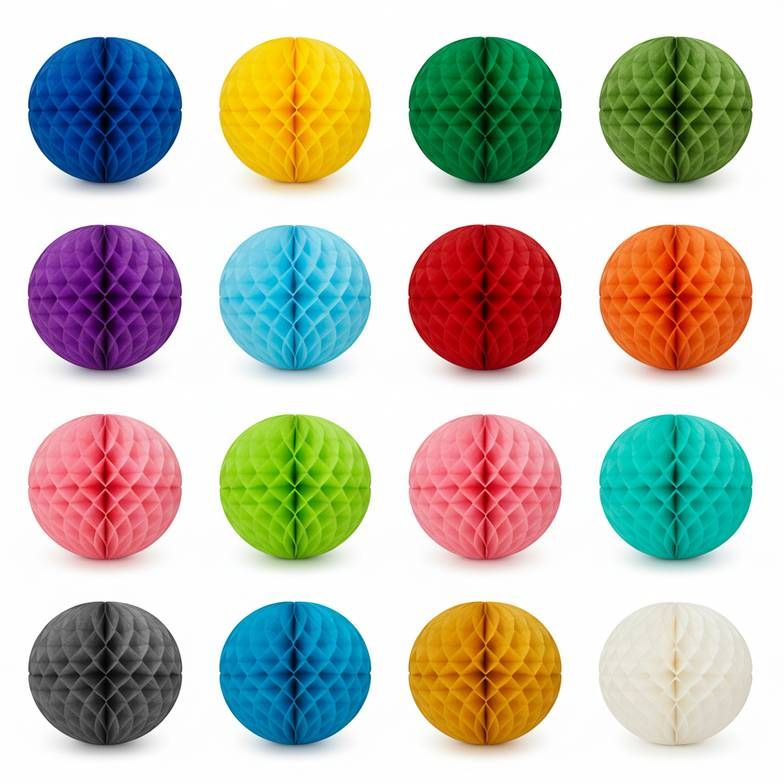
This is the most common request. It typically involves dyeing paper to match a specific Pantone color.
- The Process: We source raw paper stock and work with a dyeing partner to match your color reference.
- What to Prepare: A clear Pantone (PMS) code is essential. Be aware that colors can look different on-screen versus on paper, and on different paper textures. Always request a physical paper sample for approval before mass production.
- Key Consideration: MOQ. Custom dyeing paper requires a large minimum order quantity (MOQ). If your project is small, a supplier might suggest choosing from their existing "in-stock" color library as a more feasible alternative.
What is Structural Customization?
This is true product development. It involves creating a new shape, a new folding mechanism, or integrating other elements like lights or mixed materials. This is engineering, not just decorating.
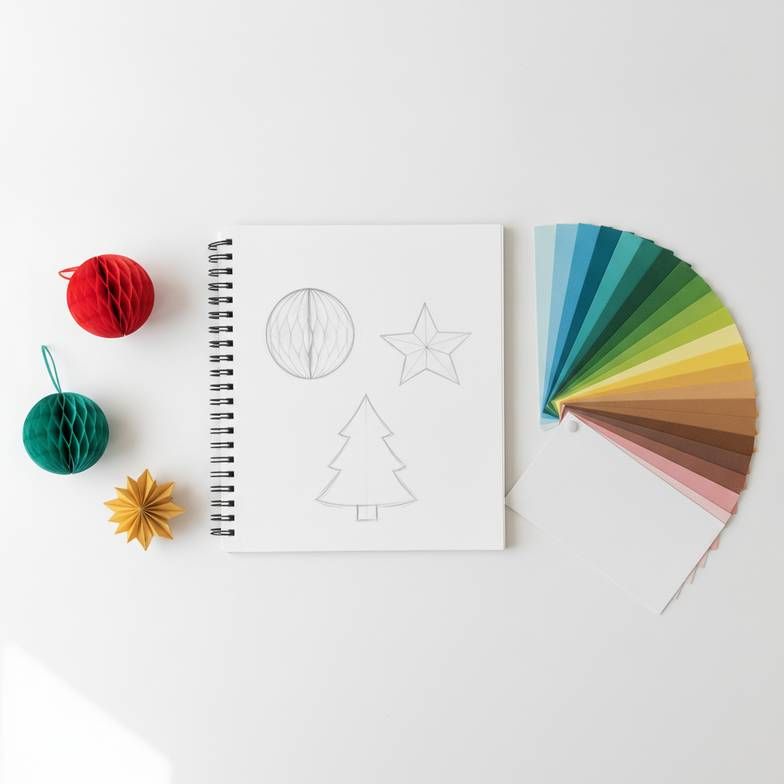
- The Process: This starts with sketches, moves to 2D/3D digital modeling, and then to physical prototyping. Our engineers have to figure out the honeycomb cell structure, the angles, the folding lines, and how it will all collapse down neatly. It’s a process of trial and error.
- What to Prepare: Detailed sketches with dimensions, angles, and desired functionality are a must. Inspiration images are helpful, but annotated drawings are better.
- How to Vet a Supplier: Don't just take their word for it. A supplier who claims to have engineering capabilities should be able to prove it. Here are some questions you should ask:
- "Can you share a case study of a structurally complex project you've completed for another client?"
- "What is your prototyping process for a brand-new shape?"
- "Who on your team handles the technical design and engineering? Can we speak with them?"
- "What challenges do you foresee with our proposed design?"
A confident, experienced supplier will welcome these questions. A hesitant response is a major red flag that they may be outsourcing the engineering or simply don't have the capability.
Frequently Asked Questions
What's a typical MOQ for custom honeycomb paper decorations?
This varies greatly. For simple color customization of an existing shape, the MOQ is driven by the paper dyeing minimum, which can be several thousand units. For a new, complex structural design, the MOQ might be lower (e.g., 500-1000 units) because the higher development cost is factored into the unit price.
How long does it take to get a sample for a custom design?
For a simple color swatch on existing paper, it might take 1-2 weeks. For a full structural prototype of a new design, expect 3-5 weeks. This process involves engineering, die-cutting tool creation, and several rounds of testing and refinement before a sample is ready to be sent.
Do I need a technical drawing (CAD file) to get a quote?
No, a professional CAD file is not necessary for an initial quote. However, you must provide a clear, well-annotated sketch with all critical dimensions (height, width, depth), desired closure method, and any notes on function. The more detail you provide, the more accurate your quote will be.
How does paper type (GSM) affect the final product?
GSM stands for "Grams per Square Meter" and indicates the paper's weight and thickness. A higher GSM (e.g., 100-120 GSM) results in a more durable, premium-feeling product that's better for reusable items. A lower GSM (e.g., 60-80 GSM) is more delicate and cost-effective, suitable for single-use or hanging decorations.
Conclusion
Requesting a quote for custom honeycomb paper decorations is your first and best opportunity to de-risk your project. By shifting your focus from a simple spec sheet to a complete project brief, you empower manufacturers to become true partners. Prepare your application scenario, define your functional needs, clarify the level of customization you require, and treat the quote process as a dialogue. The questions a supplier asks are just as important as the price they provide. A thorough, thoughtful RFQ not only ensures you get an accurate quote but also helps you identify the expert partners who can truly bring your creative vision to life.
When you're ready to move from a great idea to a successful retail display, our team is here to have that detailed conversation. Contact us to discuss your project's unique requirements and explore how we can build something amazing together.