Custom Honeycomb Paper Window Displays: A Briefing Guide for Retail Brands
Struggling to turn that brilliant mood board for your next retail campaign into a real, physical product? It’s a common frustration. You have the vision, but translating it into a
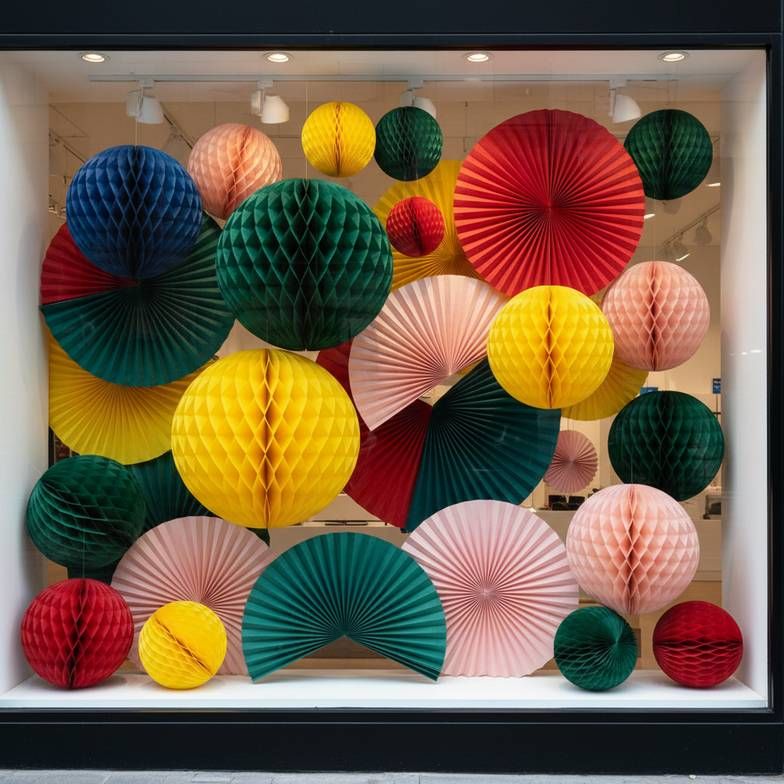
Struggling to turn that brilliant mood board for your next retail campaign into a real, physical product? It’s a common frustration. You have the vision, but translating it into a technical brief can feel like learning a new language, leading to inaccurate quotes, production delays, and a final display that just doesn’t work in-store. The key is knowing exactly what to ask for to get the perfect custom honeycomb paper window displays for your brand.
A successful brief for custom honeycomb paper window displays moves beyond just a picture. It requires you to deconstruct your visual concept into clear technical specifications: the structure that defines the shape, the paper type that dictates color and feel, and the closure method that ensures easy setup. You must also provide the commercial context, including the number of stores, the expected lifespan, and who will be assembling the display, so the manufacturer can recommend the most practical and cost-effective solution.
That might sound like a lot, but don't worry. This guide is designed to walk you through it. As a manufacturer, I've seen hundreds of project briefs—some great, and some that were destined for trouble from the start. Let's break down how you can build a brief that ensures your supplier becomes a partner in bringing your vision to life, flawlessly.
How Do You Translate a Visual Concept into Technical Specs?
You’ve got a stunning design concept, but your supplier is asking about "GSM" and "cell size." How do you bridge that gap without getting lost in technical jargon?
The secret is to break your visual idea down into three core manufacturing elements. By defining these, you give your supplier the exact information they need to create a sample that matches your vision and a quote that matches your budget.
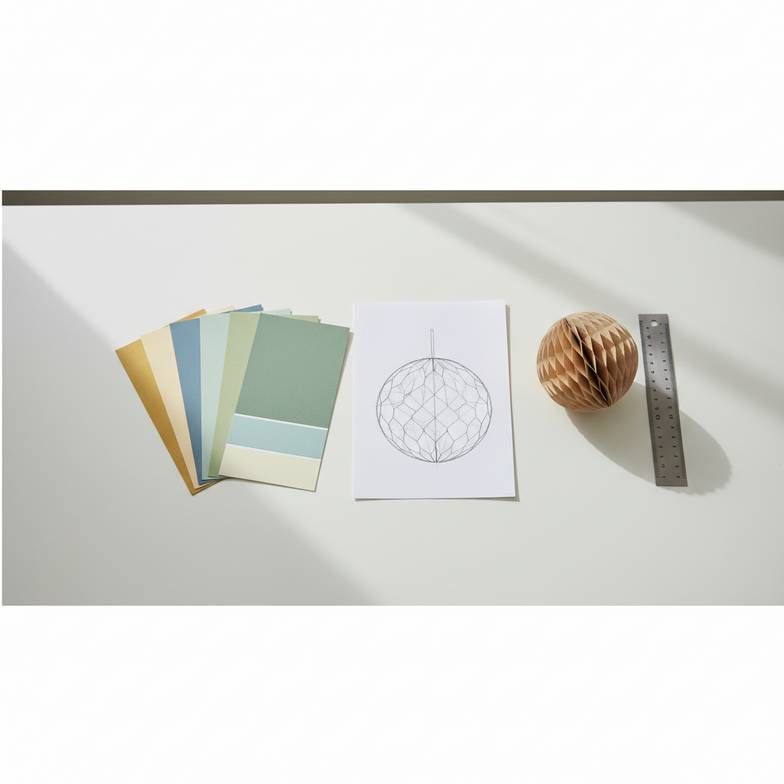
Dive Deeper: Deconstructing Your "Look"
When we receive a brief, our goal is to understand the final product's form, feel, and function. A picture is a great start, but the real work begins when we translate that into a recipe your supplier can follow. Here's what we look for.
Structure and Shape
The "honeycomb" structure is what gives these decorations their magical, three-dimensional quality. The size of the honeycomb cells and the way the paper is cut and glued together determines the final shape.
- Shape & Volume: Do you need a perfect sphere, a tall cone, an abstract shape, or a flat-backed ornament to sit against a wall? Be specific about the final 3D dimensions. A common mistake we see is briefs that specify a product's diameter but forget to account for the clearance needed for it to open fully in a crowded window display.
- Cell Size: This refers to the size of the individual "tunnels" in the honeycomb. Smaller cells create a denser, more solid look, which is great for premium products. Larger cells are more open and airy, which can be cost-effective and create a lighter visual effect.
Paper Weight and Finish
The paper itself is where your brand's color story and desired aesthetic come to life. When a client asks for the "strongest" paper, our first question back is always, "What problem are you trying to solve with strength?" The answer helps us pinpoint the right material.
- Paper Weight (GSM): Measured in Grams per Square Meter (GSM), this determines the paper's thickness and stiffness.
- Lighter paper (e.g., 60-80 GSM): More delicate, cost-effective, and works well for smaller, intricate designs.
- Heavier paper (e.g., 100-120+ GSM): Offers better color opacity (less light shows through), feels more substantial, and holds its shape better in larger structures. However, it increases weight and cost.
- Color & Finish: Do you need a specific Pantone color, or can you work with a supplier's stock colors? Custom color dyeing is possible but usually requires a higher minimum order quantity (MOQ). Also, consider the finish: a matte finish offers a modern, sophisticated feel, while a coated or slightly glossy finish can make colors pop under store lighting.
Closure Mechanism
How the display opens and closes is a critical detail, especially for multi-store rollouts. It directly impacts setup time, reusability, and the overall clean look of the product.
- Adhesive Strips: A cost-effective solution perfect for one-time-use displays. The decoration is opened and sealed shut permanently. It's simple, but there's no going back.
- Magnets: A more premium option where small magnets are embedded in the covers. This allows the display to be opened, closed, and stored flat for future use. It’s the standard for any campaign where you might reuse the decorations.
- Clips or Velcro: Less common but can be options for very large or heavy structures.
By thinking through these three areas, you're no longer just showing a picture; you're providing a clear, actionable set of instructions.
Why Is the Retail Context Crucial for Your Display's Design?
You've designed a gorgeous, intricate paper star. But will it survive shipping to 200 stores and be easy enough for a busy retail associate to assemble in 15 minutes?
Ignoring the real-world deployment of your custom honeycomb paper window displays is one of the biggest risks in a retail campaign. The perfect design for a flagship store's grand opening is often the wrong choice for a nationwide rollout.

Dive Deeper: Briefing for the Real World
To prevent costly surprises, your brief must give your supplier a clear picture of the environment your display will live in. An experienced manufacturer will use this information to flag potential issues and suggest practical adjustments you may not have considered.
The Assembly & Rollout Plan
Who, where, and how many? These questions are just as important as the design itself.
- One-Off vs. Multi-Store Rollout: A single display for a flagship store can be more complex, as it might be installed by a professional visual merchandising team. For a 200-store rollout, the design must be foolproof. It needs to be something a store employee can assemble quickly and correctly with minimal instructions.
- Packaging and Shipping: How will the items be packed? Individually for each store, or in bulk for a distribution center? Compact, flat-packed designs are a key advantage of honeycomb paper, but the final carton size and weight impact shipping costs. We always advise clients to consider the entire journey from our factory to their final store window.
The Store Environment
Paper is a natural material, and it reacts to its surroundings.
- Lighting: Will the display be in a front window with direct, bright sunlight? Saturated, darker colors might be prone to fading over a long campaign. Lighter colors or UV-resistant papers might be a better choice. Is it lit by internal spotlights? This can change how colors appear.
- Humidity: In very humid climates or open-air entrances, paper can absorb moisture and sag over time. If this is a concern, discussing heavier GSM paper or alternative structures is a conversation you should have early on.
Lifespan and Reusability
Is this a two-week promotional display or part of a seasonal collection you want to use next year?
- Short-Term Use: For a single, short campaign (e.g., a weekend sale), adhesive closures and lighter-weight paper are perfectly suitable and more budget-friendly.
- Long-Term or Reuse: If you plan to store and reuse the displays for the next holiday season, investing in magnetic closures is essential. It also pays to consider slightly more durable paper that can withstand being packed and unpacked. This is a classic "pay a little more now to save a lot later" scenario.
Sharing this context transforms your brief from a simple order into a strategic plan, enabling your supplier to help you de-risk the project from day one.
How Can You Verify a Supplier's Claims About Materials and Durability?
Your potential supplier says their products are "high-quality," "durable," and "eco-friendly." But how do you confirm these aren't just marketing buzzwords?
You have to move past the brochure and learn to ask for specific evidence. Treat supplier claims not as facts, but as the start of a very important conversation. Verifying these details is a crucial part of your due diligence when sourcing custom honeycomb paper window displays.

Dive Deeper: From Claims to Confirmation
True quality isn't a vague promise; it's a collection of verifiable attributes. An experienced buyer knows what to ask for to ensure the product will perform as expected. Here’s a simple framework for your discussions with potential manufacturing partners.
| If a Supplier Claims... | You Should Ask For... |
|---|---|
| "Eco-Friendly / Sustainable" | "Can you provide your FSC (Forest Stewardship Council) certification? What percentage of the paper is from recycled content? Is the paper recyclable in standard municipal systems?" |
| "Durable / Reusable" | "What is the paper's GSM? Can you send a physical sample so I can test the closure mechanism (magnets vs. adhesive) and feel the paper's stiffness myself? What is the expected lifespan under normal retail conditions?" |
| "Flame Retardant" | "Do you have a test report showing compliance with the specific fire safety standards for my market (e.g., in the US or EU)? Was the test performed on the exact paper material and color I am ordering?" |
| "Vibrant / Consistent Color" | "Are you using stock colors or custom dyeing? If custom, what is the Pantone matching tolerance? Can you provide a pre-production color swatch for approval before the bulk run begins?" |
The Importance of Physical Samples
Reading a spec sheet is one thing, but there is no substitute for getting a physical sample in your hands. This is your single best tool for verification. When you receive a sample, don't just look at it—interact with it.
- Open and close it multiple times. Do the magnets hold firmly? Does the paper crease or tear easily?
- Hold it up to a light. How opaque is the paper? Will the internal structure be visible?
- Place it where it will be displayed. How does the color look under your store's lighting compared to how it looked in the supplier's photos?
- Check the construction. Are the glue lines clean? Is the shape symmetrical?
Requesting samples is a standard part of the process. At Mypaperbloom, we see it as a critical step to ensure alignment and client confidence before we ever start mass production.
How Can a Detailed Brief Turn Your Supplier into a Creative Partner?
Are you worried that by providing a highly detailed spec sheet, you might be limiting your options or missing out on a better solution? What if there's a more clever or cost-effective way to achieve your goal?
This is where you shift from treating your supplier as a "spec-taker" to engaging them as a solution-provider. The best way to do this is by sharing the why behind your design—the core objectives of your campaign.

Dive Deeper: Sharing the "Why" Behind the "What"
An experienced manufacturer has seen what works and what doesn't across hundreds of campaigns. By giving them insight into your strategic goals, you empower them to use that experience for your benefit. They might suggest a structural tweak that improves stability, a paper finish that enhances your lighting, or a different construction method that saves you money without compromising the look.
From Spec-Taker to Solution-Provider
- A Spec-Taker simply executes the instructions you provide. If you specify a 100 GSM paper, they will quote and produce 100 GSM paper, even if a 90 GSM paper would have worked just as well for less cost.
- A Solution-Provider understands your goal (e.g., "create a luxurious feel") and uses their expertise to recommend the best way to achieve it. They might say, "For that premium look, 100 GSM is good, but have you considered a 90 GSM paper with a matte finish and smaller honeycomb cells? It creates a denser, more sophisticated appearance and could be more cost-effective."
This collaborative approach is fundamental to getting the best possible custom honeycomb paper window displays.
What to Include in Your "Goal-Oriented" Brief
In addition to your technical specs, include a short section that covers your commercial and creative objectives.
- The Big Picture: What is the theme of the campaign? (e.g., "Winter Wonderland," "Spring in Bloom," "Valentine's Day Gifting").
- Target Aesthetic: What feeling are you trying to evoke? (e.g., "Playful and vibrant," "Minimalist and elegant," "Warm and rustic").
- Key Challenges: Are there any known constraints or problems you're trying to solve? (e.g., "The displays need to be installed in under 5 minutes," "We need to maximize color impact from the street," "Our budget is extremely tight").
- Mandatories vs. Nice-to-Haves: What parts of the spec are absolutely fixed, and where are you open to suggestions? (e.g., "The 50cm sphere shape is mandatory, but we are flexible on the paper finish").
When we get a brief like this, it completely changes the conversation. It allows us to move beyond a simple quote and proactively help our clients design a better, more effective product.
Frequently Asked Questions
What is a typical MOQ for custom honeycomb paper window displays?
This really depends on the complexity and materials. For designs using our stock paper colors, MOQs can be more flexible. For projects requiring custom Pantone color dyeing of the paper, the MOQ is typically higher to justify the custom production run. It's always best to ask the manufacturer directly, as they can provide a specific number based on your design.
How does color choice affect the cost and production of the displays?
Using a manufacturer's existing stock colors is the most straightforward and cost-effective option. If you need a specific brand color that isn't available, we move to custom paper dyeing. This process adds time and cost to the project and, as mentioned, usually requires a larger order volume.
What's the real difference between magnetic and adhesive closures?
Adhesive closures use a peel-and-stick strip to seal the decoration permanently. They are ideal for one-time use and are the most budget-friendly choice. Magnetic closures allow the display to be opened and folded flat repeatedly, making them perfect for displays you want to store and reuse for future seasons. They cost slightly more but offer much better long-term value.
How far in advance should I plan my seasonal window display order?
Plan as far ahead as possible, especially for major holidays like Christmas. A typical timeline includes design finalization, sampling, mass production, and shipping. For custom projects, we recommend starting the conversation 4-6 months before your target in-store date. This provides a comfortable buffer for any revisions and avoids the stress of expedited shipping.
Conclusion
Creating an effective brief for custom honeycomb paper window displays is about more than just picking a color and a shape. It's a strategic process that sets your campaign up for success. By deconstructing your visual concept into clear technical specs, providing the real-world context of your stores, diligently verifying supplier claims, and sharing your campaign's ultimate goals, you transform a simple transaction into a true partnership. This detailed approach is the single best way to ensure the final product delivered to your stores is beautiful, practical, on-time, and on-budget.
If you're planning your next seasonal campaign or retail promotion, our team at Mypaperbloom is here to help. We specialize in turning creative visions into stunning and deployable honeycomb paper displays. Reach out to us, and let's start the conversation about your project.