Ramadan Honeycomb Decorations Wholesale: Planning a Cohesive Retail Collection
Finding the right products for your seasonal aisle is tough. When it comes to sourcing Ramadan honeycomb decorations wholesale, the real headache isn't just picking nice designs; i
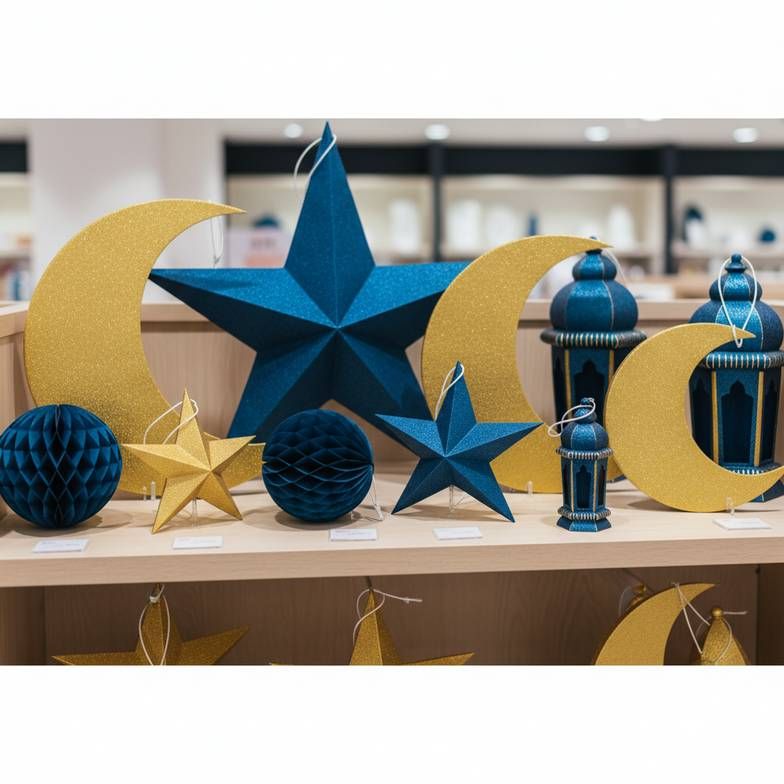
Finding the right products for your seasonal aisle is tough. When it comes to sourcing Ramadan honeycomb decorations wholesale, the real headache isn't just picking nice designs; it's ensuring that the large hanging star, the tabletop crescent, and the small ornaments all look like they truly belong together. When they don't, your retail display looks disjointed and your investment doesn't deliver the premium, coordinated feel that customers expect. The solution lies in shifting your focus from just design to the manufacturing process itself.
Planning a cohesive Ramadan retail collection means treating "cohesion" as a manufacturing specification, not just a design theme. It requires you to define clear, technical rules for color (using Pantone codes), paper finish, and scale. The goal is to verify a supplier's capability to maintain these standards consistently across different products, sizes, and even production batches to ensure every piece in your order is perfectly matched.
Now that you know the secret—treating cohesion as a technical spec—you're probably wondering what that looks like in practice. Let's break down how to move from a simple mood board to a purchase order that protects your brand and ensures a successful seasonal program.
What Makes a Ramadan Decoration Collection Truly Cohesive?
You've seen the supplier photos, and everything looks beautiful. But how can you be sure those different items will look unified once they're in your store, under your lights? It's incredibly frustrating when samples look great but the final bulk order is a mix of slightly different shades and textures. The key is to define what cohesion means to you before you even start asking for quotes.
A truly cohesive collection is built on strict manufacturing specifications, not just a shared theme of stars and moons. Think of it in terms of consistent Pantone color codes, a uniform paper finish (matte, semi-gloss, or glitter), and proportional scaling across different product sizes. It’s about technical alignment, not just visual similarity.
Dive Deeper: From Theme to Technical Specification
From my perspective as a manufacturer, I can tell you that the most successful retail programs are born from the clearest specifications. A buyer who sends a mood board with a theme like "Celestial Ramadan" is a starting point. But a buyer who sends a technical sheet is setting their project up for success.
A theme is a creative idea. A technical specification is a clear instruction for production. Here are the core elements you need to define for your collection:
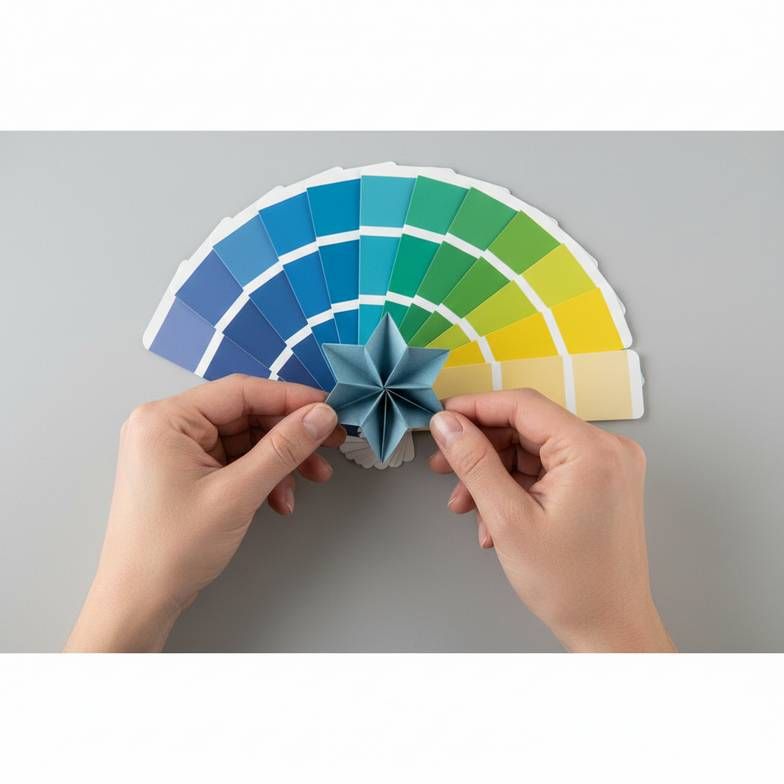
- Color as a Code, Not a Concept: Don't just say "gold." Is it a warm, yellow-toned gold or a cooler, champagne gold? The best way to communicate this is with a universal color system. Provide specific Pantone (PMS) codes for every color in your collection. This gives us a physical, objective standard to match the paper dye lots against. You can even specify an acceptable tolerance, often measured in Delta E, to define how much variation is permissible.
- Material and Finish Consistency: The look and feel of paper can change dramatically based on its properties. You should specify:
- Paper Weight (GSM): Heavier paper feels more premium and is more durable, but it also affects how the honeycomb structure opens.
- Finish: Is the paper matte, semi-gloss, or fully coated? A matte finish is great for reducing glare under bright retail spotlights, while a semi-gloss can add a subtle sheen. Consistency here is key. A matte star next to a glossy crescent from the same "collection" will look mismatched.
- Scale and Proportion: Imagine a 4-foot hanging star and a 12-inch tabletop star. For them to feel like part of a family, they need to be proportionally scaled. This means the points of the star should have similar angles, and the density of the honeycomb paper should feel visually consistent. If one is made with dense honeycomb cells and the other is very sparse, they won't feel cohesive, even if the color is identical.
- Construction Details: Cohesion extends to the small details. Are the hanging loops made of the same material and color across all hanging items? Are the magnetic closures the same strength and quality? Are the glue lines clean and invisible on all pieces? These small points of consistency add up to create a truly premium impression.
When you present a supplier with this level of detail, you're no longer just hoping for the best. You are providing a clear blueprint for manufacturing, which dramatically reduces the risk of disappointing results.
How Can You Mitigate Inconsistency in Ramadan Honeycomb Decorations Wholesale Orders?
The biggest fear for any seasonal buyer is opening cartons to find that the products meant to form a collection don't actually match. This "range inconsistency" can happen when a supplier uses different paper dye lots for different items, or even worse, subcontracts parts of your order to different workshops. This can compromise your entire visual merchandising strategy for a critical, time-sensitive holiday.
To mitigate this risk, you must go beyond the product sample and verify your supplier's process. The most direct way is to request pre-production samples from several different products in your collection at the same time. This allows you to check for uniformity and ask direct questions about how they guarantee consistency across a complex, multi-SKU production run.

Dive Deeper: Ask Questions That Reveal Process
Don't ask a supplier, "Can you make a cohesive collection?" They will always say yes. Instead, you need to ask targeted questions that reveal their actual production and quality control capabilities. I get these kinds of questions from experienced buyers all the time, and it shows me they understand the realities of manufacturing.
Here are the kinds of questions that give you real insight:
- "What is your standard procedure for color matching against a Pantone reference?"
A good supplier will describe their process, which might involve using a spectrophotometer to measure color values or having a dedicated QC team approve dye lots under controlled lighting. A vague answer is a red flag.
- "How do you manage color consistency if my order is large enough to require multiple paper batches?"
This is a fantastic question. Paper is dyed in batches, or "lots," and there can be slight variations between them. An experienced manufacturer will have a process for this, such as reserving a single, large paper lot for your entire order or using a master sample to approve each new lot before it enters production.
- "Are all the items in my proposed collection produced in the same facility?"
Some suppliers are assemblers who source different components from various workshops. While this isn't necessarily bad, it adds a layer of risk. If they do use partners, their ability to manage quality and consistency across that supply chain becomes the most important thing to verify.
- "Can you show me a case study or examples from a multi-SKU collection you produced for another retail client?"
Seeing is believing. Ask them to show you examples of a large hanging piece and a small tabletop item from the same past production run. This is proof of their ability to deliver the consistency they promise.
By framing your inquiries around their process, you shift from a hopeful buyer to a professional partner in manufacturing.
| Aspect | The Risky Approach (Hope-Based) | The Secure Approach (Process-Based) |
|---|---|---|
| Color Specification | Sending a JPEG image and saying, "Make it this color." | Providing a Pantone code (e.g., PMS 18-1631 "Fired Brick"). |
| Sample Approval | Approving a single, perfect "golden sample." | Approving pre-production samples from multiple SKUs to check consistency. |
| Supplier Questions | "Do you promise good quality?" | "What is your color tolerance standard (Delta E) for paper stock?" |
| Quality Control | Relying only on a final inspection after everything is packed. | Requesting in-line inspection photos and retaining a master sample for comparison. |
How Does Merchandising Impact Your Ramadan Honeycomb Decorations Wholesale Plan?
It's so easy to scroll through a supplier's catalog and get excited about individual products. That star is beautiful! That lantern is so intricate! But when you get them in-store, they somehow feel flat or get lost in the visual noise. This happens when products are chosen in isolation, without thinking about their final job: to work together in a live retail environment.
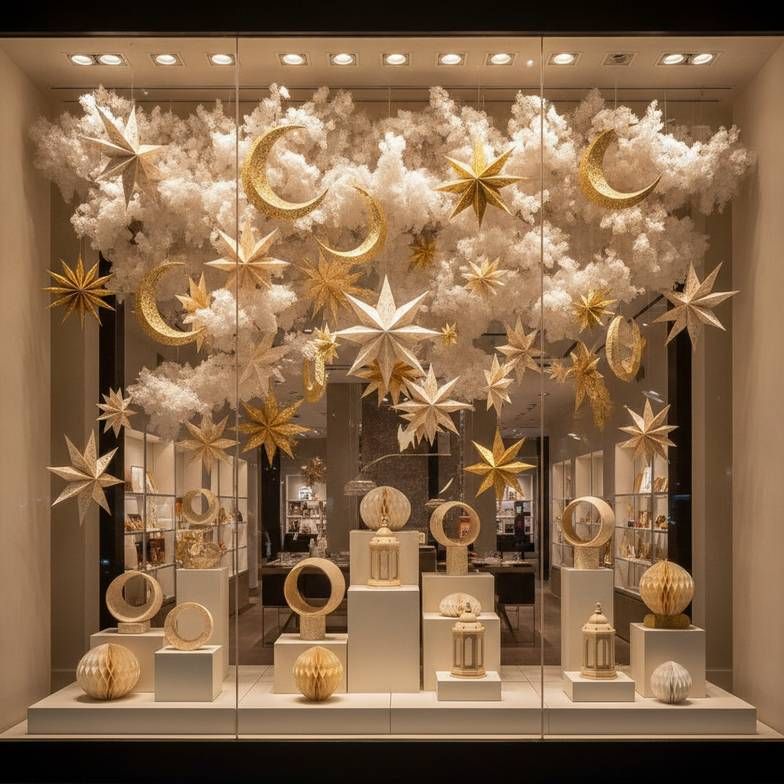
Your merchandising plan should be the foundation of your sourcing strategy for Ramadan honeycomb decorations wholesale. You must consider how decorations will be viewed—from 20 feet away in a store window or 2 feet away on a shelf—and how they will interact with your specific store lighting. This shifts the focus from "what's a pretty product?" to "what's an effective retail tool?"
Dive Deeper: Planning for the In-Store Experience
When I talk to visual merchandising teams, our conversation is very different from one with a procurement agent. The merchandiser is thinking about sightlines, customer flow, and creating an immersive atmosphere. This perspective is incredibly valuable for making smart sourcing decisions.
Here are some key merchandising considerations that should influence your product selection:
- Viewing Distance and Scale:
- For Store Windows & Entrances: Go for large, bold, and simple shapes. From a distance, intricate details are lost. A massive, 4-foot honeycomb star or crescent in a single, vibrant color makes a much stronger statement than a cluster of small, detailed items. The goal is to grab attention from the street.
- For Tabletops & Shelves: This is where detail shines. Customers will see these products up close. Here you can use smaller, more complex structures, multi-color designs, and finer textures. These items should invite closer inspection.
- Lighting Conditions:
- Retail lighting is often harsh. Matte paper finishes are your best friend for reducing glare from spotlights.
- Very dark colors (like deep navy or black) can look like "holes" in a display if not lit properly.
- Very light pastels can get washed out under bright lights. Choosing mid-tone, saturated colors often works best for creating visual punch.
- Creating Layers and Dimension: A great display is never flat. Your collection should include a mix of formats to create depth.
- Hanging Decorations: These create a "ceiling" and draw the eye upward.
- Standing Tabletop Pieces: These ground the display and create interest at eye-level.
- Wall-Mounted Fans/Half-Rosettes: These add texture and color to vertical surfaces without taking up floor space.
- I often advise clients to create a simple sketch or planogram of their target display. This quick drawing immediately reveals gaps. You might realize you need more large-format hanging pieces or that your tabletop area looks too sparse.
Thinking like a merchandiser from day one ensures that you're not just buying products; you're building a toolkit for a successful and profitable retail presentation.
Frequently Asked Questions
What's the first step to ensure color consistency in a wholesale paper decoration order?
The absolute first step is to define your color standard using a universal system like Pantone (PMS). Provide your supplier with the specific Pantone codes for every color in your collection. Do not rely on a picture or a vague description like "navy blue." This creates an objective, physical target for the factory to match.
How important are pre-production samples when ordering a whole collection?
They are absolutely critical. However, don't just approve a single "golden sample." For a collection, you should request pre-production samples for several different items (e.g., a large hanging lantern, a small standing tree) to be sent at the same time. This is your best chance to confirm that the supplier can maintain color, finish, and quality across different sizes and structures.
Should I be concerned if a supplier uses different factories for different items in my collection?
It is a valid concern because it introduces a risk to consistency. If a supplier subcontracts parts of your order, you must ask very direct questions about their quality control process between those facilities. A vertically integrated manufacturer who controls the entire process in-house, from paper sourcing to final assembly, can often provide a higher degree of consistency.
What is "Delta E" and why does it matter for Ramadan decorations?
Delta E (or dE) is a standard metric used to measure the difference between two colors. A dE of 1.0 is generally considered the smallest difference a human can perceive. By specifying a maximum dE tolerance (e.g., under 2.0) in your purchase order, you are giving the factory a technical, measurable target for color consistency. It’s a professional way to say "make sure these all look exactly the same."
Conclusion
Planning a cohesive retail collection is far more than a creative exercise; it's a sourcing and manufacturing challenge. The key is to shift your mindset from simply picking products to defining clear, technical specifications for your entire range. True cohesion comes from consistency in color, material finish, and proportional scale—details that must be managed carefully during production. By asking your supplier sharp questions about their processes and thinking like a visual merchandiser from the start, you can mitigate the biggest risks.
When sourcing Ramadan honeycomb decorations wholesale, this strategic approach is what transforms a risky seasonal buy into a predictable, profitable, and beautifully executed retail program. It ensures that every piece works together to create the stunning, immersive experience your customers are looking for.
If you're planning your next seasonal collection and need a manufacturing partner who understands the critical importance of consistency, contact us at Mypaperbloom. We specialize in helping brands and retailers build cohesive assortments from the ground up.