OEM vs ODM Honeycomb Paper Decorations: Which Development Route Fits Your Brand?
Struggling to source your next collection of paper decorations? You're hearing terms like OEM and ODM thrown around, and it feels like a high-stakes choice you can't afford to get
Struggling to source your next collection of paper decorations? You're hearing terms like OEM and ODM thrown around, and it feels like a high-stakes choice you can't afford to get wrong. Making the wrong decision can lead to missed deadlines, bloated budgets, or worse, a final product that doesn't truly represent your brand. Understanding the real difference between OEM vs ODM honeycomb paper decorations is the key to choosing a development path that aligns perfectly with your business goals.
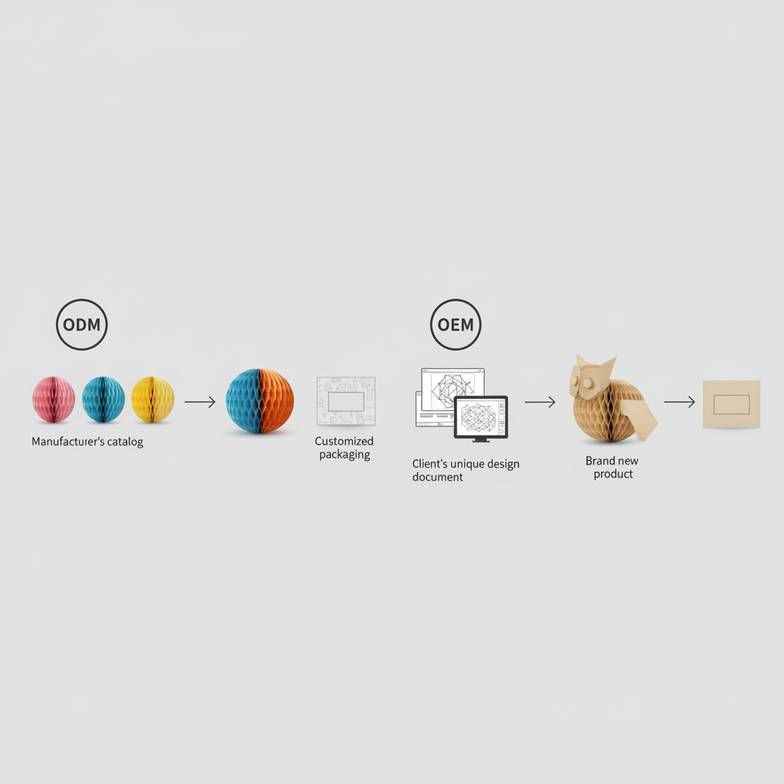
In short, ODM (Original Design Manufacturing) means you select from our existing catalog of honeycomb paper decorations and customize elements like color and packaging. OEM (Original Equipment Manufacturing) means we manufacture a completely new and unique design that you provide to us. The best route depends entirely on your brand's priorities for design control, speed-to-market, and budget.
Now that you have the basic definition, let's go deeper. The choice isn't just a simple toggle switch. It’s a strategic decision that impacts everything from your budget to your brand's competitive edge. Let's break down which route is right for you and why.
When Does an ODM Route for Honeycomb Paper Decorations Make the Most Sense?
Do you need to launch a beautiful seasonal collection fast, but don't have a big in-house design team? Are you worried about the time and money it takes to develop a product from scratch? An ODM approach might be the streamlined, efficient path you're looking for.
An ODM strategy is ideal for brands that need to prioritize speed-to-market and keep development costs low. It’s a fantastic option for sourcing trend-driven seasonal items, testing a new product category without a huge investment, or for businesses that simply don’t have dedicated product design resources.

Dive Deeper into the ODM Advantage
From my experience talking with buyers, one of the most common points of confusion is what you "get" with an ODM product. Many think it means zero customization, but that's not the case at all. It's more about leveraging an existing, proven foundation to get your product to market faster.
Speed, Efficiency, and Lower Risk
The biggest benefit of ODM is speed. When you choose a design from our existing catalog, you're tapping into a production process that is already dialed in. The tooling is made, the material specifications are known, and the production line is ready to go.
- No R&D Delays: You skip the entire research and development phase, which can take months. There's no need for extensive structural engineering or multiple rounds of prototyping to see if a new shape will work.
- Lower Investment: Because the design and tooling already exist, your upfront costs are significantly lower. This is a huge advantage for brands testing a new holiday collection or for distributors who need to offer a wide variety of items without breaking the bank on development for each one.
- Proven Designs: You're choosing from products that are already successful. We know how they fold, how they open, and how they perform. This reduces the risk of production issues or customer complaints down the line.
A classic example is a retail brand needing to add a few new items to their Halloween assortment at the last minute. Instead of designing a new honeycomb pumpkin from scratch, they can select one from our ODM catalog, have it produced in their signature orange, and get it on shelves in a fraction of the time.
What Can You Actually Customize with ODM?
This is a question we get all the time. ODM is not a one-size-fits-all solution. You still have powerful levers to make the product your own. Here’s what you can typically customize:
- Paper Color: You can usually select from a range of our standard stock colors. For larger orders, we can often produce in a custom Pantone color, though this may have different MOQ implications.
- Packaging: This is a huge area for branding. We can work with you to create custom retail packaging, from simple polybags with branded header cards to full-color gift boxes.
- Branding: We can add your logo or brand name directly to the packaging or instructional inserts.
- Assortments: You can curate your own collection by mixing and matching different ODM products to create a unique seasonal story for your customers.
The ODM route is about being smart and efficient. It allows you to focus your resources on marketing and brand-building while relying on your manufacturing partner's design expertise.
Why Would a Brand Invest in an OEM Process for Honeycomb Paper Decorations?
Is your brand identity your single most important asset? Do you need a proprietary decorative structure for a store window display that no one else can copy? If standard catalog items feel too generic for your vision, then an OEM investment is not just an option—it's a necessity.
Investing in an OEM process for honeycomb paper decorations is the right move for brands that demand complete control over the final product. This route allows you to create an exclusive item that protects your design IP, strengthens your brand identity, and provides a powerful competitive advantage in the market.

Dive Deeper into the OEM Commitment
Choosing OEM is like commissioning a custom-built house instead of buying a pre-built one. It requires more involvement, more investment, and more time, but the end result is something that is uniquely yours. It’s a path for established brands with a strong design DNA or for projects with very specific technical requirements.
Building a Moat with Intellectual Property
The single biggest reason to choose OEM is ownership. When you provide the design, you own the intellectual property. This means no other brand can sell the same item. For a brand's flagship Christmas ornament or a signature paper stool used in a global retail campaign, this exclusivity is invaluable. It becomes part of your brand story. We take this very seriously and work with clients to ensure their designs are protected.
Total Control Over Quality, Materials, and Structure
With OEM, you are in the driver's seat for every single specification. This level of control is critical when the decoration has to do more than just look pretty.
- Material Specification: You can specify the exact paper type, weight (GSM), and finish. Need fire-retardant paper for a public installation? Need a specific texture to match other products in your line? OEM is the only way to guarantee it.
- Color Perfection: While we offer custom colors for large ODM runs, OEM allows for precise Pantone matching from the very beginning of the process.
- Structural Integrity: This is huge for our clients in visual merchandising and furniture. If you're designing a foldable paper bench or a large, self-standing archway, we need your technical drawings to build it to your exact structural and weight-bearing specifications.
The Resource Commitment: A Realistic Look
Full control comes with greater responsibility. The OEM process is more demanding for both the brand and the manufacturer. You should be prepared for:
- Higher Investment: You will need to fund the creation of new tooling (molds or cutting dies), which is a one-time upfront cost.
- Longer Lead Times: The R&D process—including creating technical drawings, making prototypes, testing, and revisions—naturally takes longer than a standard production run.
- Higher MOQs: Because of the custom setup involved, Minimum Order Quantities for OEM projects are typically higher than for standard ODM items.
To make it clearer, here’s a simple table comparing the two routes:
| Feature | ODM (Original Design Manufacturing) | OEM (Original Equipment Manufacturing) |
|---|---|---|
| Design Origin | Manufacturer's existing catalog | Brand's unique, custom design |
| Intellectual Property | Owned by the manufacturer | Owned by the brand |
| Customization | Colors, packaging, branding | Full control: structure, size, materials, color |
| Speed-to-Market | Fast | Slower (due to R&D, tooling) |
| Upfront Investment | Low | High (tooling, prototyping) |
| MOQ | Generally lower | Generally higher |
| Best For | Trend items, market tests, speed | Brand flagships, proprietary designs, IP protection |
Beyond OEM vs ODM Honeycomb Paper Decorations: Is There a Middle Ground?
So, what if you don't fit neatly into either box? Perhaps you like a manufacturer's existing product but need more than just a color change—you want to alter its shape or function. Are you stuck between the simplicity of ODM and the high investment of OEM?
Absolutely not. There is a collaborative middle ground, which we often call "ODM with Modifications" or "Customized ODM." This hybrid approach involves working together to adapt a supplier's existing product, resulting in a semi-unique item that balances cost, speed, and brand identity.
Dive Deeper into the Collaborative Path
I find that some of the most successful product launches come from this hybrid space. It’s where our manufacturing experience meets a client's unique market insight. It’s less about a rigid contract and more about a creative partnership.
What is "ODM with Modifications"?
Think of it as a renovation project. The foundation and main structure (the core honeycomb design) are already there, but you're working with us to "knock down a few walls" or "add a new wing."
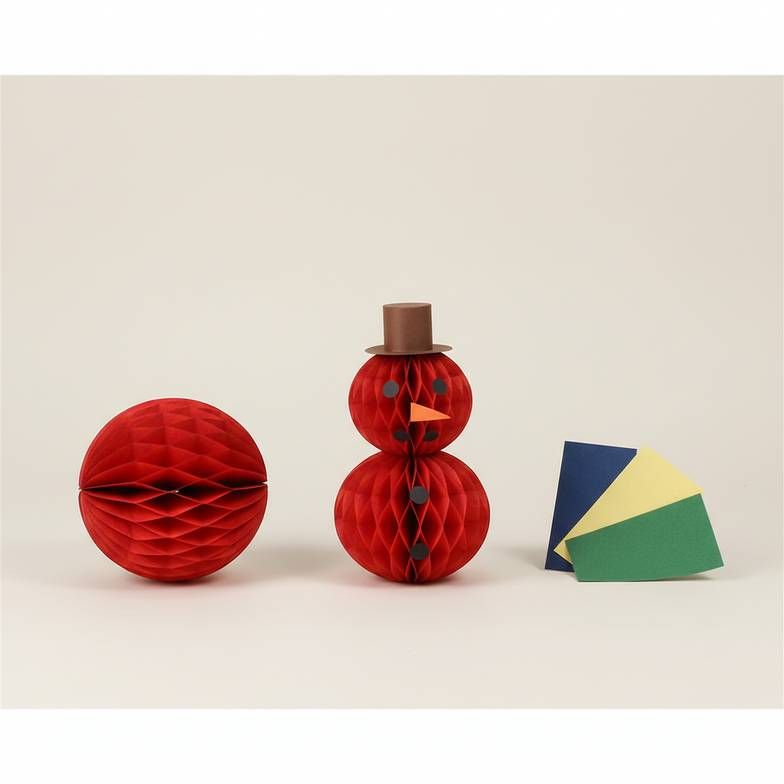
For example, a client might see a standard honeycomb ball in our catalog but want to create a snowman shape for their winter collection. The core honeycomb technology is the same, but we would work with them to engineer new die-cut shapes for the paper and develop a new assembly process. The client benefits from our existing production knowledge, which speeds things up, but still gets a product that is unique to their brand. This is a far more common scenario than pure, from-scratch OEM.
Asking the Right Questions: From "What" to "How"
This brings me to the most important piece of advice I can offer. To find the right path, you need to ask better questions. The initial "Do you do OEM/ODM?" is just a starting point. The real, value-driving conversations happen when you dig into the how.
Here are some questions we love to hear from clients, as they show a deeper level of strategic thinking:
- _Instead of "Do you do OEM?" ask:_ "What is your process for developing a custom structure from a client's design brief? What information do you need from us?"
- _Instead of "What's the MOQ?" ask:_ "How do MOQs and pricing change if we use your standard paper colors versus a custom Pantone-matched color?"
- _Instead of "Can you do private label?" ask:_ "If we co-develop a modification to your existing design, how is the intellectual property handled? Can we get exclusivity for our market?"
- _A great one is:_ "What are the cost and lead time implications of changing the paper GSM versus changing the overall shape of the product?"
Questions like these move the conversation from a simple transaction to a strategic partnership. It helps both sides understand the true scope of the project and find the most efficient way to bring a vision to life. This collaborative approach often uncovers the best solution that balances your needs within the OEM vs ODM honeycomb paper decorations framework.
Frequently Asked Questions
What does ODM stand for in manufacturing?
ODM stands for Original Design Manufacturing. In this model, the manufacturer (like us) designs and develops the product. As a buyer, you select a product from our existing catalog and can often customize elements like color, branding, and packaging for your own private label.
What does OEM stand for in manufacturing?
OEM stands for Original Equipment Manufacturing. In this model, you (the brand or client) provide a complete, custom design to the manufacturer. The manufacturer’s role is to produce that specific design exclusively for you, according to your exact specifications.
Are MOQs higher for OEM or ODM honeycomb paper decorations?
Generally, MOQs (Minimum Order Quantities) are higher for OEM projects. This is because OEM requires creating new custom tools, sourcing specific materials, and setting up a unique production process, which involves significant upfront costs that need to be spread over a larger volume.
Who owns the design in an OEM agreement?
In a true OEM partnership, the client who provides the design brief and funds the development owns the intellectual property (IP). It is critical to have a clear manufacturing agreement in place that outlines and protects the client's ownership of their unique design.
Conclusion
Ultimately, the choice in the OEM vs ODM honeycomb paper decorations debate is not about which is "better," but which is the smartest strategic fit for your brand at this moment. ODM offers a fast, low-risk, and cost-effective way to bring trend-driven seasonal products to market. OEM provides the ultimate control and exclusivity needed to create brand-defining, proprietary products that stand out. And importantly, there is a collaborative middle ground where we can modify existing designs to create something semi-custom. The right path depends on your brand's resources, your timeline, and your long-term goals.
The best way to determine your path is to start a conversation. If you're planning your next seasonal collection, retail display, or custom paper product, contact us to discuss your project. We can help you navigate these options and find the perfect development route to fit your brand's unique needs.