How to Write an RFQ for Custom Paper Decorations
Struggling to get clear, comparable quotes from suppliers? You send out a Request for Quotation RFQ for custom paper decorations with what seems like all the details—size, color, q

Struggling to get clear, comparable quotes from suppliers? You send out a Request for Quotation (RFQ) for custom paper decorations with what seems like all the details—size, color, quantity—but the proposals you get back are wildly different in price and scope. It’s frustrating and wastes valuable time. A poorly defined RFQ forces suppliers to guess, leading to quotes that are either too high to cover unknown risks or too low because they missed a critical requirement.
To write an effective RFQ for custom paper decorations, you must go beyond basic specifications like size and color. Your document needs to clearly define the product’s real-world application (e.g., a reusable retail display vs. a single-use event piece), translate vague quality goals into measurable metrics (e.g., specify a Pantone code instead of just "blue"), detail the exact type of customization needed, and include comprehensive packaging and logistics requirements.
A great RFQ isn't just a shopping list; it's a project brief. It tells a supplier not just what you want to buy, but how you plan to use it and what success looks like. Let's dig into the details that will transform your RFQs and get you the actionable quotes you need.
Beyond Specs: Why Does Application Matter in Your RFQ?
You’ve specified a 30cm red honeycomb ball. But is it for a one-night party or a two-month holiday window display? The answer completely changes how a manufacturer should quote the project, yet this is one of the most common details I see missing in RFQs.
An RFQ that only lists product specs forces suppliers to make assumptions about its intended use. A manufacturer might quote the cheapest possible option to win the bid, only for you to discover it sags after a week or can't be folded back up for storage.
Dive Deeper: From One-Time Event to Seasonal Program
The application and required lifespan of your custom paper decorations directly influence material choices, construction methods, and, ultimately, the cost. Clearly stating your use case allows a supplier to recommend the right product for the job, not just the cheapest one.
Lifespan and Material Selection
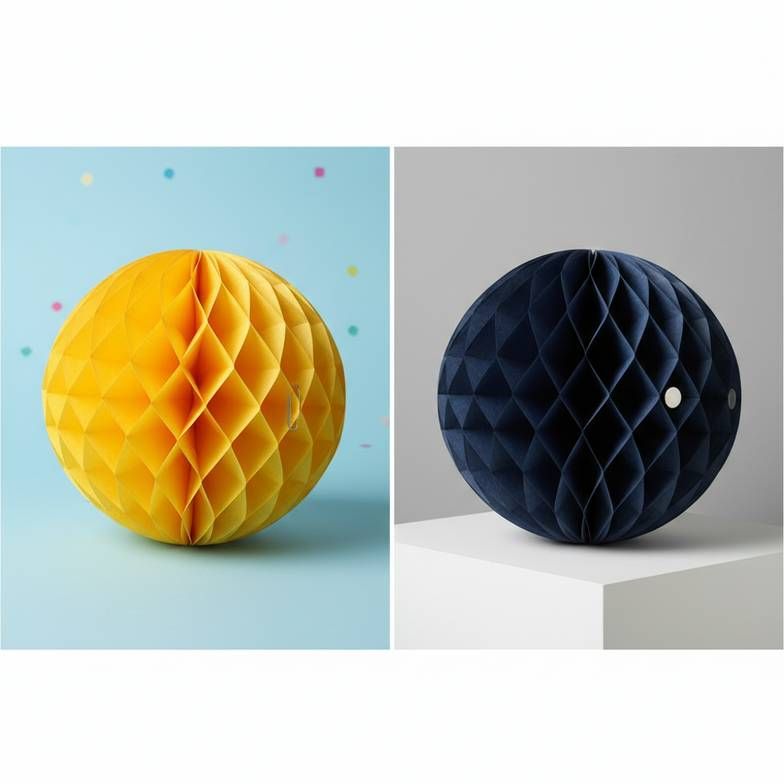
A decoration for a single-day event can be made with lighter-weight paper and a simple closure, like a paper clip or double-sided tape. The priority is visual impact at the lowest possible cost.
However, a decoration for a seasonal retail program that needs to look perfect for eight weeks and potentially be reused next year requires a different approach.
- Paper Weight (GSM): We'd recommend a heavier paper stock (higher Grams per Square Meter) that's less prone to sagging over time, especially in larger formats.
- Color Fastness: For a decoration sitting in a sunny shop window, we need to consider paper dyes that are more resistant to fading.
- Durability: The overall construction needs to be more robust.
The Critical Role of the Closure Mechanism
The closure is a perfect example of how application dictates specifications. From our experience at Mypaperbloom, this is a frequent point of confusion.
- Paper Clips: These are cost-effective and fine for single-use items or decorations that will be hung and left untouched.
- Double-Sided Tape: This provides a very clean, seamless look but is strictly for one-time assembly. Once stuck, it can't be undone without damaging the paper.
- Magnets: This is the premium option. Magnets allow for easy assembly and disassembly, making the decoration reusable. If you specify a decoration for a seasonal program, a good supplier should ask if you need it to be collapsible for storage. In your RFQ, instead of just saying "durable," you could specify "must use magnet closures strong enough for 10+ open/close cycles." This is a clear, testable requirement.
When you define the application, you're not just buying a product; you're buying a solution. An RFQ that states, "Needed for a multi-store retail rollout to be displayed for 6 weeks and stored for potential reuse," will get you a far more relevant and reliable quote than one that just says, "1,000 honeycomb balls."
How Can You Define 'Quality' in an RFQ for Custom Paper Decorations?
Here's a problem we see all the time: RFQs that ask for "high-quality" or "premium" materials. What does that even mean? To me, it might mean thicker paper. To another supplier, it might mean vibrant color. To you, it might mean it's made from certified paper.
This vagueness is where projects go wrong. You end up comparing apples to oranges because each supplier is quoting based on their own interpretation of "quality." The key is to replace subjective words with objective, measurable criteria.
Dive Deeper: Turning Vague Goals into Verifiable Specs
To write a professional RFQ for custom paper decorations, you need to be the one who defines the standards. This protects you from disappointment and gives you a concrete basis for rejecting a sample or a production batch if it doesn't meet your written requirements.
From 'Good Color' to Pantone Specificity
Your brand's red is not just any red. A slight variation can make a whole display look cheap or off-brand.
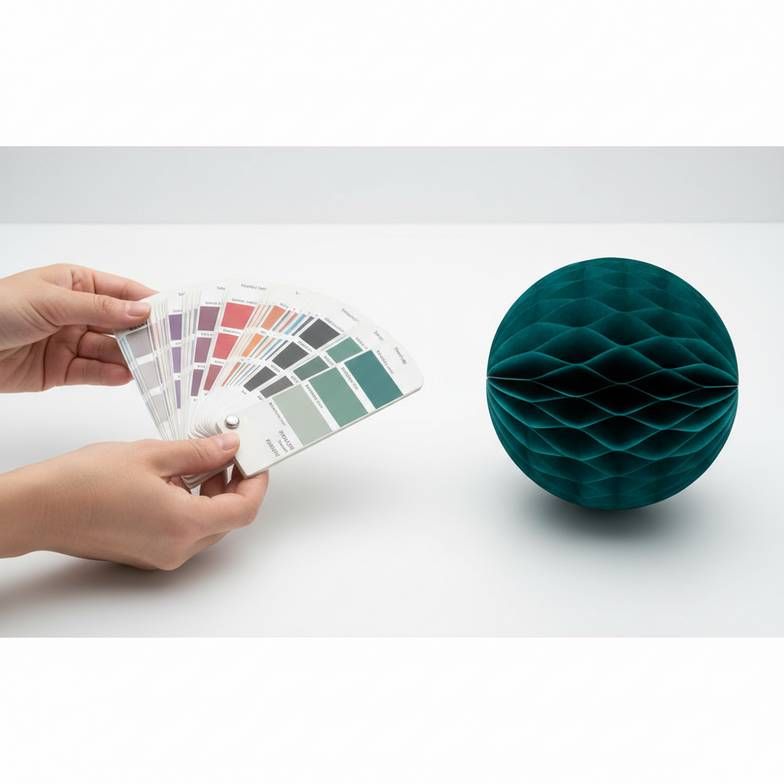
- Specify Pantone Codes: Instead of "dark blue," specify "Pantone 289 C." This gives all potential suppliers the exact same color target.
- Define Acceptable Variance: In professional printing, color variance is measured by a value called Delta E (dE). For most applications, a dE of less than 2 is imperceptible. You can state, "Color must match provided Pantone C code with a variance of less than 5% across all units."
- Request a Pre-Production Sample: Always ask for a physical sample using the final paper stock and dyes. A digital proof can't show you how the color will look on the actual material.
From 'Durable' to Functional Requirements
"Durable" is another word that needs to be defined. How will the product be handled?
- Structural Integrity: For a hanging decoration, you might specify: "Must hold its shape without sagging for 30 days when fully opened and hung."
- Assembly/Disassembly: As mentioned earlier, if it's for reuse, specify the closure type and cycle count: "Magnet closure must function for a minimum of 10 open/close cycles without loss of strength."
- Paper Strength: If you're concerned about tearing, you can ask about the paper's GSM or request a specific weight, such as "Must be made from 100 GSM paper or higher."
Asking for Proof, Not Promises
Any supplier can claim their products are "eco-friendly" or "safe." A professional RFQ asks for documentation.
- Certifications: If sustainability is important, ask for it specifically. "Does the paper used hold FSC certification? If so, please provide your company's FSC certificate number for verification."
- Material Safety: For products used in children's areas or that have strict import regulations (like in the EU or California), ask for material safety reports. "Please provide any available testing reports for heavy metals or other restricted substances."
By building these specific, verifiable metrics into your RFQ, you shift the responsibility to the supplier to prove they can meet your standards.
What Does 'Custom' Really Mean in Your RFQ?
The word "custom" can mean many different things in manufacturing, and each one has a different impact on cost, minimum order quantity (MOQ), and lead time. We often get RFQs asking for a "fully custom decoration" when the buyer only needs a custom color.
Being unclear about the type of customization is a major source of delays and mismatched quotes. Breaking it down in your RFQ for custom paper decorations helps a supplier understand the true scope of work and quote accurately from the start.
Dive Deeper: Deconstructing 'Customization'
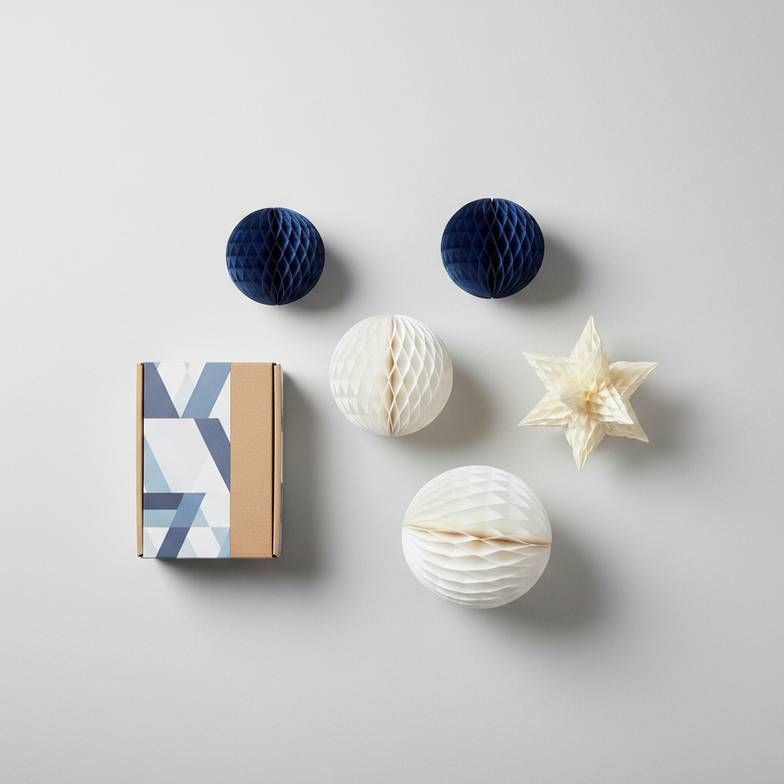
Let's break down the most common types of customization. When you write your RFQ, try to identify which of these categories your request falls into. This will help you ask better questions and understand the quotes you receive.
| Type of Customization | Description | Impact on MOQ | Impact on Lead Time | What to Specify in Your RFQ |
|---|---|---|---|---|
| Custom Color | Using a specific Pantone color on an existing product shape. | Medium | Medium | "Existing style #ABC in Pantone 123 C." |
| Custom Size | Producing an existing shape in a new, non-standard size. | Medium to High | Medium | "Existing honeycomb ball style, but in a 45cm diameter." |
| Custom Shape | Creating a completely new shape that requires a new cutting die. | High | High | "New custom star shape based on attached design file." |
| Custom Structure | Engineering a new 3D form, like a foldable paper stool or display stand. | Very High | Very High | "Need to develop a new foldable paper structure to hold a 5kg product." |
| Custom Packaging | Designing a branded retail box, header card, or printed polybag. | Medium to High | Medium | "Each unit to be packed in a custom-printed box as per attached artwork." |
| Private Labeling | Adding a small branded tag or sticker to an existing product. | Low to Medium | Low | "Add a small branded paper tag with our logo to each item." |
As you can see, asking for a custom color is much simpler and cheaper than asking for a custom structure. The first involves a standard production process with custom-dyed paper. The second requires R&D, structural engineering, prototyping, and testing.
When you send your RFQ, be precise.
- If you need a new shape, attach a vector design file (.ai or.eps).
- If you need a new color, provide the Pantone code.
- If you need custom packaging, include a die-line or artwork.
This level of detail eliminates guesswork. It allows us, as a manufacturer, to immediately assess feasibility, calculate tooling costs (like for a new cutting die), and give you a realistic timeline.
Frequently Asked Questions
What's a reasonable MOQ for custom paper decorations?
This depends entirely on the level of customization. For a simple color change on a standard item, the MOQ might be a few hundred units. For a completely new shape or structure that requires new tooling and R&D, the MOQ could be in the thousands to justify the setup costs. Always ask the supplier to break down MOQs by customization type.
How long does it take to get a sample?
A sample using existing materials and shapes might take 1–2 weeks. A sample requiring custom-dyed paper or a new cutting die could take 3–5 weeks or more. Your RFQ should ask for an estimated sample lead time after all design files are confirmed.
Should I provide my target price in the RFQ?
It can be very helpful! Providing a realistic target price per unit helps the supplier propose a solution that fits your budget. They might suggest a different material, a slightly simpler design, or an alternative closure to meet your price point. Without a target, you might only get a quote for the highest-spec version, which may be out of your budget.
What's the difference between a paper clip and a magnet closure?
A paper clip is a low-cost option best for single-use decorations. It holds the sides together but isn't ideal for aesthetics or reuse. Magnets are embedded in the paper, provide a clean, seamless look, and allow the decoration to be easily collapsed and stored, making them perfect for seasonal or reusable displays.
Why do suppliers ask for my shipping destination in the RFQ?
Shipping costs can be a significant part of the total project cost, especially for voluminous but lightweight items like paper decorations. Knowing your final destination and requested Incoterms (like FOB, EXW, or DDP) allows the supplier to provide a more complete and accurate "landed cost" estimate, preventing surprises later on.
Conclusion
Writing a powerful RFQ for custom paper decorations is less about filling a template and more about strategic communication. By moving beyond a simple list of specs, you guide suppliers toward the solution you actually need. Remember to clearly define the product's application and lifespan, translate subjective quality goals into hard numbers, specify the exact level of customization required, and never forget the crucial details of packaging and logistics. From my experience on the manufacturing side, an RFQ that contains this level of detail is a sign of a professional buyer and is always prioritized. It lays the foundation for a smooth project, a fair price, and a final product that delivers on its promise.
If you're planning a project and want to ensure your requirements are perfectly understood, our team at Mypaperbloom is here to help. We can work with you to refine your specifications and build an effective RFQ. Contact us today to discuss your next custom paper decoration project.