How to Source Honeycomb Paper Decorations Wholesale: A Buyer’s Checklist
Finding the right supplier for honeycomb paper decorations wholesale can feel overwhelming. You scroll through endless online catalogs, but every shiny bauble and colorful fan star
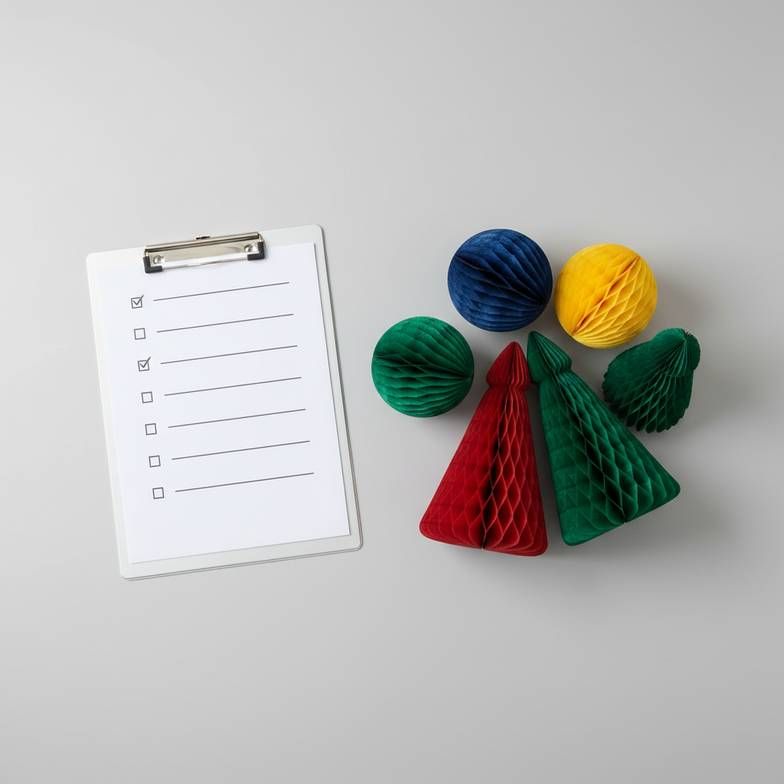
Finding the right supplier for honeycomb paper decorations wholesale can feel overwhelming. You scroll through endless online catalogs, but every shiny bauble and colorful fan starts to look the same. The real problem is, a bad choice can lead to delayed shipments, inconsistent quality, and decorations that fall flat—literally—costing you sales and ruining a campaign launch. The solution isn't just finding a cheaper price; it's about asking smarter questions with a comprehensive buyer's checklist.
Sourcing honeycomb paper decorations wholesale is a risk management process. It requires moving beyond catalogs and spec sheets to create a detailed checklist covering three critical areas: verifiable product specifications, proven supplier capabilities, and airtight logistics planning. This ensures the products you receive match your commercial goals, whether for a multi-store retail program or a one-off event.
I’ve seen firsthand where buyers can make costly mistakes because they didn’t dig deep enough. In this guide, I'll walk you through the essential questions we use internally to qualify a project. This isn't just a list to copy; it’s a framework to help you build your own foolproof sourcing plan.
How Do You Define Your Product Specifications for Wholesale Decorations?
You have a vision for your display, but have you considered the practical trade-offs? Just asking for a "red paper ball" can result in something that's too fragile for customer handling or a color that clashes with your other products. Defining your specs is about making conscious choices.
The best approach is to define your specifications by balancing the intended use case with material properties. This means deciding on paper durability, color precision, and structural features like the closure method based on whether the decoration is for a single-use event or a reusable retail product.

Let's dive deeper into the key specifications you need to lock down.
Paper Weight (GSM) vs. Application
One of the first questions we get is about paper quality. This usually comes down to paper weight, measured in grams per square meter (GSM). It’s tempting to think "heavier is better," but it's more nuanced than that.
- Lower GSM (e.g., 60-80 GSM): This paper is lighter and more cost-effective. It’s a perfectly good choice for single-use decorations like for a wedding, a promotional event, or a party supply line where items are used once and discarded. The trade-off is lower durability.
- Higher GSM (e.g., 100-120 GSM+): This paper is thicker, more durable, and feels more premium. It can withstand more handling, making it ideal for retail products that customers will buy and reuse for several seasons. It's also better for larger, structural pieces like paper furniture or big window displays that need to hold their shape. The cost is higher, so you need to be sure the application justifies it.
Your job as a buyer is to match the GSM to the product's life cycle. Don't overpay for durability you don't need, but don't cut corners on a product you want customers to love and reuse.
Color Consistency and Matching
"I need it in our brand's blue." That's a common request, but achieving the right blue across thousands of units is a technical process. For honeycomb paper decorations wholesale, color consistency is crucial, especially for multi-store rollouts where every location needs to look identical.
Here’s what to specify:
- Standard vs. Custom Color: Suppliers have a range of standard paper colors in stock. Using a standard color is faster and often has a lower minimum order quantity (MOQ). If you need a specific brand color, you'll need to request custom dyeing.
- Provide a Pantone (PMS) Code: Don't just send a screenshot of a color. A Pantone code is a universal standard that gives your manufacturer a precise target to match.
- Request a Lab Dip: For custom colors, the supplier will dye a small swatch of paper (a "lab dip") for your approval before dyeing the full batch.
- Discuss Color Tolerance: Even with a PMS code, there will be tiny variations. Ask the supplier about their color tolerance, which is professionally measured by a Delta E (dE) value. A dE under 2.0 is generally considered a close match, unnoticeable to most people. Agreeing on this upfront prevents disputes later.
Closure Method: Magnets, Adhesive, or Clips?
How the decoration is held open is a surprisingly critical detail that affects user experience and reusability. I've heard from clients who switched closure types after getting feedback from their own store staff about setup time.
Here's a comparison to help you choose:
| Closure Method | Cost | Reusability | Setup Speed | Best For |
|---|---|---|---|---|
| Double-Sided Tape | Low | Low | Fast (first time) | Single-use events, party supplies |
| Paper Clips | Low | High | Slow | Cost-sensitive reusable items |
| Embedded Magnets | High | Excellent | Very Fast | Premium retail products, frequent use |
- Adhesive Tape: This is the cheapest option. It's great for single-use items where the decoration will be opened once and then discarded. However, it can tear the paper when reopened, making it a poor choice for reusable retail products.
- Magnets: Small magnets embedded in the paper covers create a clean, seamless closure. They snap shut instantly and can be opened and closed hundreds of time without damage. This is the best choice for retail items meant for home use and for visual merchandising teams who need to set up and take down displays quickly.
- Clips: Using paper clips to hold the covers together is a simple, reusable solution. It’s more budget-friendly than magnets, but setup is slower and less elegant.
What Questions Should You Ask to Evaluate a Wholesale Honeycomb Paper Decoration Supplier?
You've found a few suppliers whose products look good online. Now, how do you vet them? Every supplier will claim they have "great service" and "high quality," but these are just marketing words. Your task is to turn those claims into verifiable facts.
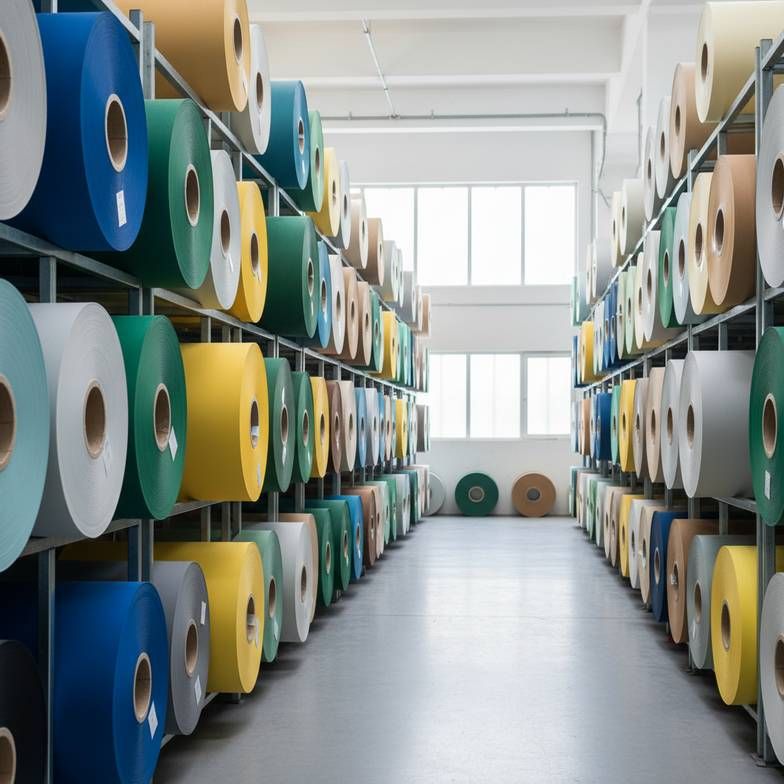
To properly evaluate a wholesale honeycomb paper decoration supplier, you must ask for concrete evidence of their capabilities. This includes reviewing their quality control documentation, requesting examples of past projects similar to yours, and understanding their manufacturing process.
Here’s how to separate a great partner from a potential problem.
From Claims to Verification
A professional buyer operates on the principle of "trust, but verify." Here’s how to translate common supplier claims into actionable verification steps:
- The Claim: "We use FSC-certified, sustainable paper."
- Your Verification Question: "That's great to hear. Could you please provide your FSC Chain of Custody (CoC) certificate number so we can verify it on the FSC database?" A legitimate certificate holder will have no problem providing this.
- The Claim: "We have a very strict quality control process."
- Your Verification Question: "Can you walk me through your QC checkpoints? For example, do you inspect raw materials? Do you have in-process inspections during assembly? What final checks are performed before packing? Can we get a copy of the final inspection report before shipment?"
- The Claim: "We are experts in custom designs."
- Your Verification Question: "Could you share a few case studies or unbranded photos of custom projects you've completed that are similar in complexity to ours? I'm interested in seeing how you handled unique structures or specific color requirements."
Asking these follow-up questions shows you are a serious, professional buyer and helps you gauge the supplier's transparency and true capabilities.
Differentiating a Manufacturer from a Trading Company
It's important to know who you're actually dealing with. A manufacturer produces the goods in their own facility, while a trading company sources them from one or more factories.
- Working with a Manufacturer (like us): You get direct communication with the team making your product. This typically means more control over customization, quality, and production schedules. If a problem arises on the production line, it can be addressed quickly.
- Working with a Trading Company: They may offer a wider variety of products from different categories since they aren't limited to what one factory can make. They can also sometimes consolidate shipments from multiple factories. The downside is an extra communication layer, which can slow things down and potentially lead to misunderstandings about your specifications.
There's a place for both, but for sourcing honeycomb paper decorations wholesale, especially with custom requirements, direct communication with a manufacturer is often the safer bet. Ask them directly: "Are you a manufacturer or a trading company?"
How Can You Ensure Your Wholesale Honeycomb Paper Decorations Arrive on Time and Ready for Sale?
You’ve designed the perfect product and vetted the perfect supplier. But all that work is for nothing if the order arrives two weeks after your seasonal launch or is packaged in a way that requires hours of rework in your warehouse.
You can ensure a successful delivery by treating logistics as part of the product specification. This means getting firm commitments on production schedules, packaging design, carton dimensions, and shipping documentation before you sign the purchase order.

Logistics are not an afterthought; they are a critical part of a successful wholesale program.
The Critical Path: Production Timelines
A common mistake is miscalculating the total lead time. The clock doesn't start when you send your first email; it starts when you approve the final pre-production sample.
Here’s a typical timeline:
- Quotation & Initial Design: 1-2 weeks
- Sampling: 1-3 weeks (can be longer for complex custom designs)
- Sample Shipping & Approval: 1 week
- Mass Production: 4-8 weeks (this is the "lead time" most suppliers quote, and it can vary dramatically based on order size and season)
- Shipping: 3-6 weeks (depending on ocean vs. air freight and destination)
Always build a buffer into your schedule. Production during peak seasons (like July-October for Christmas products) can be slower, so plan accordingly. Confirm the "ready to ship" date with your supplier and track its progress.
Packaging: More Than Just a Box
How your honeycomb paper decorations are packed affects everything from shipping costs to in-store presentation. Since our products fold flat, they offer huge advantages in shipping and storage efficiency, but the packaging still needs to be right.
Discuss these three layers of packaging with your supplier:
- Unit Packaging (Retail Ready): This is what your end customer sees. Does it need to be a polybag with a printed header card? A custom-printed box with a window? Does it require a barcode sticker, a warning label, or assembly instructions? Provide detailed artwork and specifications for this.
- Inner Cartons: For case-pack retailers, you might need inner cartons that hold a set number of units (e.g., 6 or 12).
- Master Cartons (Shipper Cartons): This is the most critical for logistics. You must define the maximum weight and dimensions. A carton that is too heavy might violate workplace safety rules in your warehouse. Dimensions are needed to calculate how many cartons fit on a pallet and in a container, which determines your total shipping cost.
Navigating International Shipping
If you're importing, your supplier's experience with your market is invaluable. An experienced supplier will know the standard documentation required and can help you avoid costly delays at customs.
Ensure your supplier can provide:
- Bill of Lading (B/L): The official shipping document.
- Commercial Invoice: A document detailing the transaction for customs.
- Packing List: An itemized list of what's in each carton.
- Certificate of Origin (if needed): A document to verify the country of manufacture.
Confirm the shipping terms (Incoterms) like FOB (Free On Board) or EXW (Ex Works). This defines who is responsible for the shipment at each stage of its journey.
Frequently Asked Questions
What is a typical MOQ for custom honeycomb paper decorations?
This varies widely. A simple decoration using a standard paper color might have an MOQ of 500-1000 pieces per design. A highly complex item with custom-dyed paper and special printing could have a much higher MOQ. It always depends on the materials and processes involved, so you must get a specific quote from your supplier.
How do I get a sample before placing a wholesale order?
Most professional manufacturers offer pre-production samples. You should always request one to approve the final quality before mass production begins. There is often a sample fee, which is sometimes credited back to you if you place a bulk order. Confirm the cost, timeline, and process for sampling upfront.
What's the difference between honeycomb paper and tissue paper decorations?
Honeycomb paper decorations are made from layers of paper bonded together to create a cellular, 3D structure when opened. This makes them relatively durable and structured. Tissue paper decorations, like pom-poms, are made from thin, layered sheets that are fluffed out. They are typically more delicate and less structural.
Can I get my logo printed on the decorations or packaging?
Yes, this is a very common request for private label and custom programs. Most manufacturers can print logos, patterns, or other branding on the decoration's cover or on its retail packaging. Be sure to provide your artwork in a high-resolution vector format and confirm any extra costs or MOQ requirements for printing.
Conclusion
Sourcing honeycomb paper decorations wholesale is a strategic process that goes far beyond picking a product from a catalog. A successful program is built on a foundation of clear communication and diligent verification. By using a detailed checklist that covers product specifications, supplier evaluation, and logistics planning, you can significantly reduce your risk and ensure the final product meets your brand's standards, arrives on schedule, and delights your customers. This structured approach turns sourcing from a guessing game into a predictable, manageable part of your business.
If you are planning a seasonal collection, retail display, or promotional event, our team is here to help you build your checklist. Contact us to discuss your project specifications and learn how our expertise in foldable honeycomb decorations can support your commercial goals.