How to Build a Seasonal Decoration Assortment for Retail Stores
Struggling to build a seasonal decoration assortment that actually works for your retail stores? It’s a common headache. You pick items that look great in a catalog, but they arriv

Struggling to build a seasonal decoration assortment that actually works for your retail stores? It’s a common headache. You pick items that look great in a catalog, but they arrive and become a nightmare of high shipping costs, difficult setup for store staff, and inconsistent visual impact. The real problem isn't just about picking pretty things; it's about the lack of a strategic framework. The right approach turns your assortment from a risky gamble into a profitable, repeatable system.
Building a successful seasonal decoration assortment for retail involves a strategic process of balancing three layers: hero versus filler pieces for visual hierarchy, a core color palette adaptable for different holidays, and a mix of display formats (hanging, tabletop, wall). This approach ensures the collection is not only visually compelling but also commercially effective and operationally feasible for multi-store rollouts.
So, how do you move from simply picking products to strategically building a collection? It starts by thinking less like a decorator and more like an operations manager. Let's break down the practical framework we use to help our clients build smarter, more efficient seasonal programs.
How Do You Deconstruct Your Assortment into Layers?
Ever feel overwhelmed by an endless catalog of options? Trying to choose individual pieces without a plan is a recipe for a disjointed and ineffective display. The key is to stop thinking about a single "assortment" and start breaking it down into distinct, manageable decision layers.
The solution is to categorize your needs first. By creating a clear structure based on visual impact, color strategy, and display location, you can make focused decisions that serve a larger, cohesive vision for your seasonal decoration assortment.

Dive Deeper: The Three Strategic Layers of Assortment Planning
From our experience helping retail buyers plan their collections, the most successful ones always think in these three layers. It simplifies the process and ensures no critical aspect is overlooked.
Layer 1: Hero vs. Filler Pieces
Your assortment needs a clear visual hierarchy. This is where the concept of "Hero" and "Filler" comes in.
- Hero Decorations: These are your large, show-stopping pieces. Think of the giant honeycomb ornaments in a store window or a massive paper installation hanging over an entrance. Their job is to grab attention from afar and create a "wow" moment. You only need a few. Because of their size, they often come with higher unit costs and shipping volume, so their use must be strategic.
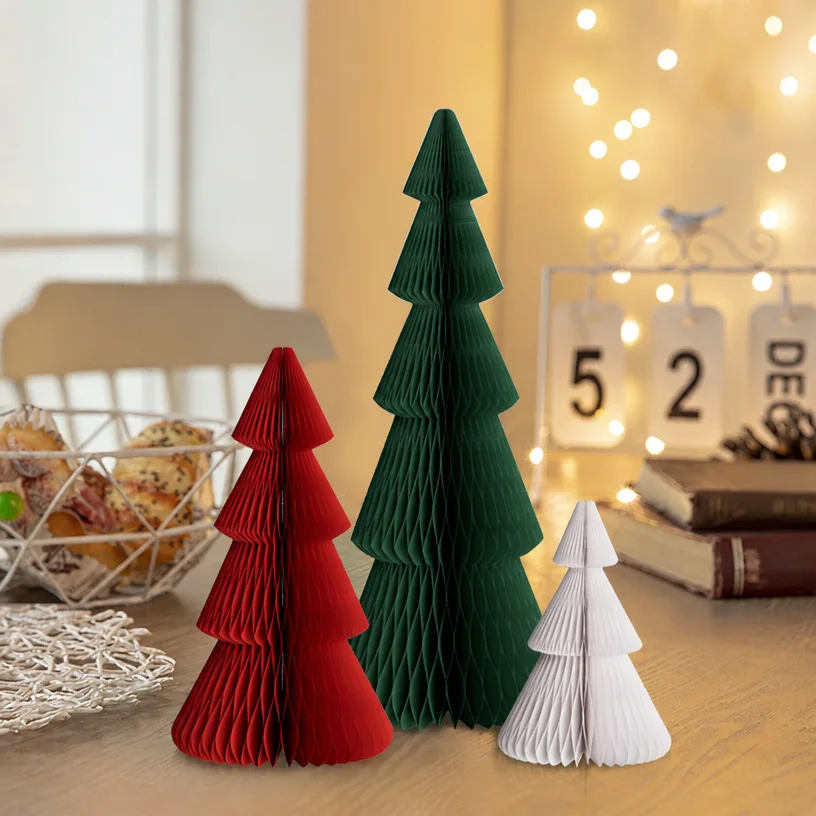
- Filler Decorations: These are the smaller, more affordable items that flesh out the theme. They include tabletop honeycomb trees, small hanging ornaments for shelves, and decorative paper garlands. Their role is to carry the seasonal theme throughout the store, creating a cohesive experience at a lower cost per unit. They are the workhorses of your seasonal decoration assortment.
A common mistake I see is ordering too many hero pieces, which blows the budget and creates logistical headaches. A balanced plan uses heroes for high-impact zones and fillers for broad, cost-effective coverage.
Layer 2: Core Color & Seasonal Themes
Your color palette is the glue that holds the entire assortment together. Instead of reinventing the wheel every season, we advise clients to develop a core color palette that aligns with their brand identity.
This palette can then be accented with one or two seasonal colors. For example:
- Core Palette: Neutral Gray, Cream, and a Brand-Specific Blue.
- Christmas: Add Deep Red and Forest Green.
- Easter: Add Pastel Pink and Light Yellow.
- Ramadan: Add Gold and Royal Purple.
This approach makes your decorations feel instantly recognizable as your brand, season after season. It also simplifies inventory management, as the core-colored items can often be used across multiple holidays, reducing waste and sourcing complexity.
Layer 3: A Mix of Display Formats
Finally, you need to plan for the physical reality of your stores. Where will these decorations actually go? A good plan includes a variety of formats to fit different spaces.
- Hanging Decorations: Ideal for creating visual interest from the ceiling, especially in stores with high ceilings. Our foldable honeycomb structures are perfect here because they offer huge visual volume but are lightweight.
- Tabletop Decorations: Essential for merchandising displays, cash wraps, and shelving units. These pieces bring the seasonal theme down to eye level and encourage impulse buys.
- Wall-Mounted/Window Decorations: Great for creating backdrops and framing key product areas. Flat-backed honeycomb fans or half-orbs work beautifully for this application.
By planning your seasonal decoration assortment across these three formats, you ensure a dynamic, multi-level display that fills the space effectively, from the ceiling to the shelf.
How Can the 80/20 Rule Improve Your Seasonal Decoration Assortment?
Is your stockroom filled with leftover, hyper-specific holiday decorations that you can't reuse? This is a sign of an unbalanced assortment. You're likely investing too heavily in niche, single-use items that have a short shelf life and low ROI. This creates inventory risk and eats into your profits.
Apply the 80/20 rule: dedicate 80% of your assortment to versatile, core collection items and only 20% to highly specific, thematic pieces. This framework maximizes reusability, simplifies inventory, and strengthens brand consistency across seasons.
Dive Deeper: Putting the 80/20 Rule into Practice
This isn't just a business cliché; it's a powerful strategy for managing risk and cost in seasonal retail. Let's break down what goes into each part of the ratio.
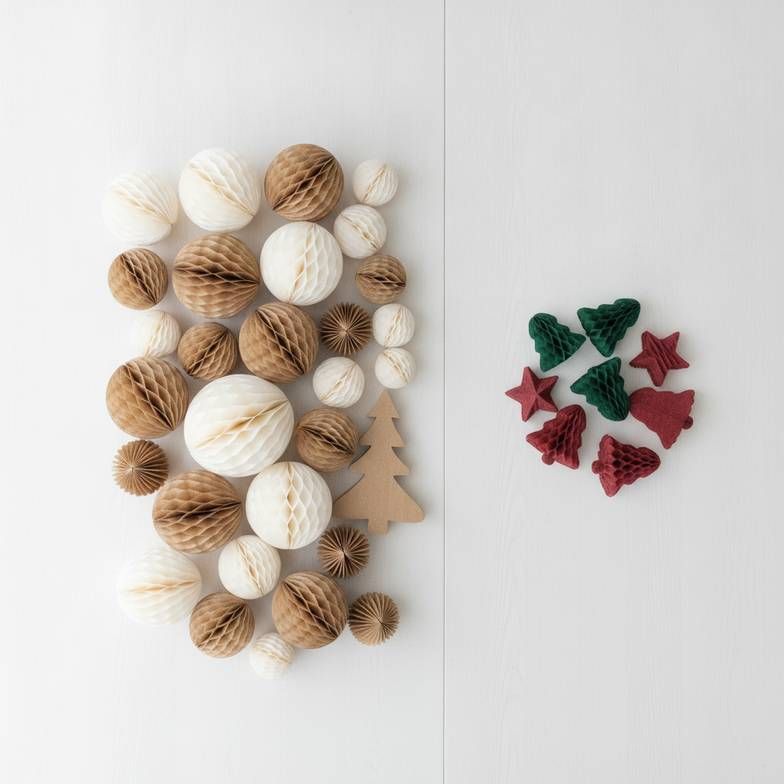
The 80%: Your Versatile Core Collection
This is the foundation of your seasonal decoration assortment. These items are designed for versatility and longevity.
- Characteristics: Typically in neutral colors (white, cream, grey) or your primary brand colors. They feature classic, non-thematic shapes like spheres, fans, and diamonds.
- Function: These pieces provide the visual bulk of your display. They can be used for Christmas, then stored and reused for a spring event by simply changing the accent colors around them.
- Benefits:
- Higher ROI: You get more mileage out of each piece.
- Lower Risk: They are less likely to become dead stock.
- Brand Consistency: They reinforce your brand's visual identity year-round.
- Simplified Logistics: Ordering larger quantities of fewer SKUs is more efficient for you and your supplier.
For example, a large white honeycomb sphere can be a "snowball" in winter, a "cloud" in spring, or just a beautiful geometric shape for a general store promotion.
The 20%: Your High-Impact Seasonal Pieces
This is where you have fun and lean into the specific holiday theme.
- Characteristics: These items are explicitly seasonal. Think honeycomb Christmas trees, paper pumpkins for Halloween, or heart shapes for Valentine's Day. They often use bold, trendy, or holiday-specific colors.
- Function: They provide the specific seasonal context and create moments of delight. These are the pieces that make a display feel timely and special.
- Benefits:
- Thematic Clarity: They instantly signal the holiday or season.
- Creates Urgency: Their limited-time nature can drive foot traffic and interest.
- Freshness: They keep your displays from looking stale or repetitive.
The key is to use them sparingly as accents. They are the "spice" of your assortment, not the main course.
| Feature | 80% Core Assortment | 20% Seasonal Assortment |
|---|---|---|
| Color Palette | Brand colors, neutrals (white, gray, kraft) | Seasonal, trendy colors (red, green, pastels) |
| Shapes | Geometric (spheres, diamonds, fans) | Thematic (trees, hearts, pumpkins, stars) |
| Reusability | High (Multi-season use) | Low (Single-season use) |
| Inventory Risk | Low | High |
| Primary Goal | Build brand identity, provide visual weight | Create thematic novelty, drive urgency |
By following this 80/20 structure, you build a smarter, more sustainable, and cost-effective seasonal decoration assortment that works harder for your business.
How Do Product Specs Translate into Retail Risk?
Do you gloss over the technical specifications on a supplier's quote, focusing only on the picture and the price? Many buyers do. They see "folded dimensions" or "closure type" as minor details, only to realize their massive impact during a multi-store rollout when shipping costs soar or staff complain about setup times.
Every line item on a spec sheet is a direct indicator of operational cost, labor, and risk. Understanding how to translate these specs into real-world business consequences is crucial for protecting your budget and ensuring a smooth execution.

Dive Deeper: Reading a Spec Sheet Like a Risk Manager
As a manufacturer of foldable honeycomb decorations, we spend a lot of time discussing these details with clients. Why? Because we know these "minor" specs are where a program succeeds or fails. Here’s what you should be looking for.
Folded Dimensions: The Hidden Logistics Cost
The single biggest advantage of honeycomb paper decorations is their ability to ship flat. But not all "flat" is created equal.
- The Spec:
Folded Dimensions: 30cm x 15cm x 1cmvs.Open Dimensions: 30cm Diameter. - The Risk Translation: The magic is in that
1cmthickness. This small folded size means you can pack hundreds of units into a single master carton. This dramatically reduces freight costs (both sea and domestic) and warehouse storage space compared to rigid, non-collapsible decorations. When you're shipping to 500 stores, a 50% reduction in carton volume translates to tens of thousands of dollars in savings. Always ask for the folded dimensions and calculate your total shipment volume.
Closure Mechanism: Setup Time vs. Reusability
How the decoration is held open is one of the most critical—and overlooked—specs. The main options are adhesive strips or embedded magnets.
- The Spec:
Closure: Double-sided adhesive tapevs.Closure: Neodymium magnets. - The Risk Translation:
- Adhesive Tape: This is a one-time-use solution. It's cheaper upfront, but it means the store staff cannot collapse and store the decoration for reuse. It can also be tricky to align perfectly under pressure. For a display that will be thrown away after the season, it's a viable cost-saving option.
- Magnets: This is our preferred method for most retail programs. The magnets allow staff to open and close the decorations in seconds. This means faster setup, zero damage, and the ability to easily pack them away for next year. While the unit cost is slightly higher, the investment pays for itself in reduced labor and reusability. It turns a disposable item into a long-term asset.
Paper Quality & Color Consistency
"Paper" is not a sufficient description. The weight and finish of the paper determine the product's durability and visual quality.
- The Spec:
Paper: 80gsm dyed papervs.Paper: 120gsm coated paper. - The Risk Translation: Heavier paper (higher gsm) is more durable and less likely to tear during setup. The color consistency across a batch is also a critical quality check. When you’re creating a seasonal decoration assortment, you need the red honeycomb ball on the table to be the exact same shade of red as the large hanging fan in the window. A good supplier will have strict color matching and quality control processes. Always request a production sample to verify before approving a bulk order.
What Questions Should a Strategic Supplier Ask About Your Seasonal Decoration Assortment?
Have you ever had a supplier who only wants to know what SKU you want and how many units you need? This is a red flag. A supplier who only takes orders is a vendor. A supplier who asks probing questions about your business is a partner.
A strategic manufacturing partner knows that the product is only one part of the equation. They should be asking questions that reveal your operational challenges and business goals, helping you co-create a seasonal decoration assortment that isn't just beautiful, but practical and profitable.

Dive Deeper: Vetting Suppliers by the Questions They Ask
The quality of a supplier is often revealed in the first discovery call. A partner who is invested in your success will move beyond the product and dig into the context of its use. Here are the kinds of questions we ask, and why they are so important for you, the buyer.
Questions a Great Supplier Will Ask:
- "What is your store footprint like? Are your ceilings high or low?"
- Why it matters: This helps them recommend the right scale of decorations. There's no point suggesting giant hanging pieces for a store with 8-foot ceilings. They are trying to match the product to the environment to maximize impact.
- "Who will be setting up these displays? Are they trained visual merchandisers or general store staff?"
- Why it matters: This question gets to the heart of operational feasibility. If general staff are doing the setup, simplicity is key. This might lead to recommending products with magnetic closures, pre-attached strings, and simple instructions to minimize setup time and frustration.
- "What is your rollout schedule? Do all stores launch on the same day?"
- Why it matters: This informs production and shipping timelines. A staggered rollout may require different packing configurations (e.g., pre-sorted kits per store) versus a bulk shipment to a central distribution center. It shows they are thinking about your downstream logistics.
- "How are these decorations being packaged? For individual sale or as part of a display kit?"
- Why it matters: Packaging is a critical component. Retail-ready packaging with barcodes is very different from bulk packaging for a VM team. A good partner will help you design packaging that protects the product, minimizes waste, and serves its end purpose.
- "What happens to the decorations after the season? Are they stored for reuse or disposed of?"
- Why it matters: This question determines the required durability and material choices. If reuse is the goal, they should be recommending more durable paper and magnetic closures. It shows they are thinking about your total cost of ownership, not just the initial sale.
When a supplier asks these questions, it's a sign that they have experience with retail rollouts and understand the hidden challenges. They are actively trying to prevent problems you might not have even thought of yet. This collaborative approach is the foundation of a successful, long-term sourcing relationship for your seasonal decoration assortment.
Frequently Asked Questions
What's the difference between a hero and a filler decoration?
A "hero" decoration is a large, high-impact piece designed to be a focal point, like a giant ornament in a store window. A "filler" decoration is a smaller, less expensive item used in larger quantities to carry a theme throughout the store, such as small honeycomb balls on shelves or tables.
Why is the closure mechanism (magnetic vs. adhesive) so important?
The closure mechanism directly impacts setup time and reusability. Adhesive tape is a permanent, one-time-use closure that is cheaper upfront. Magnetic closures cost slightly more but allow decorations to be opened and closed in seconds, making setup faster for staff and enabling the items to be collapsed for storage and reuse.
How early should I start planning my seasonal decoration assortment?
For major seasons like Christmas, we recommend starting the planning process 9-12 months in advance. This provides ample time for assortment strategy, custom design, sampling, production, and sea freight. Rushing the process often leads to compromised designs, higher air freight costs, and quality control issues.
What is a "planogram" and why does it matter for decorations?
A planogram is a visual diagram that shows exactly where products and decorations should be placed in a store to create a cohesive display. For a multi-store rollout, a clear planogram ensures every location executes the same visual merchandising vision, guaranteeing brand consistency and a professional appearance across the board.
Conclusion
Building a powerful seasonal decoration assortment is a science, not a shopping spree. It requires a strategic framework that moves beyond aesthetics to address the operational and financial realities of retail. By deconstructing your assortment into layers of hero and filler pieces, applying the 80/20 rule to balance core and seasonal items, and translating product specs into tangible business risks, you can transform your approach. This method reduces logistical burdens, controls costs, and ensures your vision is executed flawlessly across every store.
Ultimately, the most successful programs are born from a partnership with a supplier who understands your world. A partner who asks the right questions will help you anticipate challenges and build a collection that is not only beautiful but also intelligent and profitable.
If you're ready to build a smarter, more strategic seasonal decoration assortment, our team is here to help you plan. Contact us to discuss your next collection.