Honeycomb Paper Ornaments vs Rigid Decorations: A Retail Operations Comparison
Choosing decorations for a multi-store retail campaign feels like it should be a simple choice based on looks and price. But then the massive shipping quotes arrive, warehouse spac

Choosing decorations for a multi-store retail campaign feels like it should be a simple choice based on looks and price. But then the massive shipping quotes arrive, warehouse space disappears, and store managers complain about complicated setups. Suddenly, that initial "deal" on decorations becomes a major operational headache. Understanding the full operational lifecycle of honeycomb paper ornaments versus rigid decorations is the key to protecting your budget and ensuring a smooth campaign rollout.
The primary difference is operational efficiency: foldable honeycomb paper ornaments excel in temporary, multi-store campaigns due to drastically lower shipping and storage volume and faster, cheaper in-store setup. Rigid decorations, like those made from plastic, resin, or wood, are often better suited for single-location, long-term displays where logistics are less complex and durability against physical impact is the main priority.
The real question isn't "Which decoration is better?" but rather, "Which decoration's workflow fits my campaign?" This shift in perspective—from visual appeal to operational feasibility—is what separates a stressful, budget-breaking campaign from a smooth and profitable one. Let's break down what that means for your team.
Is the Unit Price the Real Cost of Your Decorations?
You get a quote for some beautiful rigid plastic snowflakes, and the unit price looks fantastic—maybe even lower than paper alternatives. It feels like an easy win for your budget. But that number is dangerously deceptive. It completely ignores the cost to ship and store those bulky, non-collapsible items for dozens or even hundreds of stores. Let's reframe the question from "What's the item cost?" to "What's the total landed cost per store?"
The real cost of your decorations includes shipping, warehousing, and even disposal. While rigid decorations may have a lower initial unit price, their logistical expenses often make foldable honeycomb paper ornaments a far more cost-effective solution for large-scale rollouts.
Dive Deeper: Calculating the Hidden Costs of Volume
The single biggest hidden cost in retail display logistics is volumetric weight. Shipping carriers charge for either the actual weight of a box or the space it takes up in a truck or container—whichever is greater. Rigid, three-dimensional items are a classic example of where this gets expensive.
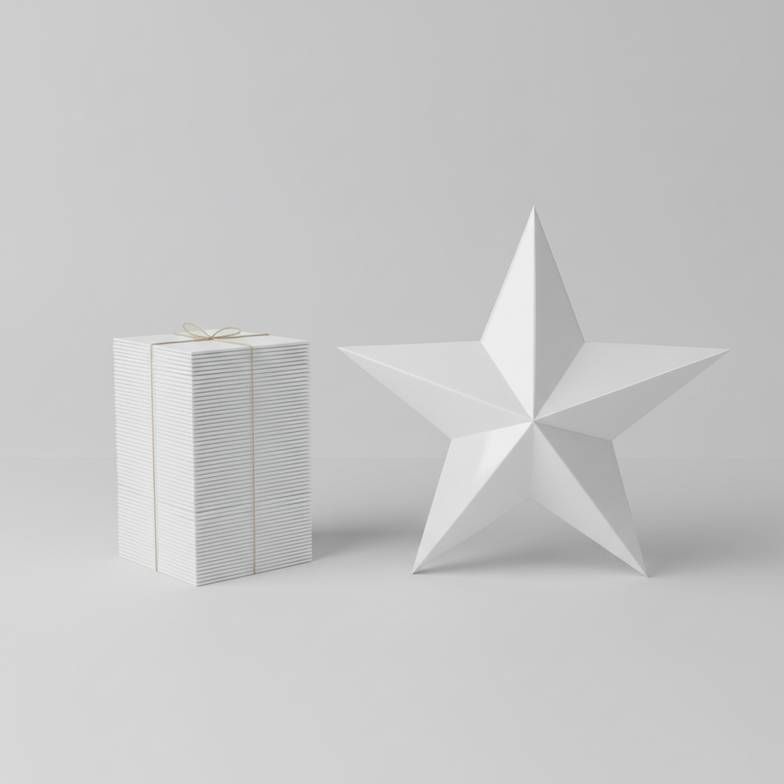
I've had many conversations with buyers who are shocked by their freight quotes. A common scenario I see is a buyer comparing 1,000 large plastic stars to 1,000 of our large honeycomb paper stars.
- The Rigid Stars: They might ship only 20 to a large carton because they don't collapse. That's 50 cartons total.
- The Honeycomb Stars: They ship flat. We can easily pack 200 into a carton of the same size. That's just 5 cartons total.
You're paying to ship air. The shipping cost for the rigid stars could be 10 times higher, completely erasing any savings on the unit price. Savvy buyers don't just ask for a price list; they ask for the packed carton dimensions and weight for their total order quantity. That's when the true cost comparison begins.
Warehousing and the Total Cost of Ownership (TCO)
The cost doesn't stop when the items land at your distribution center. Where will you store them?
- Rigid Decorations: Consume a massive amount of valuable warehouse space. If you plan to reuse them next year, you're paying to store them for 10-11 months.
- Honeycomb Paper Ornaments: The entire campaign's worth of decorations might fit on a single pallet or a few shelves. Their storage cost is minimal.
Here’s a simple breakdown of how the costs stack up:
| Factor | Rigid Decorations (e.g., Plastic, Wood) | Honeycomb Paper Ornaments |
|---|---|---|
| Unit Price | Often appears lower | Can be higher depending on complexity |
| Shipping Cost | Very high due to volumetric weight | Very low because they ship flat |
| Warehousing Cost | High, requires significant square footage | Low, highly compact storage |
| Labor Cost (Setup) | Often high, can require tools/multiple people | Very low, typically one person with no tools |
| Total Landed Cost | Deceptively high for multi-store rollouts | Predictable and often much lower overall |
When you look at the total cost of ownership—from the factory to your store floor and back to the warehouse—the math changes dramatically.
How Do Honeycomb Paper Ornaments Impact In-Store Labor?
Your beautiful new displays have arrived safely at all 200 of your stores. Success! Or is it? A week later, you learn that they require two people, a ladder, and special tools to assemble, taking over an hour for each window display. Your store staff, who are already busy with customers, are frustrated. Labor hours are piling up, and the displays don't even look consistent from store to store.
Evaluating the setup and takedown process is just as critical as evaluating the unit price. It directly impacts your payroll and the final look of your campaign.
Honeycomb paper ornaments can dramatically reduce in-store labor costs. Their lightweight, foldable nature allows a single employee to set up a complex and impressive display in minutes with no special tools, unlike heavy or complicated multi-part rigid decorations.

Dive Deeper: The "One-Person, Five-Minute" Rule
For visual merchandising managers planning multi-store rollouts, ease of execution is everything. The ideal decorative element is one that can be unpacked and installed by one person in just a few minutes. This is where honeycomb paper shines.
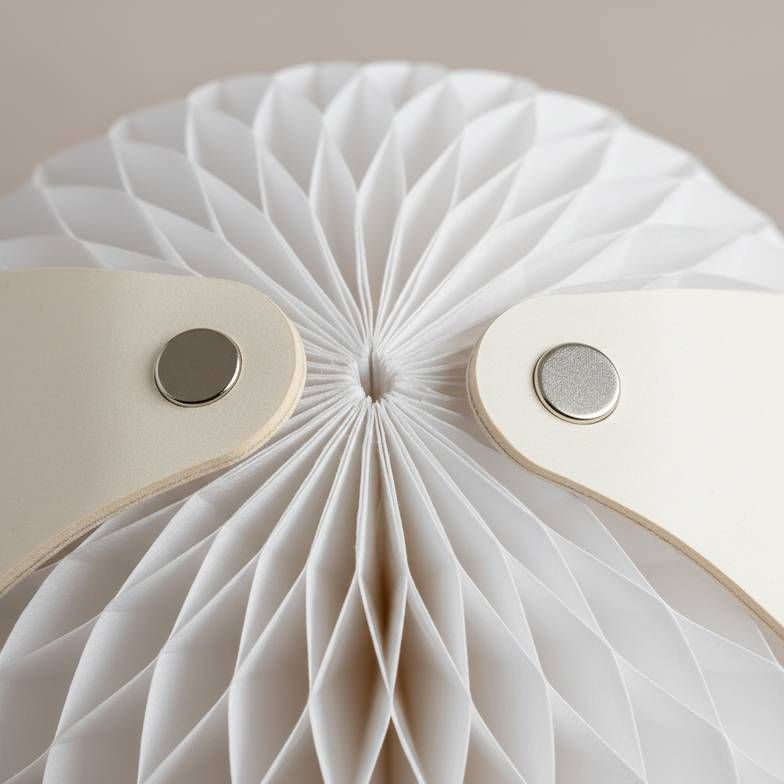
Most of our honeycomb decorations use simple, intuitive closures like embedded magnets or clips. The process for store staff is simple:
- Remove the flat-packed ornament from the box.
- Gently fan it open into its full 3D shape.
- The magnets snap together, holding it securely.
- Use the attached string to hang it from the ceiling or a fixture.
Contrast this with a large rigid mobile that needs to be assembled, balanced, and hung by two people on ladders. Or a plastic display that needs to be screwed onto a base. A five-minute setup versus a 45-minute setup, multiplied by hundreds of stores, represents a massive savings in labor.
A retail operations director for a national apparel brand once told me they switched to honeycomb paper ornaments for their holiday campaign for one reason alone: it cut their estimated in-store setup time by 75% across 500 locations. The labor savings dwarfed the difference in unit cost.
Consistency Across Your Brand
Another benefit of simple execution is brand consistency. When a display is easy to set up, it’s far more likely to look the same in your flagship New York store as it does in a small-town mall location. Complicated setups invite improvisation and error, leading to off-brand and inconsistent presentations. Foldable paper decor is practically foolproof, ensuring your creative vision is executed faithfully everywhere.
The benefits extend to takedown, too. At the end of a promotion, staff can collapse the ornaments in seconds, pack them neatly into a small box for storage, and move on. There's less risk of damage compared to trying to handle brittle plastic, and disposal is much simpler if the items aren't being reused.
Are Honeycomb Paper Ornaments Durable Enough for Retail?
When buyers hear the word "paper," they often think "fragile." You might worry that the decorations will tear during setup or look worn and tired before the promotion is even over, making them a wasteful one-time-use item. This is a valid concern, but it comes from a misunderstanding of what "durability" means in a retail campaign context.
For a temporary seasonal campaign, the durability of high-quality honeycomb paper ornaments is defined by their structural integrity and their ability to be opened and closed repeatedly without tearing. The quality of the paper itself and, most importantly, the closure mechanism are the key factors to evaluate for reuse.
Dive Deeper: Redefining "Durability" for Your Campaign
It's important to match the type of durability to the application.
- Durability for Rigid Decor: This usually means impact resistance. Can it survive a fall from a shelf without cracking? Is it weatherproof for outdoor use? This is essential for permanent fixtures.
- Durability for Honeycomb Paper: This means tensile strength and fold memory. Will the glue seams hold? Does the paper resist tearing as it's fanned open? Will the closure hold for the duration of the display?
For a six-week indoor Christmas promotion, an ornament doesn't need to withstand a hailstorm. It needs to look great and hold its shape. A well-made paper ornament can easily do this. The key is in the construction, which is something you should inspect closely when you receive samples.
The Critical Role of the Closure Mechanism
If you plan to reuse your decorations for future campaigns, the closure is the most important feature to examine.
- Double-Sided Tape: This is the budget option. It works perfectly well for a single use, but trying to pull the tape apart to collapse the ornament often results in tearing the paper. It's ideal for one-off events where cost is the top priority.
- Embedded Magnets: This is the premium choice for reusability. Small, strong magnets are embedded in the paperboard ends, allowing the ornament to snap open and be pulled apart effortlessly. A decoration with good magnets can be used for years, making it a sustainable and cost-effective asset.
When we send samples to clients, I always tell them to open and close the ornament 10 or 20 times. How does it feel? Do the magnets click securely into place? Does the paper show any signs of stress at the folds? An ornament that can be easily folded back into its compact form is an asset for next year's campaign. An ornament that has to be torn down is just an expense.
Frequently Asked Questions
How does shipping volume differ between honeycomb paper and rigid decorations?
The difference is often dramatic. Foldable honeycomb paper ornaments can reduce shipping volume by 80-90% compared to their rigid counterparts because they are shipped flat. This translates directly into lower freight costs, especially for international shipments or multi-store rollouts where volumetric weight is a key pricing factor.
Can honeycomb paper ornaments be customized for a brand's specific colors?
Yes, most manufacturers, including us at Mypaperbloom, offer color customization, often using Pantone (PMS) codes to match your brand identity precisely. This typically requires a minimum order quantity (MOQ) to justify a custom paper run. It's a fantastic way to create a cohesive seasonal collection that is unique to your brand.
What's the best closure method for reusable honeycomb decorations?
For reusability across multiple seasons, embedded magnets are by far the superior choice. They allow the ornament to be opened and closed dozens of times without damaging the paper. While double-sided adhesive is a more budget-friendly option, it's typically best for single-use displays as it can tear the paper upon removal.
Are large-format honeycomb paper decorations stable for floor displays?
Absolutely. When engineered correctly, large-format honeycomb structures are surprisingly strong and stable. We create items like foldable paper stools, benches, and display plinths that can support significant weight. The key is the density of the honeycomb cells and the overall structural design. For any large, floor-standing piece, you should always confirm its load-bearing capacity and specifications with the manufacturer.
Conclusion
Ultimately, the choice between rigid decorations and honeycomb paper ornaments is not about which material is universally "better," but which one aligns with your company's operational reality. If you're decorating a single, permanent space, the durability of a rigid item might be the right call. However, for temporary, multi-store seasonal or promotional campaigns, the operational advantages of honeycomb paper are undeniable. They consistently deliver a lower total cost of ownership by dramatically reducing expenses in shipping, warehousing, and in-store labor, all while ensuring brand consistency. The smart choice comes from looking past the unit price and analyzing the entire lifecycle of the product.
Ready to explore how foldable decorations can streamline your next retail campaign? Contact us at Mypaperbloom to discuss your project. We can help you build a smarter operational plan that saves you money and makes life easier for your entire team.