Honeycomb Paper Display Stands Wholesale: Round Columns, Plinths and Modular Sets
Finding affordable, lightweight, and visually striking fixtures for your retail environment can be a real challenge. You're drawn to innovative options, but you worry about their s

Finding affordable, lightweight, and visually striking fixtures for your retail environment can be a real challenge. You're drawn to innovative options, but you worry about their stability and longevity. When it comes to wholesale honeycomb paper display stands, the solution isn't just about finding the lowest price; it's about matching the product’s construction to your specific application to avoid the risk of a display collapsing or looking worn out before your campaign ends.
The best choice between a round column, a plinth, or a modular set depends entirely on your display needs. Factors like foot traffic, the weight and size of the products you're displaying, and how often you plan to reuse the stand are critical. The true quality of honeycomb paper display stands is found in the paper weight (GSM), the density of the honeycomb cells, and the durability of the closure mechanism, which all contribute to stability and a premium appearance.
Now that you have the direct answer, let’s explore the details. Understanding these factors will help you source with confidence, ensuring your displays not only look great on day one but perform reliably for their entire intended lifespan.
What Really Defines the Quality of Honeycomb Paper Display Stands?
You're looking at a supplier's catalog, and you see specifications like paper weight and dimensions. But what do those numbers actually mean for the display you're putting in your store? It’s easy to assume all paper stands are the same, but the hidden details are what separate a wobbly, cheap-looking unit from a sturdy, premium one.
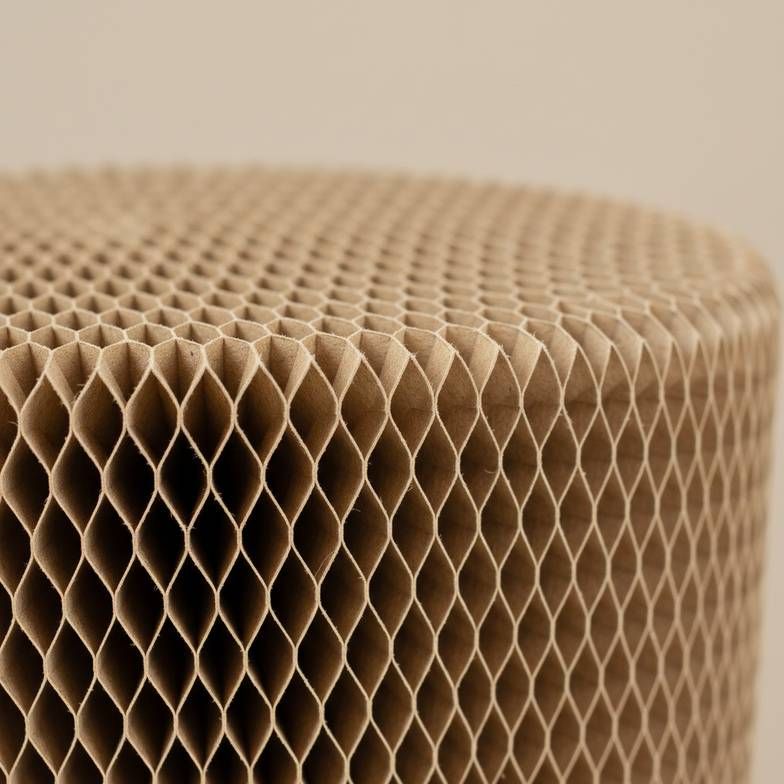
The quality of honeycomb paper display stands is determined by three key factors: the paper's weight (GSM), the honeycomb cell density, and the closure mechanism (like magnets or Velcro). Together, these elements dictate the stand's stability, edge sharpness, and overall durability, especially if you plan on reusing it.
Dive Deeper
Let's break down exactly what you should be looking for. From my experience working with retail brands on multi-store rollouts, these are the technical details that have the biggest impact on real-world performance.
Paper GSM: The Foundation of Durability
GSM stands for "Grams per Square Meter." It's a standard measure of paper thickness and density. While a lower GSM might make a product cheaper, it comes with significant trade-offs for structural items.
- Low GSM (e.g., 120-180 GSM): This paper is lighter and more flexible. It's perfectly fine for small, purely decorative hanging ornaments. However, when used for a load-bearing plinth or column, it can lead to softer edges that crush easily and a structure that is more susceptible to dents and moisture damage.
- High GSM (e.g., 250-350 GSM): A heavier paper creates a much more robust and rigid structure. The edges of the honeycomb cells are sharper and crisper, giving the display a more premium, finished look. Most importantly, it provides better resistance to compression and everyday bumps, which is essential in any retail environment. When sourcing a stand to hold products, always ask about the GSM and lean towards a higher number for better durability.
Honeycomb Cell Density: The Secret to Stability
The "honeycomb" structure itself is a feat of engineering, providing incredible strength for its low weight. However, not all honeycomb is created equal. The size of the individual cells matters immensely.
- Large Cells: A structure with larger, more open cells uses less paper and is therefore less expensive to produce. The downside is reduced compressive strength. It may be fine for displaying a very lightweight item like a scarf, but it's not suitable for a stack of books or a ceramic vase.
- Small, Dense Cells: A denser pattern with smaller cells creates significantly more vertical support columns within the stand. This distributes weight more evenly and drastically increases the load-bearing capacity and overall stability. When I consult with clients on a custom project, we always discuss the intended load to ensure the cell density is appropriate. For anything other than light decorative use, a denser cell structure is non-negotiable.
Closure Mechanisms: Magnets vs. Velcro
A foldable honeycomb stand needs a way to secure it in its open, cylindrical, or square shape. The two most common methods are magnets and Velcro (hook-and-loop).
- Velcro: This is often the less expensive option. It works well for a display that will be set up once and left in place for an entire season. However, Velcro's grip can weaken over time with repeated opening and closing. The fibers can also collect dust and lint, making it look messy and reducing its effectiveness.
- Magnets: Embedded magnets provide a clean, seamless closure that snaps into place perfectly every time. This is the superior choice for any display that needs to be collapsed for storage and reused, such as for trade shows, pop-up shops, or rotating seasonal campaigns. The initial cost is slightly higher, but the reliability and longevity more than make up for it. From what we've seen, the most common point of failure for reused stands isn't the paper—it's a worn-out Velcro closure.
How Do I Choose Between Plinths, Columns, and Modular Honeycomb Paper Display Stands?
Walking into the sourcing process, you might just be looking for "a paper stand." But the options—round columns, square plinths, interlocking modular sets—can be overwhelming. Choosing the wrong format for your space can lead to an unstable display or a missed merchandising opportunity.
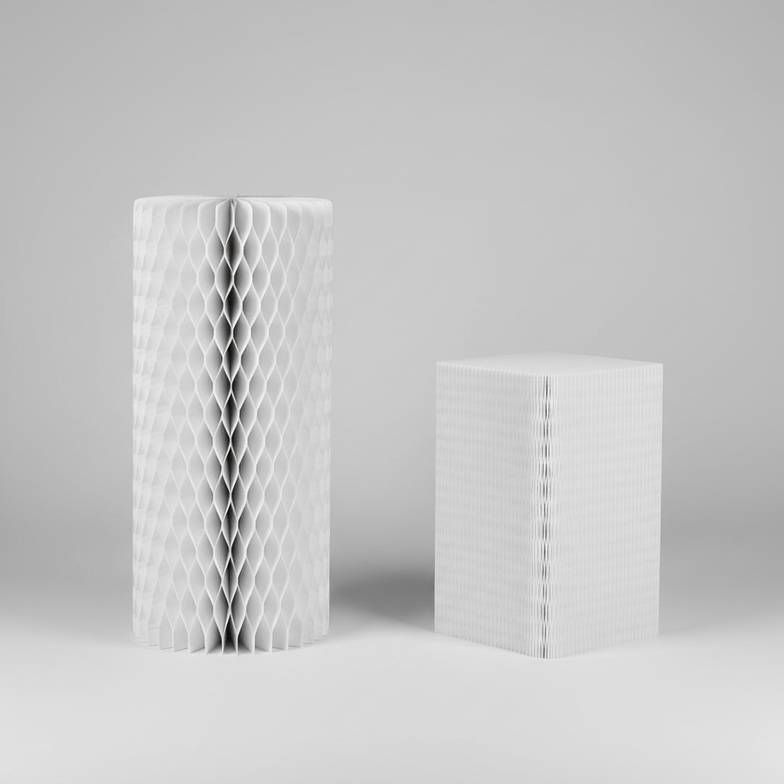
The right format depends entirely on your application. Square plinths are ideal for static, corner-based displays holding stable items. Round columns are better for high-traffic areas as they guide flow. Modular sets offer the most creative freedom but require careful evaluation of their connection points to ensure stability.
Dive Deeper
Let's frame this not as "which is best?" but "which is right for my specific goal?" The answer lies in analyzing your environment, the products you're displaying, and your creative vision.
When to Use Round Columns
Round columns are visually dynamic and tend to draw the eye. Their lack of sharp corners makes them an excellent choice for central floor spaces or areas with high foot traffic, as people can move around them easily.
- Best For: Highlighting a single hero product, creating visual height in a display, or use in walkways and open areas.
- Considerations: A round top surface can be less stable for precariously balanced or oddly shaped items compared to a flat plinth. Ensure the diameter is wide enough to securely support your product's base. From our experience, a wider, shorter column is often more stable than a tall, narrow one.
The Case for Square Plinths
Square or rectangular plinths are the workhorses of retail display. Their flat sides allow them to sit flush against walls or back-to-back with other fixtures, maximizing floor space.
- Best For: Corner displays, creating tiered product arrangements, supporting heavier or boxy items, and building structured, geometric layouts.
- Considerations: Their sharp corners can be a snag point in very tight aisles. They provide a solid, predictable base, making them a safe bet for most static merchandising needs. We often recommend these for displaying products like shoes, handbags, or packaged goods.
The Trade-offs of Modular Sets
Modular sets, which might include plinths and columns of varying heights and shapes, offer incredible creative flexibility. You can stack them, arrange them, and reconfigure them to create unique, custom-looking installations. However, this flexibility comes with a trade-off.
- Best For: Creating dynamic, multi-level window displays, adaptable pop-up shops, or visual stories that evolve over a campaign.
- Considerations: Stability is your primary concern. When you stack modular pieces, you introduce multiple points of potential failure. You must verify how the pieces connect. Do they simply rest on top of each other? Do they have interlocking lips? A single, well-built column of the correct height may be more stable and cost-effective than a wobbly stack of modular blocks.
Here is a simple table to help guide your decision:
| Feature | Round Columns | Square Plinths | Modular Sets |
|---|---|---|---|
| Best For | High-traffic areas, hero items | Static displays, stable products | Creative, multi-level layouts |
| Stability | Good (especially wider bases) | Excellent (flat, stable surface) | Variable (depends on stacking) |
| Flexibility | Moderate | Low (fixed shape) | High (reconfigurable) |
| Footprint | Efficient in open space | Space-efficient against walls | Adaptable to space |
How Can I Vet a Supplier's Load-Bearing Claims?
You’ve found a supplier, and their product page claims a honeycomb paper plinth can hold 50kg. That sounds great, but a healthy dose of skepticism is your best tool as a buyer. An exaggerated claim can lead to collapsed displays, damaged products, and a major headache for your retail team.
Never take a manufacturer's load-bearing claims at face value, especially without context. The single best way to verify performance is to request a production-grade sample of the honeycomb paper display stand and test it yourself with the actual products you intend to display in a simulated environment.

Dive Deeper
Verifying these claims is a critical part of risk management. A common question we get from buyers is about the maximum weight, but that's only half the story. Here is the framework we recommend for due diligence.
Ask the Right Questions: Static vs. Dynamic Load
A supplier’s test was likely done under ideal lab conditions: a "static load" where a weight is placed carefully in the center and left untouched. Your retail floor is not a lab. It's a "dynamic load" environment.
- Static Load: The pure, downward force of an object at rest. This is what most spec sheets refer to.
- Dynamic Load: This includes jostling from customers, vibrations from the floor, and the impact of someone bumping into the display. A stand that holds 20kg statically might topple if a customer brushes against it forcefully.
Instead of asking, "How much weight can it hold?" ask better questions:
- "Under what conditions was your load test performed?"
- "How does the stand hold up to off-center loads?"
- "What is your recommendation for a high-traffic vs. a low-traffic environment?"
The Importance of a Physical Sample
This is the most crucial step. A photo or video is not enough. You need to touch and feel the product. When you get the sample:
- Assemble and Disassemble It: Pay close attention to the closure. Does it feel secure? Do the magnets align easily?
- Test with Your Product: Place your actual product on it. Don't just place it gently—give it a light nudge to simulate a customer interaction. Does it feel top-heavy? Does it wobble?
- Leave it Overnight: Place a weight on it and leave it for 24 hours. Check for any signs of compression, sagging, or deformation in the morning.
- Inspect the Edges: Look at the top and bottom edges. Are they crisp and sharp, or do they feel soft and easy to crush? This tells you a lot about the paper quality (GSM).
Look for Real-World Proof
Ask the supplier for case studies or photos of their honeycomb paper display stands being used in a real retail environment—not just a product photo studio. Seeing their columns and plinths in a busy store, holding actual merchandise, is a powerful form of social proof. If they can't provide this, it may be a red flag that their experience is limited.
Experience with Structural vs. Decorative Products
Finally, ask about their manufacturing history. Is this a factory that primarily makes delicate paper garlands and hanging fans? Or do they have specific experience and production lines dedicated to structural, load-bearing items? A manufacturer experienced in making honeycomb furniture or large-format display structures will have a much deeper understanding of the engineering required than one who is new to the category.
Frequently Asked Questions
How many times can a honeycomb paper display stand be folded and unfolded?
This largely depends on the closure mechanism. Stands with strong, embedded magnets can be reused dozens of times with minimal wear. Models with Velcro closures are better for single-use or long-term displays, as the hook-and-loop system can lose its grip and collect debris over time.
What's the difference between honeycomb paper and regular cardboard for displays?
While both are paper-based, they serve different purposes. Cardboard displays are typically die-cut and folded into a fixed shape. Honeycomb paper's main advantage is its incredible strength-to-weight ratio and its ability to collapse into a flat, compact form for efficient shipping and storage, then expand into a large 3D structure.
Can I customize the color and size of wholesale honeycomb paper stands?
Yes, most manufacturers, including us, offer extensive customization. You can typically specify dimensions (height and diameter/width), paper color to match your brand or campaign palette, and even custom-printed top surfaces. Always discuss Minimum Order Quantities (MOQs) and production lead times for custom orders.
Are honeycomb paper display stands sustainable?
They are often a more sustainable choice compared to plastic or acrylic fixtures. They are made from paper, a renewable resource. However, you should always verify a supplier's specific claims. Ask if the paper is FSC-certified and confirm whether the product is fully recyclable in your local system, as some components like magnets may need to be removed.
Conclusion
Choosing the right wholesale honeycomb paper display stands is about more than just aesthetics and price. It’s a calculated decision to mitigate risk and ensure your investment performs. By shifting your focus from "which is cheapest?" to "which is best for my specific context?", you empower yourself to source smarter. Remember to evaluate the environment, inspect the material quality (GSM and cell density), test the closure mechanism, and thoroughly vet your supplier's claims by getting a physical sample. This thoughtful approach ensures your displays will be stable, durable, and effective, reflecting the quality of the products they are built to showcase.
If you are planning a retail campaign and need reliable, foldable display solutions, our team has deep experience in matching structural paper products to commercial needs. Contact us to discuss your project specifications and to arrange for a sample.