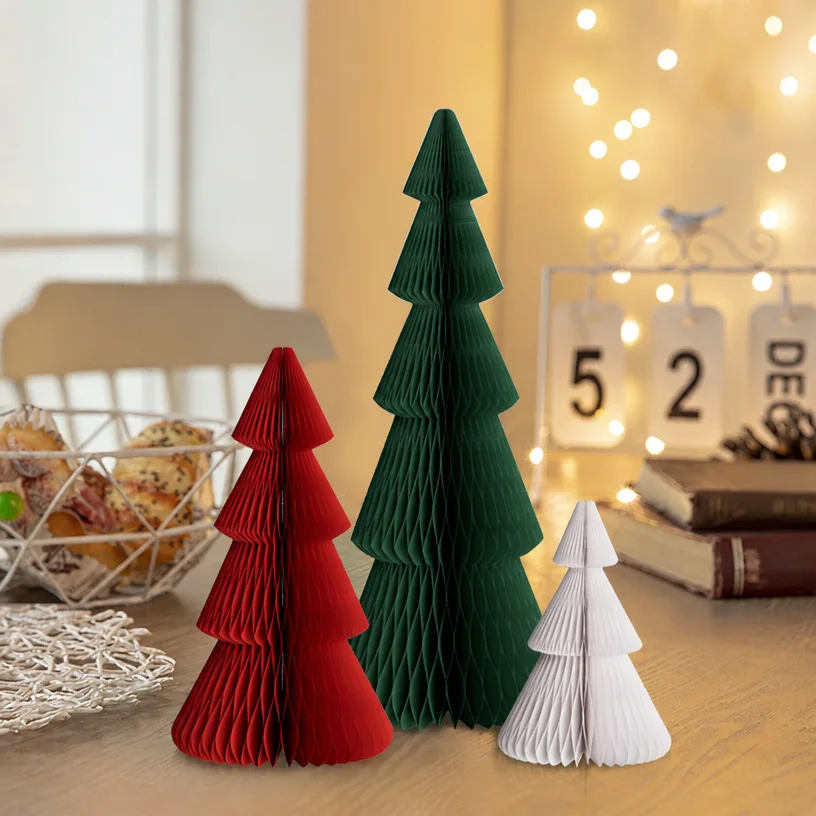
Honeycomb Paper Decorations Manufacturer: 12 Questions to Ask Before Placing an Order
Struggling to find a reliable supplier for your next seasonal collection? You know that sourcing honeycomb paper decorations manufacturers can feel like a gamble, with quality, tim
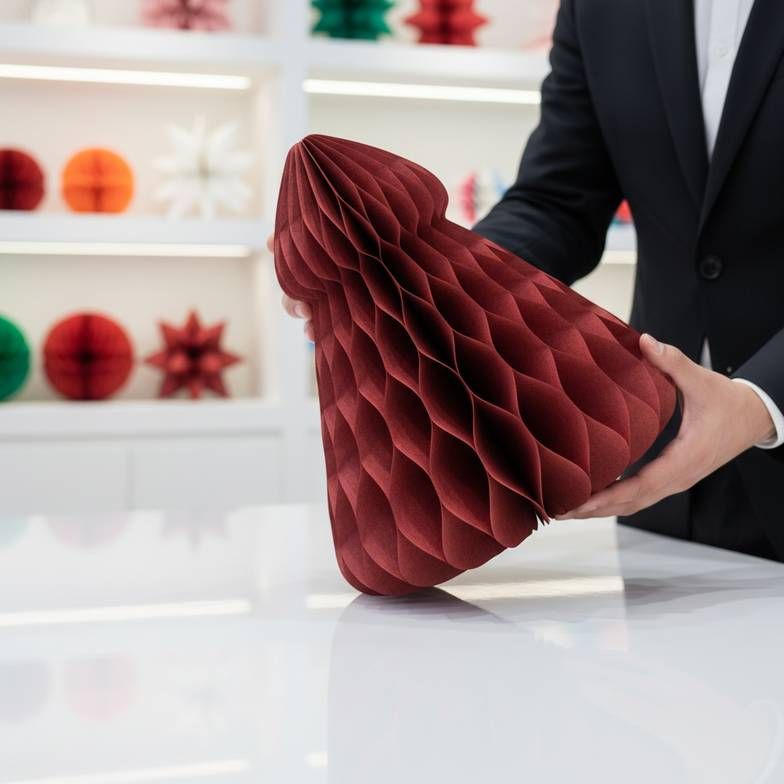
Struggling to find a reliable supplier for your next seasonal collection? You know that sourcing honeycomb paper decorations manufacturers can feel like a gamble, with quality, timelines, and budgets on the line. The fear of receiving a shipment that doesn't match the sample, arrives too late, or incurs hidden costs is real. The key to mitigating these risks lies in asking the right questions—questions that go far beyond a simple price quote.
When evaluating a honeycomb paper decorations manufacturer, professional buyers should ask about the total cost of ownership, not just unit price. This includes questioning folded vs. open dimensions (shipping volume), closure mechanisms (reusability), packaging solutions (product protection), the scope of customization beyond color, material specifications for the intended application, and the manufacturer’s documented quality control and verification processes.
Asking for a catalog and a price list is just the first step. The truly critical information isn't always on the sales sheet. These 12 questions are designed to help you peel back the layers and understand a manufacturer's true capabilities, turning a simple sourcing task into a strategic partnership. Let's get into it.
What Really Determines the Total Cost of Honeycomb Paper Decorations?
New buyers often fixate on the unit price. It's a natural starting point, but it’s only a fraction of the story. You're worried about getting the best price, but the real costs are often hidden in logistics, labor, and product lifespan.
To get the full picture, you need to ask questions that reveal the Total Cost of Ownership. Think of it this way: a "cheaper" product that costs a fortune to ship, is difficult to assemble in-store, or falls apart after one use isn't cheap at all.
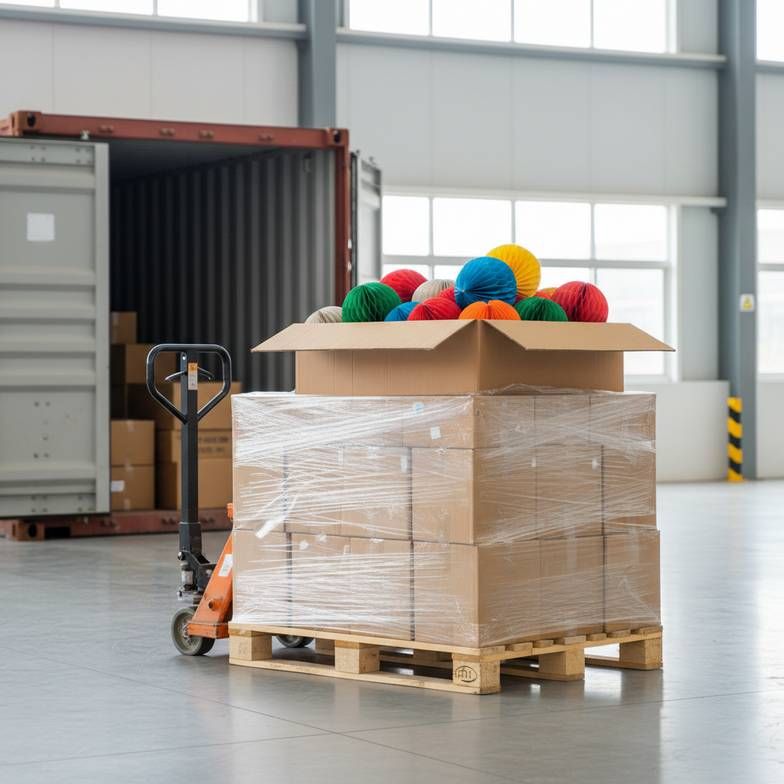
From my experience on the manufacturing side, the smartest buyers dig into the details that impact their budget long after the invoice is paid. Here’s how you can do the same.
1. What are the folded and open dimensions, and what is the carton size and weight?
This question seems simple, but it’s a powerful tool for forecasting your logistics costs. Honeycomb paper decorations are brilliant because they ship flat, but the volume difference between two similar-looking products can be huge.
Why it matters:
- Shipping Costs: Ocean and air freight are calculated by volumetric weight. A design that folds down more compactly can drastically reduce your shipping bill, especially for large orders.
- Warehousing: The folded size determines how much space you’ll need in your distribution center. More compact products mean lower storage costs and easier handling.
- Retail Footprint: Before it's sold, the product sits in a stockroom. Knowing the carton dimensions helps your retail operations team plan their space effectively.
When we get this question, I know the buyer is thinking about their entire supply chain. A weak answer would be just the product dimensions. A strong response from a honeycomb paper decorations manufacturer will include:
- Exact folded
(L x W x H)and open(Diameter x H)dimensions. - Standard carton dimensions and the number of units per carton.
- Gross weight of a full carton.
- An estimate of how many cartons fit on a standard pallet.
2. What closure mechanisms are available, and how do they affect reusability?
The way a honeycomb decoration is held open is critical. It impacts everything from in-store setup time to whether the product can be used for more than one season.
Why it matters:
- Labor Costs: For a multi-store rollout, imagine your visual merchandising team spending an extra five minutes per decoration fumbling with a difficult closure. Across hundreds of stores, that labor cost adds up fast.
- Reusability & ROI: Can the decoration be easily folded back up and stored for next year? This is a key concern for retailers who want to reuse props.
- Appearance: The closure should be discreet and secure, ensuring the decoration maintains its perfect shape while on display.
Here’s a quick breakdown of common options we work with:
| Closure Type | Best For | Pros | Cons |
|---|---|---|---|
| Magnetic | Reusable retail displays, high-end products | Fast setup, clean look, excellent for reuse | Higher unit cost, magnets add weight |
| Hook & Loop | Frequent reuse, applications needing adjustment | Strong hold, very durable, allows for minor adjustments | Can look bulky, may catch on delicate paper |
| Interlocking Tabs | Single-use events, cost-sensitive projects | Integrated into the design, very low cost | Can be tricky to assemble, tabs can tear easily |
| Double-Sided Tape | Permanent or single-use displays | Strong, permanent bond, very low cost | Not reusable, can damage the paper if repositioned |
When you ask this, you're not just asking about a feature; you're asking a honeycomb paper decorations manufacturer to help you solve for labor efficiency and long-term value.
3. Can you detail your standard packaging and options for custom retail packaging?
How the product arrives is just as important as the product itself. Damaged goods are unsellable, and poor packaging can ruin a product launch.
Why it matters:
- Product Protection: The packaging must be robust enough to survive transit from our factory to your warehouse and finally to the store floor.
- Merchandising: For products sold directly to consumers, the retail packaging is part of the appeal. It needs to be attractive, informative, and align with your brand.
- Efficiency: Is the product easy to unbox? Is there excessive waste? These things matter to your store teams and sustainability-conscious customers.
When a buyer asks us this, we break it down into two parts:
- Wholesale Packing: We explain our standard process, such as poly-bagging each item, packing a set number into an inner carton, and then into a master export carton. We focus on maximizing carton strength and pallet stability.
- Retail Packing Options: We discuss options like branded belly bands, printed header cards, or fully custom-printed boxes. We also discuss how these choices affect cost, MOQ, and production timelines. This is a core part of our private label and custom development service.
How Do You Evaluate a Manufacturer's Customization Capabilities?
Every buyer wants "custom," but the term means different things to different people. For some, it's just a custom Pantone color. For others, it's a completely new structure for a store window display. You're trying to bring a unique vision to life, but you're worried about the production risks.
A good honeycomb paper decorations manufacturer won't just say "yes" to everything. They'll act as a consultant, helping you understand the trade-offs between your design, production feasibility, and cost.

Let's look at the questions that separate a simple order-taker from a true development partner.
4. Beyond color, what structural or material changes can you support?
This is where you test the limits of a factory's R&D and engineering skills. Creating a new shape isn't just about cutting paper differently; it affects the entire structure of the honeycomb.
Why it matters:
- Design Integrity: Can the manufacturer translate your 2D concept into a stable, aesthetically pleasing 3D object? A poorly engineered structure might not open correctly or could collapse under its own weight.
- Innovation: A partner with strong structural capabilities can help you create truly unique, attention-grabbing displays that set your brand apart.
- Material Expertise: What if your design requires a heavier paper stock for durability or a specific finish for a luxury look? An experienced manufacturer will know how different materials interact with the honeycomb gluing process.
From a production standpoint, a seemingly simple request like making a sphere into an oval shape requires re-calculating the cell angles and glue lines. A great partner will be able to explain this process and point out potential challenges upfront.
5. How will my requested customizations affect the MOQ, lead time, and sample costs?
This is the "show me the money" question for customization. Every change has a ripple effect on the production process, and you need to know the full impact before you commit.
Why it matters:
- Budgeting: Custom colors require large batches of paper to be dyed, which means a higher MOQ. New cutting dies for custom shapes add tooling costs. You need these numbers to build an accurate project budget.
- Timeline Planning: Creating custom samples, getting them approved, and then sourcing special materials all add time to the production schedule. This is critical for seasonal programs with hard deadlines.
- Risk Assessment: If the MOQ for your dream design is 50,000 pieces but you only need 5,000, you need to know that early. A transparent manufacturer helps you find a balance between your vision and commercial viability.
Be prepared for the MOQ to increase for things like:
- Custom Pantone-matched paper: The paper mill has its own minimum run for custom dye lots.
- Unique structural shapes: New tooling and machine setup have fixed costs that need to be spread over a larger quantity.
- Custom-printed packaging: Printing presses are most efficient on high-volume runs.
6. What is your process for creating and approving pre-production samples?
The pre-production sample (PPS) is your single most important quality gate. It is the physical contract that says, "This is what I expect the bulk order to look like."
Why it matters:
- Quality Assurance: The PPS is your chance to check everything: color, dimensions, construction, closure mechanism, and packaging. It's your last chance to make corrections before thousands of units are made.
- Expectation Alignment: It ensures that your understanding and the manufacturer's understanding of the final product are identical.
- Dispute Resolution: If the bulk production does not match the approved PPS, you have clear grounds for raising a quality claim.
A professional honeycomb paper decorations manufacturer will have a formal, multi-stage sampling process:
- Counter-Sample: Based on your initial design brief.
- Color/Material Swatches: For approval before the sample is made.
- Pre-Production Sample: Made with the actual materials and methods intended for bulk production.
- Packaging Sample: To approve the retail and shipping boxes.
Don't ever skip the PPS step to "save time." In my experience, it's the most common cause of major sourcing disasters.
How Do You Verify Paper Quality and Durability?
Not all paper is created equal. The "best" paper quality is entirely contextual. You might be concerned about getting something that feels cheap or tears easily, but the solution is to match the paper specs to the product's intended use.
Is this a small, disposable ornament for a one-time event, or is it a large, freestanding structure for a flagship store window that needs to last for a six-week campaign? The paper requirements are completely different.
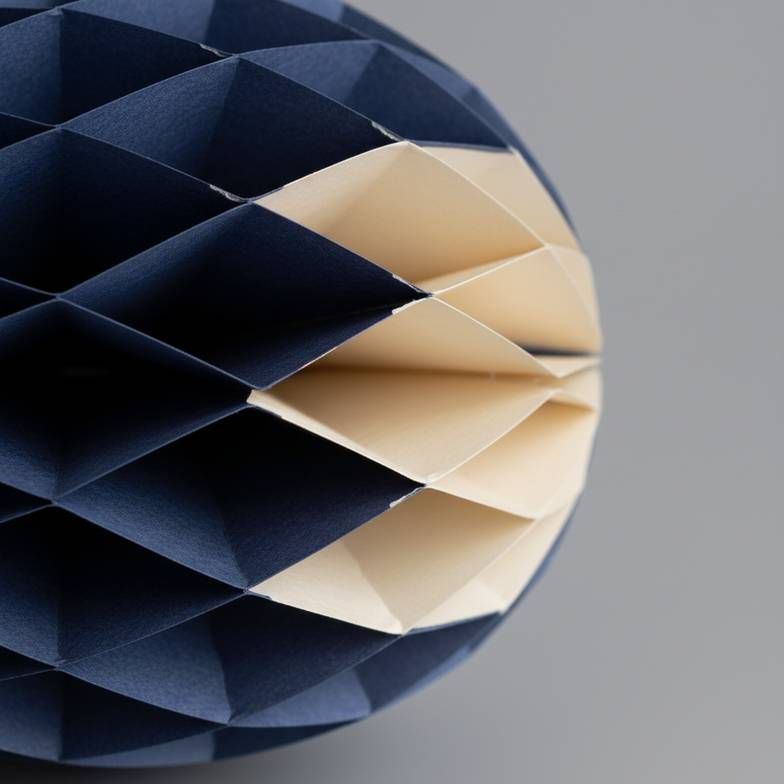
Here’s how to ensure you're getting the right material for your specific application.
7. What paper stocks (GSM, finish) do you recommend for my specific application?
This question shifts the conversation from a generic "is your quality good?" to a specific, technical discussion about fitness-for-purpose.
Why it matters:
- Durability: Heavier paper (measured in grams per square meter, or GSM) is generally stronger but also adds weight and cost. For large, hanging structures, a balance must be struck.
- Appearance: The paper's finish (e.g., matte, gloss, uncoated) affects the color vibrancy and overall aesthetic.
- Functionality: For a foldable paper stool or bench, the paper's compressive strength is the most critical factor. An experienced manufacturer will understand these technical requirements.
When a buyer asks this, it opens up a consultative dialogue. We might ask them:
- Will this be handled by customers in-store?
- How long will it be on display?
- Is it near a window with direct sunlight? (This relates to the next question).
This conversation helps us recommend the right paper stock, ensuring the final product performs as expected in its real-world environment.
8. Can you provide documentation for paper colorfastness and material composition?
For professional retail clients, this is non-negotiable. Colors that fade in a sunny window display or materials that don't meet market regulations can be a huge liability.
Why it matters:
- Brand Image: Faded, discolored decorations look cheap and reflect poorly on your brand.
- Regulatory Compliance: Many markets, particularly in the EU and North America, have regulations about the chemicals and dyes used in consumer products (e.g., REACH, Prop 65).
- Consistency: You need to know that the color of the 1,000th piece will be the same as the first. This requires a supplier who works with reliable paper mills and has good color management processes.
Instead of asking, "Is your paper colorfast?" ask, "Can you provide a test report for colorfastness to light for the red paper stock used in item #123?" This shifts the burden of proof. A capable honeycomb paper decorations manufacturer should be able to either provide existing reports for their standard materials or facilitate testing for your specific project. It shows they take material quality and compliance seriously.
What Proof Should You Request from a Manufacturer?
Ultimately, sourcing is about managing risk. You need to move from trusting a salesperson's promises to verifying their claims with documentation and clear processes. You're worried about factory legitimacy, production delays, and what happens if something goes wrong.
A reliable partner will be transparent and welcome your due diligence. Their willingness to provide proof is often as important as the proof itself. It signals a culture of quality and accountability.
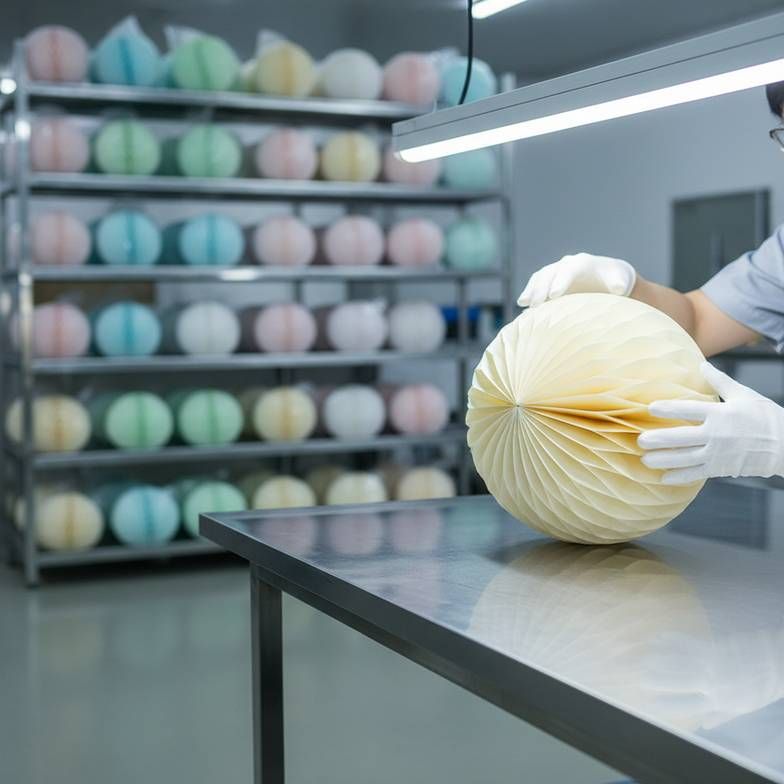
These final questions are about verifying the operational backbone of the honeycomb paper decorations manufacturer you're considering.
9. Can you provide copies of your business license and relevant certifications?
This is your first and most basic background check. It confirms you're dealing with a legally registered and legitimate business.
Why it matters:
- Legitimacy: A business license confirms the company's legal name, registered address, and business scope.
- Quality Management: Certifications like ISO 9001 indicate that the manufacturer has a structured quality management system in place. It doesn't guarantee a perfect product, but it shows a commitment to process and consistency.
- Social Compliance: For many retail brands, factory ethics are crucial. Audits like BSCI or Sedex provide insight into a factory's social and environmental practices.
Remember to treat these documents as a starting point. Always verify the authenticity of a certification with the issuing body. A good supplier will provide these documents without hesitation.
10. What are your quality control (QC) checkpoints throughout the production process?
This question gives you a window into how they prevent defects, rather than just catching them at the end.
Why it matters:
- Proactive vs. Reactive Quality: A factory that only does a final inspection will have a higher defect rate and more delays, as they have to scrap or rework bad products. Proactive QC saves time and money.
- Process Control: It shows they understand the critical points in honeycomb production: paper slitting, glue application, pressing, cutting, and final assembly.
- Traceability: If a defect is found, can they trace it back to a specific batch of raw materials or a production shift?
We explain our QC process in stages:
- IQC (Incoming Quality Control): We check raw paper for color consistency, GSM, and defects before it ever enters production.
- IPQC (In-Process Quality Control): We have checkpoints on the production line to monitor glue application and cell structure.
- FQC (Final Quality Control): We conduct a final inspection based on an AQL standard to check for visual defects, correct dimensions, and proper function before packing.
11. How do you manage production schedules to align with our seasonal retail deadlines?
For seasonal products, on-time delivery is everything. A shipment of Christmas decorations that arrives in January is worthless.
Why it matters:
- Timeline Reliability: You need a partner who understands the high stakes of seasonal retail and has a system for managing production capacity and deadlines.
- Communication: What happens if there's an unexpected delay (e.g., a material shortage or power outage)? A good manufacturer will communicate proactively and have contingency plans.
- Capacity Planning: An experienced manufacturer knows their peak seasons and won't over-promise on capacity, which is a common cause of delays.
When we discuss this with clients, we use a "backward planning" approach. We start with their in-store date and work backward, mapping out milestones for shipping, production, sample approval, and material sourcing. This creates a shared, realistic timeline that everyone is accountable for.
12. What are your procedures for handling non-conforming products or shipping discrepancies?
No manufacturer is perfect. Problems can happen. The true test of a partner is how they handle things when they go wrong.
Why it matters:
- Accountability: You need to know what your recourse is if you receive damaged goods or the wrong product.
- Risk Mitigation: A clear procedure for claims and resolutions reduces your financial risk and provides a predictable path to solving problems.
- Long-Term Partnership: A supplier who works with you to solve a problem fairly is one you'll want to work with again. A supplier who denies responsibility is a major red flag.
Ask for their formal procedure. A strong answer will include who to contact, the timeframe for filing a claim, the evidence required (photos, videos, inspection reports), and the potential resolutions (e.g., credit note, replacement stock, or rework). This isn't a negative question; it's a practical one that responsible business partners should be prepared to answer.
Frequently Asked Questions
What is a typical MOQ for custom honeycomb paper decorations?
There's no single answer, as it depends heavily on the level of customization. For standard designs in our existing colors, MOQs can be relatively low. However, for custom Pantone-matched paper or complex new structures, the MOQ will be significantly higher—often in the thousands of units—to meet the minimums from our own material suppliers.
How long does production and shipping take?
After the pre-production sample is approved, production typically takes 30-60 days, depending on order complexity and volume. Sea freight to North America or Europe can add another 30-45 days. It's crucial to start the sourcing process 4-6 months before your desired in-store date to build in buffers for design, sampling, and transit.
Can I get a sample before placing a large order?
Yes, and you absolutely should. We always recommend a multi-stage sampling process, culminating in a pre-production sample (PPS) that represents the final bulk order. While there's usually a fee for custom samples, it's a vital investment to ensure quality and alignment before committing to a large volume.
What’s the difference between honeycomb paper and tissue paper decorations?
Honeycomb paper is made by gluing sheets together in a specific pattern to create a cellular structure that opens into a 3D shape. It's generally denser, more structured, and more durable. Tissue paper decorations, like pom-poms, are typically made from layered, lightweight tissue sheets that are fluffed up to create a softer, less-defined shape.
Conclusion
Choosing the right honeycomb paper decorations manufacturer is less about finding the cheapest quote and more about identifying a capable, transparent, and reliable partner. By asking these 12 questions, you shift the conversation from price to value, from promises to proof, and from a simple transaction to a strategic collaboration. These questions are your framework for assessing risk and uncovering a supplier’s true ability to deliver on your vision, your timeline, and your quality standards. This due diligence is the foundation of a successful product launch and a profitable long-term partnership.
If you’re looking for a manufacturing partner who understands these complexities and is ready to help you navigate them, our team at Mypaperbloom is here to help. Contact us to discuss your next seasonal collection and see how we can bring your vision to life.