Graduation Dessert Display Stands: What Event Buyers Should Specify
Planning a graduation party means juggling a dozen details, and the dessert table is often the centerpiece. You're looking for stunning graduation dessert display stands that eleva

Planning a graduation party means juggling a dozen details, and the dessert table is often the centerpiece. You're looking for stunning graduation dessert display stands that elevate your event's theme, but you're also worried about a potential disaster. A wobbly, flimsy stand can collapse mid-event, turning a beautiful cake display into a messy, expensive problem. The key is to move beyond pretty pictures and specify a stand that is engineered for your exact needs.
When sourcing graduation dessert display stands, buyers should specify criteria beyond simple aesthetics. Focus on structural integrity, including base width and honeycomb cell density; the intended use case, which dictates the trade-off between portability and load capacity; verified reusability, such as the type of magnetic closure and the number of tested collapse/reopen cycles; and crucial logistical details like folded dimensions for storage and clear assembly time.
Getting these details right on your specification sheet is the difference between a reliable, impressive display and a last-minute panic. Let’s dive deeper into the questions you should be asking suppliers to de-risk your purchase and ensure your dessert table is remembered for all the right reasons.
How do you prioritize structural design over paper weight?
It’s easy to assume that a heavier paper, measured in grams per square meter (GSM), automatically means a stronger stand. I’ve seen many buyers fixate on this single metric, only to be disappointed. The real risk of collapse often comes from a poor structural design, not the paper itself. A stand made from thick paper can still tip over if its base is too narrow or fail if its internal structure isn't built to distribute weight effectively.
To avoid this common pitfall, you should shift your focus from material weight to engineering. The most critical factors for a stable and reliable paper dessert stand are the stability of its base, the density of its internal honeycomb cells, and the quality of its closure mechanism.
The Base: Your Foundation of Stability
The single most common point of failure we see is a narrow base. A tall, slender stand might look elegant, but it's an accident waiting to happen in a high-traffic area like a graduation party. A slight bump from a guest or a gust of wind at an outdoor event can send it toppling.
When writing your specs, prioritize a wide, stable base. Ask potential suppliers for the exact base diameter and compare it to the stand’s height. A good rule of thumb is that the base diameter should be at least half the total height, but wider is always better for stability. If you’re planning an event in a busy hall or outdoors, this is a non-negotiable specification. Don't just ask if it's "stable"—ask for the dimensions and make an informed decision yourself.
Honeycomb Cell Density: The Secret to Load-Bearing
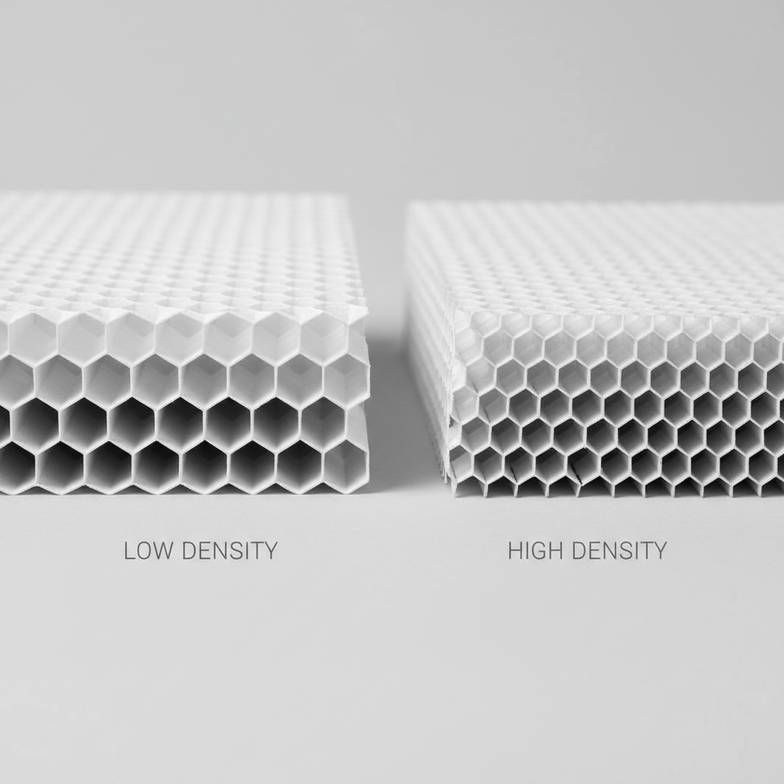
Not all honeycomb structures are created equal. The magic of these foldable displays lies in their internal hexagonal cells, which distribute vertical force. The size and density of these cells directly impact the stand's load-bearing capacity.
- Larger, open cells: These use less paper, making the stand lighter and often less expensive. However, they provide less vertical support and are more susceptible to crushing under a concentrated weight, like a tiered cake.
- Smaller, dense cells: These create a more rigid, robust structure. The force from the items on top is distributed across many more support points, significantly increasing the weight it can safely hold.
When you get a sample, open it up and look inside. You can immediately see the difference. For displaying anything heavier than light pastries or cupcakes, specify a stand with high-density honeycomb cells. You can ask suppliers for images of the internal structure or describe it in your request for quotation (RFQ).
Closure Mechanisms: Magnets vs. Adhesives
How the stand holds its circular shape is another critical detail. This choice primarily affects cost and reusability.
| Closure Type | Best For | Pros | Cons |
|---|---|---|---|
| Adhesive Strips | Single-use events | Lower cost, secure one-time closure. | Cannot be collapsed and reused, paper can tear upon disassembly. |
| Embedded Magnets | Multiple uses, rental inventory | Easy to open and collapse, allows for storage and reuse, more professional look. | Higher initial cost, magnet strength can vary between suppliers. |
A common question we get is about reusability. If you plan to use these graduation dessert display stands for multiple events, specifying strong, well-spaced magnetic closures is essential. If it's for a one-off party, a quality adhesive strip might be a more budget-friendly choice.
What defines your event's specific use case?
Buyers often email us asking for "the best" dessert stand. My first question back is always, "What is it for?" There is no single "best" stand, only the one that is best suited for your specific event. The right choice involves making conscious trade-offs between load capacity, portability, ease of assembly, and cost. Defining your use case first is the only way to write a spec that gets you a product you'll love.
Start by asking yourself a series of questions. The answers will form the core of your specification sheet. Answering these helps a supplier like us recommend the right product or customize a solution that truly fits, preventing you from overpaying for features you don't need or getting a stand that fails on event day.

Calculating Your Load Requirements
First, be realistic about what you'll be placing on the stand. Is it for a few dozen light cupcakes, or a heavy, multi-tiered graduation cake? Don't forget to account for the weight of plates or serving dishes.
- Estimate the total weight. A standard cupcake is about 100-150 grams. A small tiered cake can easily weigh over 5 kilograms. If you plan to display drink dispensers, the weight will be even higher.
- Specify a weight range. In your RFQ, state the maximum load you expect the stand to hold. For example: "The stand must be tested to support a distributed load of at least 10 kg without buckling or tipping."
- Ask for proof. Don't just take a supplier's word for it. Request test data or, even better, a sample that you can test yourself with items of equivalent weight. Place the weight on it and leave it for a few hours to see if any sagging or instability occurs. This simple test can save you a huge headache.
Portability and Storage: The Logistics Factor
Think about the stand's entire lifecycle. It arrives flat-packed, needs to be transported to the venue, and may need to be stored after the event.
- Folded Dimensions: How much space do you have in your storage room or vehicle? A stand that is beautiful when open but massive when folded might be a logistical nightmare. Ask for the "shipping" or "folded" dimensions and weight.
- Packaging: Will the stands be moved frequently? If so, you might want to specify durable packaging, like individual boxes, rather than bulk plastic wrapping. This is especially important for companies that rent out party supplies.
Assembly: Who is Setting This Up?
Will a team of professional event installers be setting up, or will it be a volunteer or a catering staff member with five minutes to spare? The complexity of assembly is a crucial factor.
As a manufacturer, we've designed our foldable honeycomb stands to be opened in seconds with no tools. However, some complex multi-part stands from other suppliers can be tricky. Be clear about your needs:
- "Assembly must take less than one minute per unit."
- "No tools or additional personnel should be required for setup."
- "Clear, visual instructions must be included with each stand."
This ensures that setup is smooth and doesn't become a bottleneck on a busy event day.
How can you verify "reusability" claims?
Many suppliers market their displays as "reusable," a term that sounds great for your budget and sustainability goals. But what does "reusable" actually mean? I've seen stands that look worn and frayed after just one use. If you plan to use these displays for an entire graduation season or add them to your rental inventory, you must verify this claim with specific, measurable criteria.
To properly vet a reusable event dessert display, you need to go beyond the marketing slogan. You should request specific details about the closure system, examine the material's durability, and ideally, perform your own hands-on testing with a sample.
What to Ask About Magnetic Closures
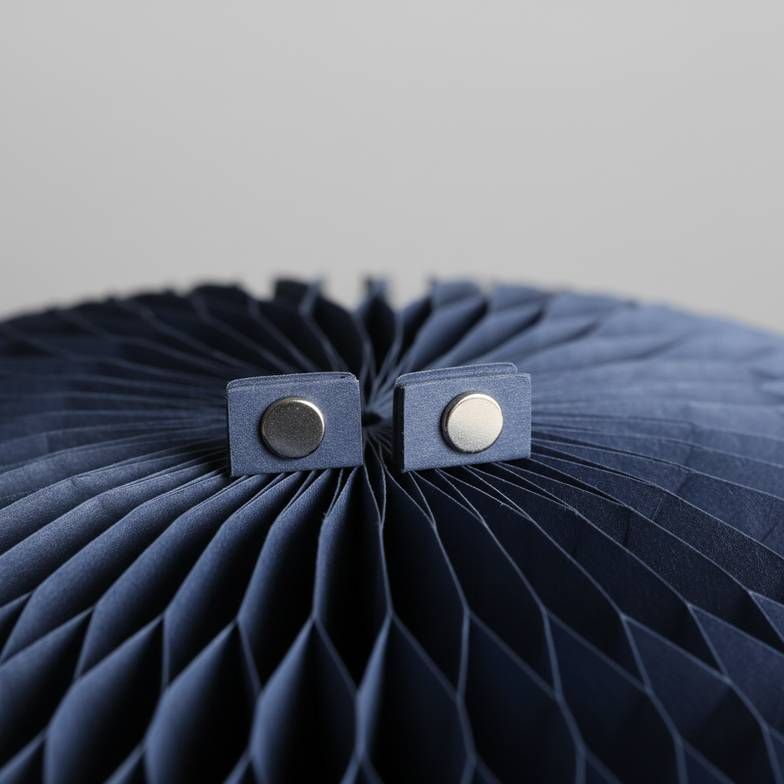
For a honeycomb stand, the magnetic closure is the heart of its reusability. Weak or poorly placed magnets are a common failure point. After a few uses, they can lose their strength, causing the stand to pop open or look uneven.
Here’s what to specify:
- Number and Placement: Ask how many magnet pairs are used in the closure. More magnets, spaced evenly along the seam, provide a more secure and seamless connection.
- Magnet Strength: While you can't specify a technical grade, you can describe the expected performance. For example, "The magnetic closure must be strong enough to hold the stand's shape without gaps, even when moved."
- Testing Cycles: Ask the supplier if they have data on how many times the stand can be opened and closed before the magnets or paper show wear. A reputable manufacturer may have this data available. For example, "The stand should withstand a minimum of 20 open/close cycles without loss of magnetic strength or structural integrity."
Examining Edges and Surfaces
The long-term appearance of a reusable stand depends on the finishing of its edges and surfaces. Repeated handling can quickly lead to frayed edges and stained tops, making the stand look unprofessional.
- Edge Finishing: Look closely at the sample. Are the paper edges clean-cut or are they reinforced? A stand with a laminated or rolled edge will be far more resistant to wear and tear.
- Surface Treatment: The top surface is the most vulnerable to damage from spills, grease, or moisture. Ask if the top has a protective coating. A moisture-resistant or oleophobic (grease-resistant) treatment can dramatically extend the life of the stand. This is crucial for displaying desserts that may have frosting or fillings.
Requesting a Sample for Testing
Ultimately, the best way to verify a reusability claim is to test it yourself. Don't be shy about putting a sample through its paces.
- Open and Close It Repeatedly: Unfold and collapse the stand 20-30 times. Do the magnets still snap together firmly? Does the paper start to crease or tear at the seam?
- Simulate a Spill: Place a small drop of water on the top surface and leave it for a few minutes before wiping it away. Does it bead up, or does it soak in and leave a stain?
- Check for Wear: After your tests, examine the edges and corners. Are they still crisp, or are they starting to soften and fray?
This hands-on evaluation will give you more confidence than any marketing brochure ever could.
Frequently Asked Questions
How much weight can a paper dessert stand hold?
This varies significantly by design. A small, simple stand might only hold a few kilograms, while a well-engineered honeycomb paper stand can support 15-20 kg or more. Never trust a generic claim. Always ask your supplier for the tested load capacity for the specific model you are interested in and test a sample with your intended items.
Are paper dessert stands suitable for outdoor events?
They can be, but with caution. Paper is inherently sensitive to moisture and wind. For outdoor use, specify a stand with a very wide, stable base to resist tipping in light breezes. Also, ask for a moisture-resistant top surface. It's always best to place them under a tent or in a sheltered area to protect them from rain.
Can I customize the color of a graduation dessert stand?
Yes, customization is often possible, especially when sourcing directly from a manufacturer like us. You can request stands in specific school or brand colors. Be prepared to provide a Pantone color code for accuracy and ask about the Minimum Order Quantity (MOQ) and production lead time, as custom orders typically require a longer planning horizon.
What's the difference between a honeycomb stand and a simple cardboard stand?
The key difference is the internal structure. A simple cardboard stand is often just a folded piece of cardstock, which is less stable and can't support much weight. A honeycomb stand has a 3D internal structure of hexagonal cells that gives it a far superior strength-to-weight ratio, allowing it to be foldable and lightweight yet remarkably strong and durable.
Conclusion
Choosing the right graduation dessert display stands is less about finding a pretty object and more about conducting a proper risk assessment for your event. By moving past surface-level aesthetics, you can write a specification sheet that ensures you receive a product that is stable, functional, and fit for purpose. Remember to focus on the core principles: prioritize structural design over simple paper weight, clearly define your use case to balance trade-offs, rigorously verify any claims of reusability, and specify the hidden logistical details that photos don't show. Asking these detailed questions upfront will protect your budget, your time, and the flawless execution of your event.
If you're planning a graduation event and need help developing specifications for your dessert displays, contact the Mypaperbloom team. We can guide you through our wholesale collections and custom options to ensure your vision comes to life beautifully and reliably.