Foldable Wedding Display Plinths: A Buyer’s Guide to Sizes, Finishes and Setup
Finding the right decorative elements for a wedding can be a challenge. You need elegant, impactful displays, but traditional plinths are often heavy, expensive to ship, and a nigh
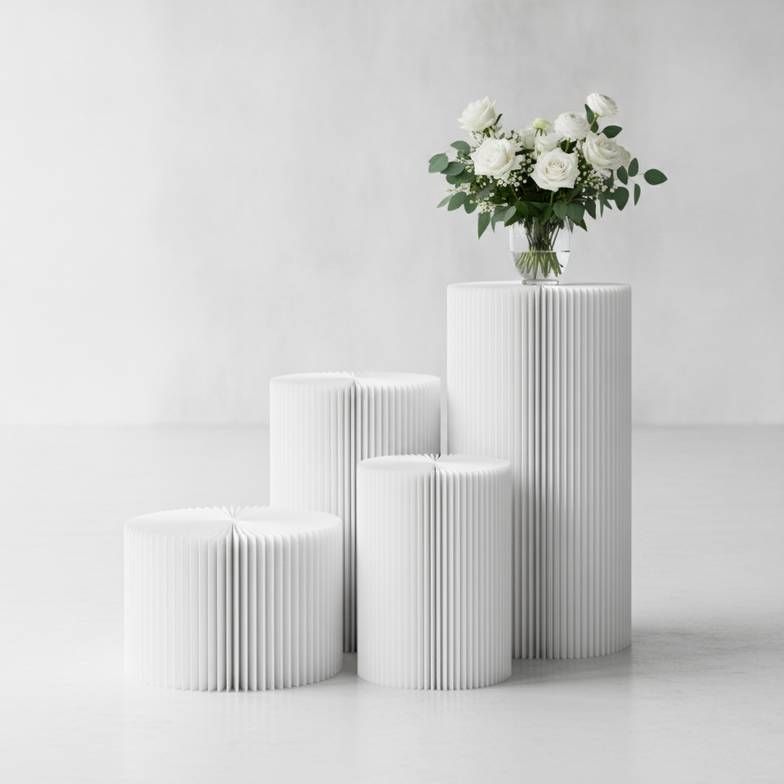
Finding the right decorative elements for a wedding can be a challenge. You need elegant, impactful displays, but traditional plinths are often heavy, expensive to ship, and a nightmare to store. You’re worried that a more practical alternative might look cheap, be unstable, or take forever to assemble on a high-stress event day. This guide to foldable wedding display plinths is designed to walk you through the key decisions, helping you source with confidence.
A successful purchase of foldable wedding display plinths involves matching the plinth's dimensions, surface finish, and setup mechanism to the specific logistical and aesthetic demands of your event. The goal is to balance visual impact with real-world stability, durability, and on-site efficiency.
Now that you have the short answer, let's dive deeper into the practical trade-offs behind the catalog specs. I’ll walk you through the questions we get asked every day to help you choose the perfect plinths that are beautiful, reliable, and surprisingly practical for any event.
How Do You Choose the Right Size for Foldable Wedding Display Plinths?
You've found the perfect floral arrangement, but now you need a plinth. You want something tall and dramatic, but a nagging voice in your head wonders if it will topple over if a guest bumps into it. Choosing the wrong size isn't just an aesthetic mistake; it can be a genuine safety hazard on the big day.
The right size isn't just a single dimension; it's a careful balance between the visual height you desire, the base diameter required for stability, and the weight of the object it will display. A taller, narrower plinth will always be less stable than a shorter, wider one.
Dive Deeper: The Stability Triangle (Height, Base, and Load)
When clients ask me about the maximum load capacity of our foldable wedding display plinths, my first question is always, "What are you placing on it, and where will it be?" A spec sheet might list a static load capacity of 50 kg, but that number is often determined in perfect lab conditions—on a level floor with a perfectly centered, static weight. A real-world wedding is anything but static.
Here’s the framework we use to guide buyers toward a safe and stable choice:
- Height-to-Base Ratio: This is the most critical factor for stability. A plinth that is 90 cm tall but only 30 cm in diameter has a 3:1 ratio. A plinth that is 60 cm tall and 40 cm in diameter has a much more stable 1.5:1 ratio. For high-traffic areas or top-heavy items like floral arrangements, always favor a wider base. If you need height, consider grouping several plinths of varying heights to create a wider, more stable collective footprint.
- Understanding the Load: It's not just about the weight (mass) of the object, but its shape. A tall, slender vase with a few stems has a high center of gravity and is much "tippier" than a wide, low cake of the same weight. When placing top-heavy objects, you must prioritize a plinth with a wider base and a sturdy, rigid top panel (like MDF or acrylic) that won't flex.
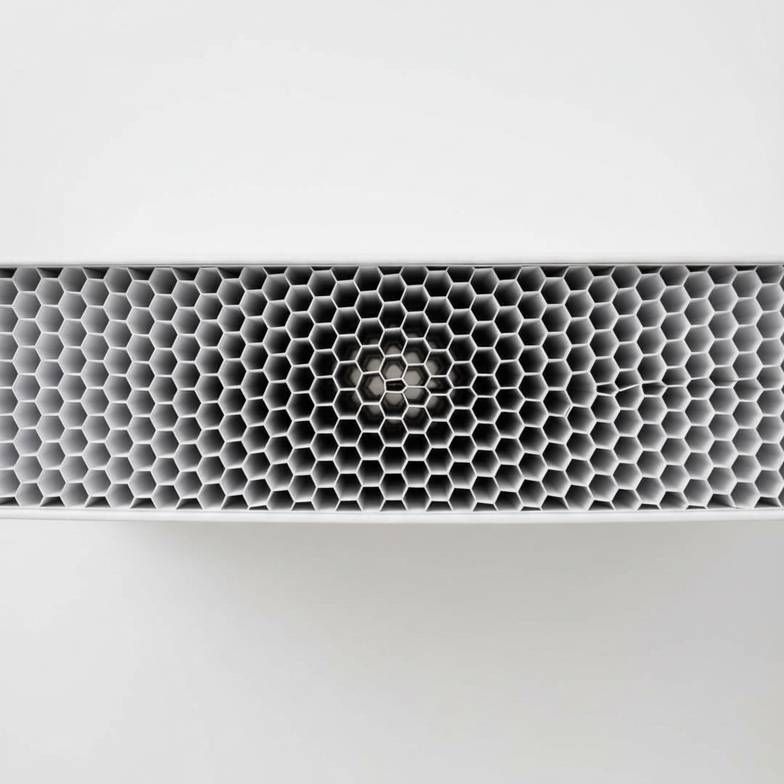
- The Honeycomb Core: The magic of these plinths is the internal honeycomb structure. The density of these cells plays a huge role in the plinth's compressive strength and rigidity. A plinth with a denser honeycomb pattern will resist crushing and feel more solid than one with larger, sparser cells. Always ask a potential supplier about the density or feel of their structure, as this directly impacts stability.
Here’s a simple table to help you visualize common scenarios:
| Plinth Dimensions (Height x Diameter) | Common Use Cases | Stability Considerations |
|---|---|---|
| 40cm H x 30cm D | Small floral arrangements, lanterns, single-tier cakes | Very stable; great for low-level accents or as part of a larger cluster. |
| 60cm H x 40cm D | Medium floral displays, welcome signs, guest books | A solid, all-purpose size with good stability for most common wedding decor items. |
| 90cm H x 30cm D | Aisle markers, tall but lightweight decor | Use with caution. Best placed against a wall or for objects with a low center of gravity. |
| 100cm H x 45cm D | Large "statement" floral arrangements, cake displays | The wider base makes this a much safer option for achieving height with heavy or tall items. |
Ultimately, treat size selection as a risk assessment. For a cake stand, stability is non-negotiable. For a lightweight aisle marker placed against a wall, you can afford to prioritize height.
What's the Best Finish for Event Display Plinths?
You're browsing supplier catalogs and see plinths in raw kraft paper, matte white, and even glossy colors. You're not sure which is best, and you don't want to overspend on a fancy finish if you don't need it. Worse, you don't want to buy a cheap one only to have it ruined by a single spilled drink.
The best finish depends entirely on your budget, intended use, and durability requirements. Raw, uncoated paper is a cost-effective choice for single, controlled indoor use, while a coated or laminated finish provides essential protection for repeated use or high-traffic events.
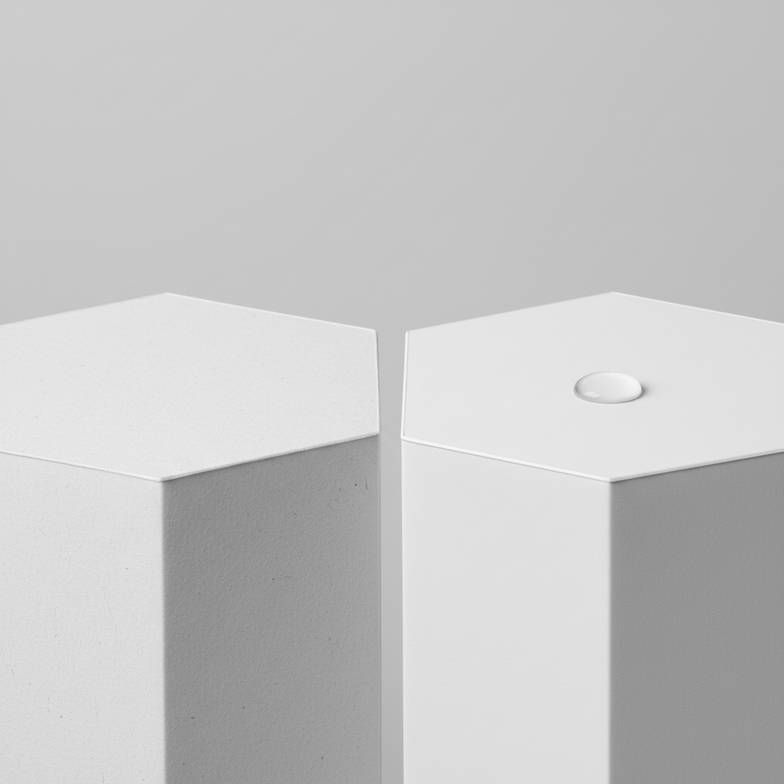
Dive Deeper: The Finish Trade-Off: Cost vs. Durability
A common point of confusion for new buyers is the finish. It seems like a minor detail, but it dramatically affects the plinth's lifespan, appearance, and practicality. Let's break down the typical options you'll encounter.
Raw, Uncoated Paper Finishes
This is often the default, entry-level option. It's typically a heavy-duty kraft paper or a simple white paper.
- Pros:
- Cost-Effective: It's the most budget-friendly option, which is great if you need a large quantity for a single event.
- Natural Aesthetic: The raw texture can be beautiful for rustic, bohemian, or minimalist themes.
- Customizable: You can technically paint it, though this can affect how it folds and should be tested first.
- Cons:
- Highly Absorbent: It acts like a sponge. A spilled drink, condensation from a vase, or even just humid air can cause staining, warping, and structural weakness.
- Easily Damaged: It's prone to scuffs, tears, and dirt marks from handling and transport. It’s essentially a single-use item in a busy event environment.
Coated or Laminated Finishes
This involves applying a thin protective layer over the paper. The coating can be a matte, satin, or gloss polyurethane or a thin plastic laminate.
- Pros:
- Durable and Reusable: This is the key benefit. The surface resists moisture and can be wiped clean with a damp cloth. This makes the plinth a reusable asset for event planners and rental companies.
- Professional Appearance: A coated finish, especially in a matte white or black, provides a smooth, premium look that mimics more expensive solid plinths.
- Color Consistency: The coating process ensures a uniform color that is less likely to show fingerprints or smudges.
- Cons:
- Higher Cost: The coating process adds a step to manufacturing, so these plinths are more expensive upfront. However, the cost per use is often lower if you plan to use them more than once.
- Potential for Glare: A high-gloss finish can create reflections and glare in event photography, so a matte or satin finish is usually preferred.
My advice to event planners is this: if you are buying for a client's one-time wedding, the raw paper might suffice if the budget is tight and the plinths will be well-protected. If you are an event company building your inventory, always invest in the coated finish. The durability and reusability will pay for itself within two or three events.
How Important is the Setup and Closure Mechanism?
The supplier’s website promises a "quick and easy setup," but you’ve been burned before. You can picture your team on-site, frantically trying to align flimsy tabs or sticky Velcro while the event start time looms. A difficult setup doesn't just waste time; it adds immense stress to an already pressure-filled day.
The setup and closure mechanism is critically important for both speed and structural integrity, especially when you need to deploy dozens of units under a tight deadline. For foldable wedding display plinths, magnetic closures are almost always the fastest, most secure, and most professional option for tool-free assembly.
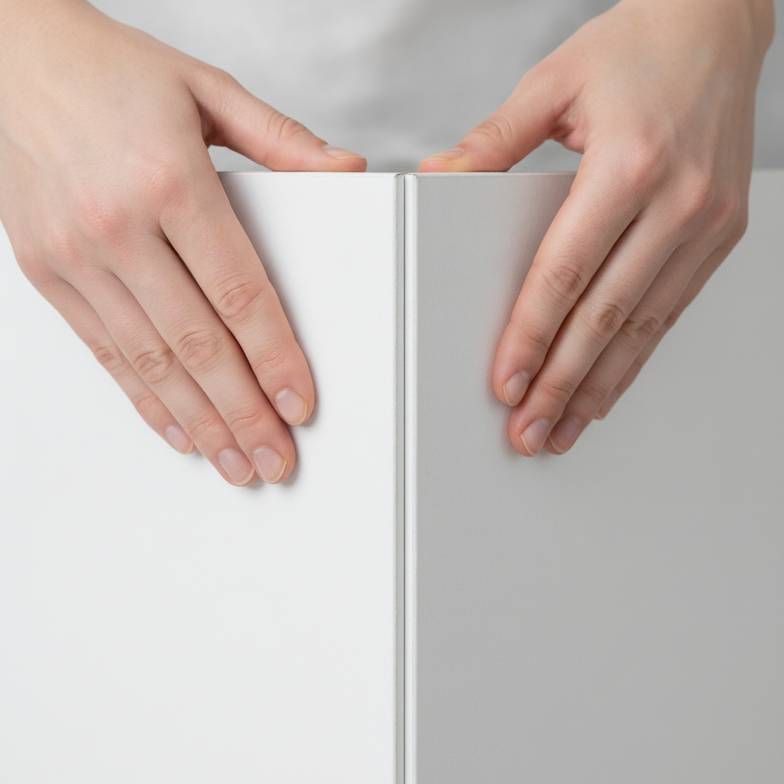
Dive Deeper: Not All "Foldable" is Created Equal
The term "foldable" simply means it ships flat. The magic is in how it transforms from a flat panel into a sturdy cylinder. The closure mechanism is the heart of this transformation, and it’s a detail you should never overlook.
Let's compare the three most common closure types we see in the market.
Magnetic Closures
These are small, powerful magnets embedded along the edges of the plinth. To assemble, you simply unfurl the plinth into a cylinder and the magnets snap together, creating a nearly invisible seam.
- Pros:
- Speed: Setup takes less than 30 seconds. It's incredibly fast and intuitive.
- Secure: The magnetic pull is strong, holding the cylinder shape firmly.
- Clean Look: The seam is virtually seamless, providing a high-end, solid appearance.
- Reusable: Magnets don't wear out, making them perfect for rental inventory.
- Cons:
- Higher Cost: This is generally the most premium option due to the cost of the magnets and the precision required in manufacturing.
Velcro Closures
Here, strips of hook-and-loop fastener are glued to the edges of the plinth.
- Pros:
- Strong Hold: Good quality Velcro provides a very secure closure.
- Lower Cost: It is cheaper to implement than magnets.
- Cons:
- Bulky Seam: The overlapping Velcro creates a visible and often bulky seam, which can cheapen the look.
- Wear and Tear: Velcro gets clogged with lint and fibers over time, losing its grip. It can also begin to peel away from the paper after repeated use.
- Loud: The ripping sound of separating Velcro can be disruptive during a quiet setup or teardown.
Tab-and-Slot Closures
This system uses paper tabs on one end that you must carefully insert into pre-cut slots on the other.
- Pros:
- Cheapest Option: This is the absolute lowest-cost way to create a closure.
- Cons:
- Frustrating and Slow: Aligning the tabs can be tedious and time-consuming.
- Prone to Damage: The paper tabs can easily bend, tear, or break, rendering the plinth useless.
- Not Secure: The closure often isn't very tight, which can compromise the plinth's cylindrical shape and stability.
For any professional planner, time is money on event day. Saving two minutes per plinth might not sound like much, but when you're setting up 20 of them, that's 40 minutes of valuable time your team gets back. In my experience, the reliability and speed of magnetic closures are well worth the modest extra investment.
Frequently Asked Questions
Can these foldable paper plinths be used outdoors?
While they are designed primarily for indoor use, plinths with a coated or laminated finish can handle some outdoor conditions, like a covered patio or a dry, calm day. However, they are not waterproof. Avoid direct rain or placing them on wet ground, as moisture can compromise the paper structure from the bottom up.
How much weight can a paper plinth actually hold?
This depends heavily on the plinth’s dimensions (especially its diameter), the density of its honeycomb core, and the rigidity of its top panel. A wide, short plinth might safely hold over 50 kg, while a tall, narrow one might be unstable with just 5 kg. Always discuss the specific object you plan to display with your supplier rather than relying on a generic load capacity number.
Are foldable wedding display plinths reusable?
Absolutely, especially if you choose a model with a durable coated finish and a reliable magnetic closure. The key to reusability is proper handling and storage. Collapse them carefully after each event and store them flat in a dry, climate-controlled environment to protect them from moisture and crushing.
How are they shipped and stored?
One of their biggest advantages is that they ship and store completely flat. This dramatically reduces shipping costs compared to solid plinths and saves an incredible amount of warehouse or storage space. A stack of 20 flat-packed plinths might only take up the same footprint as one or two traditional pedestals.
Conclusion
Choosing the right foldable wedding display plinths goes far beyond just picking a color and height from a catalog. It's a calculated decision that balances aesthetics with the practical realities of a live event. By focusing on the interplay between size and stability, matching the finish to your use case, and prioritizing a fast and secure setup mechanism, you can avoid common pitfalls. The best choice is one that not only looks beautiful but also gives you peace of mind, knowing it’s stable, durable, and won't cause headaches for your team on-site.
If you're planning an event and looking for display solutions that are both elegant and efficient, our team at Mypaperbloom is here to help. We can guide you through the specifications to ensure you get the perfect foldable plinths for your needs. Contact us today to discuss your project.