Foldable Paper Christmas Trees for Retail Displays: Sizes, Placement and Buying Considerations
Struggling to create stunning, consistent holiday displays across all your stores without breaking the shipping budget? The bulk and fragility of traditional decorations can be a l
Struggling to create stunning, consistent holiday displays across all your stores without breaking the shipping budget? The bulk and fragility of traditional decorations can be a logistical nightmare for any retail rollout. The solution lies in sourcing smarter, not just decorating harder, and that's where foldable paper Christmas trees come in, offering impressive visual impact in a compact, efficient format.
Choosing the right foldable paper Christmas tree is a risk management process. Success isn't about finding one "best" size, but about matching the tree's dimensions, materials, and logistical profile to your specific retail environment, deployment plan, and seasonal timeline. The key is to balance aesthetics with the practical realities of shipping, storage, and in-store setup.
Now that you have the core principle, let's unpack it. Moving beyond just the look of the tree and into the logistics is what separates a smooth, successful seasonal campaign from a stressful one. We'll explore the real-world factors that experienced buyers focus on.
What's the 'Right' Size for a Foldable Paper Christmas Tree?
You're planning a display and the first question is always about size. But thinking only about height can lead to problems. A frequent question I receive is, "What's your most popular size?" when the more important question is, "Which dimensions matter for my specific application?"
The right "size" is a combination of height, diameter, and folded dimensions. Balancing these three factors ensures the tree not only looks good in the space but is also practical for your supply chain and store teams.

Dive Deeper: Thinking in Three Dimensions
When we develop a custom collection with a client, we don't just talk about a "60cm tree." We analyze the entire lifecycle of the product, from the shipping carton to the display shelf. Here's how you should think about it:
Height — The Visual Impact
Height is the most obvious dimension. It determines whether the tree serves as a major focal point or a subtle accent.
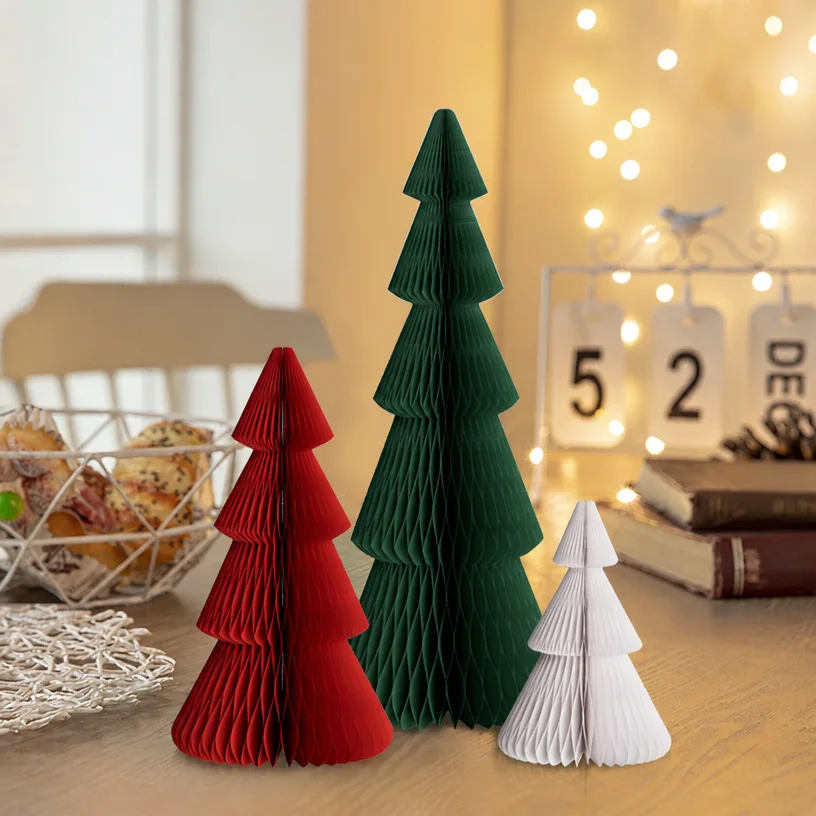
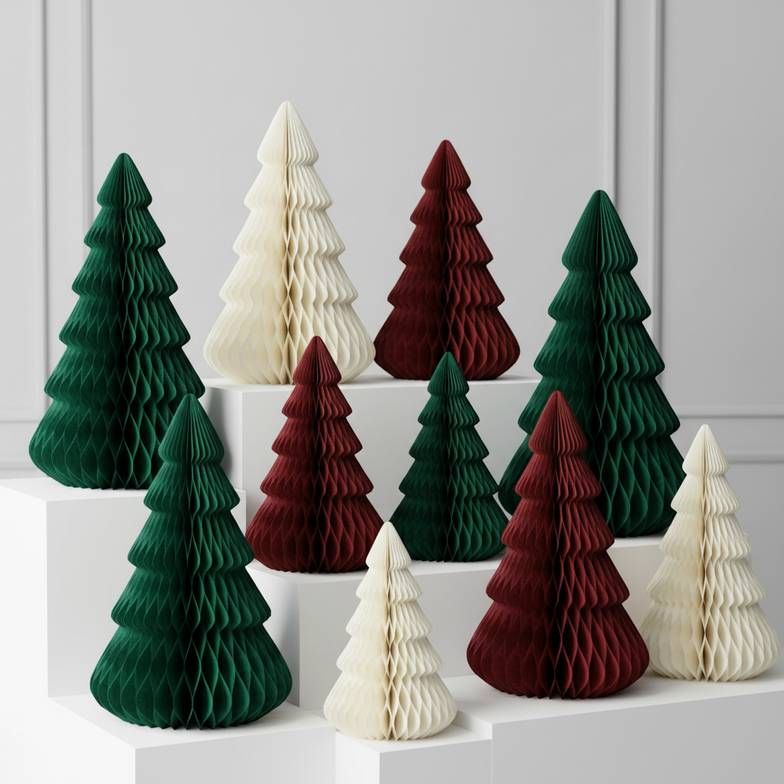
- Small (15-30cm / 6-12"): Perfect for tiered tabletop displays, shelf merchandising, and adding depth to a larger scene. They are cost-effective and easy to place in dense product arrangements.
- Medium (40-90cm / 16-35"): The workhorse of retail displays. These are excellent for creating repetition in window displays, flanking mannequins, or as standalone pieces on larger tables or podiums.
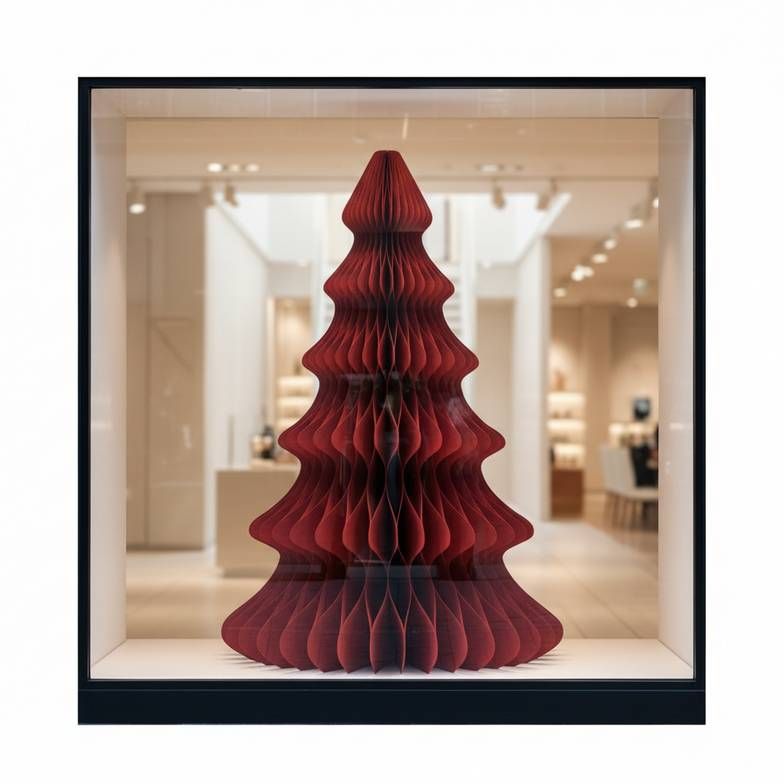
- Large (100cm+ / 40"+): These are statement pieces. Ideal for store entrances, central atriums, or as the main anchor in a large window. When you get this big, you have to seriously consider the base diameter.
Base Diameter — The Footprint
This is the dimension buyers often overlook. The diameter of the fully opened tree determines its physical footprint. A 90cm tall tree with a 40cm base might be perfect, but if the base is 70cm, it may not fit on your intended ledge or display table.
> In my experience, measuring the intended display surfaces before sourcing is a critical step. We once had a customer who loved a wide, full-looking tree but later realized it overhung their shelving by several inches, creating an unstable and messy look. Always confirm the footprint.
Folded Size & Visual Density — The Logistics
This is the secret weapon of foldable paper Christmas trees. The compact, flat-packed size dramatically reduces shipping costs and storage space compared to rigid decorations. But two trees of the same height can have very different folded profiles. This is related to their visual density—the number and depth of the honeycomb cells.
| Dimension | What It Affects | Buyer's Consideration |
|---|---|---|
| Height | Visual Hierarchy & Impact | Does it anchor the display or act as a supporting element? |
| Base Diameter | Physical Footprint & Stability | Will it fit on the shelf, ledge, or floor space I have? |
| Folded Size | Shipping Cost & Storage Space | How many units fit in a master carton? Can we send these directly to stores? |
| Visual Density | Perceived Quality & Fullness | Does it look lush and substantial when opened, or sparse? |
A tree with a denser honeycomb structure will look fuller and more premium when opened. However, it will be slightly thicker and heavier when folded. This is a classic trade-off: perceived quality versus shipping efficiency.
How Does Placement Affect Your Choice of Foldable Paper Christmas Trees?
You've found a tree with the perfect dimensions. The next mistake is assuming it will perform the same way everywhere. The physical location of the display introduces new variables like light, air currents, and customer interaction that can make or break your decorations.
The placement directly dictates the structural and material requirements. A tree destined for a sunny window needs different properties than one placed in a high-traffic entryway or one that will be used repeatedly for events.
Dive Deeper: Matching the Tree to Its Environment
Thinking like a risk manager means anticipating environmental stress. During consultations, I always ask, "Where, exactly, will these be displayed?" Here’s why it matters so much.
Store Windows: The UV Test
A vibrant red tree looks fantastic on day one. But after two weeks in a south-facing window, will it be a faded pink?
- The Challenge: Direct sunlight contains UV rays that can bleach paper dyes over time.
- What to Ask Your Supplier: "What is the colorfastness of the paper you use?" While no paper is 100% immune to fading, higher-quality dyed paper performs significantly better than cheaper, surface-printed alternatives. For critical long-term displays, requesting a sample and testing it in a sunny spot is a wise investment of time.
Entrances & High-Traffic Areas: The Durability Test
The entryway of a busy store is a demanding environment. Air currents from doors opening and closing, plus the risk of being bumped by carts and customers, mean durability is non-negotiable.
- The Challenge: Flimsy paper can tear, and weak bases can cause trees to topple.
- What to Look For:
- Paper Weight (GSM): Ask for a higher GSM (grams per square meter) paper. It will be more robust and resistant to tearing during setup and display.
- Structure: For larger trees, ensure the base is wide and stable. Some designs may incorporate a more rigid cardboard base for added security.
- Secure Closure: This is where magnets often outperform simple clips. A strong magnetic closure ensures the tree stays fully open and won't pop apart if jostled.
Tabletop & Reusable Displays: The Usability Test
If you're buying decorations for an event company or for a display that will be set up and taken down multiple times, the focus shifts to longevity and ease of use.
- The Challenge: Repeatedly opening and closing a paper decoration can cause wear and tear, especially at the closure point.
- What to Prioritize:
- Magnetic Closures: This is the gold standard for reusability. They are fast, secure, and don't damage the paper over time.
- Durable Honeycomb Glue: The bond within the honeycomb structure must be strong. A good manufacturer uses flexible, durable adhesive that withstands repeated expansion and contraction. I've seen cheaper alternatives where the layers separate after just a few uses.
What Are the Real Buying Considerations for Wholesale Paper Decorations?
First-time buyers often focus on color, shape, and price per unit. Experienced retail buyers, however, have learned that the real risks and costs are hidden in the logistics of a multi-store rollout.
The most critical buying considerations are logistical, not aesthetic. Questions about packaging, deployment speed, and production timelines have a far greater impact on your campaign's success than the exact shade of green.
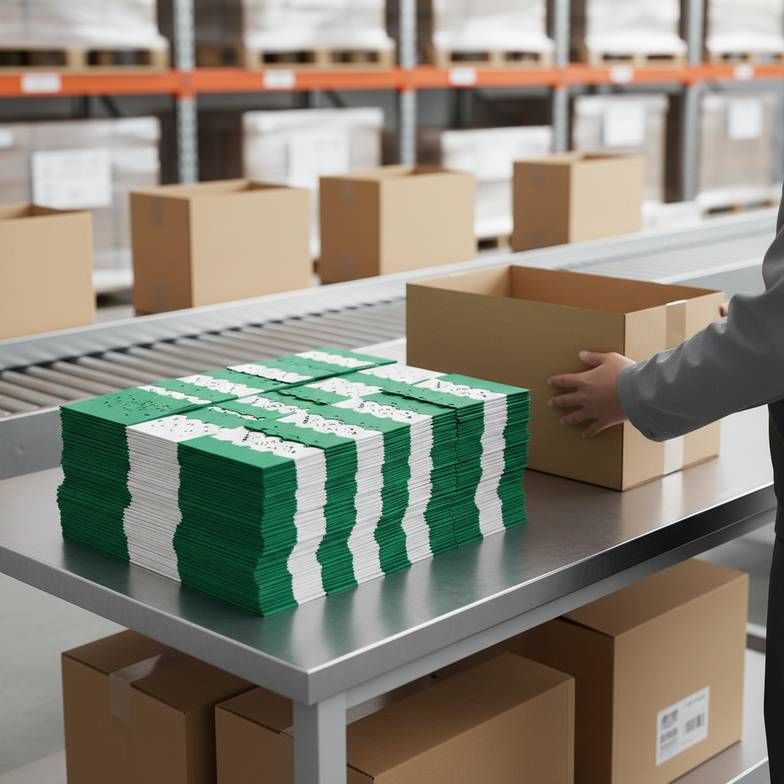
Dive Deeper: From Factory Floor to Store Floor
When we work with large retail brands, the conversation is all about execution. The product's beauty is a given; the operational excellence is what they're really buying. Here's what should be on your checklist.
Packaging & Shipping Efficiency
The unit cost of a decoration is only part of the story. The total cost includes getting it to every single store.
- The Challenge: Bulky or poorly designed master cartons can skyrocket shipping costs and create headaches at the distribution center.
- What to Specify:
- Individual Packaging: Does each tree come in a polybag or a small box? Does it include a simple instruction sheet? This is crucial for store staff.
- Master Carton Specs: Confirm the dimensions, weight, and number of units per carton. This data is essential for your logistics team to plan shipping and warehousing.
- Store-Ready Shipments: Can the supplier pack cartons in a way that allows you to forward them directly to individual stores without repacking? This is a massive labor saver. We often plan carton counts around a client's typical store allocation.
Deployment Speed & Labor Costs
For a retailer with hundreds of locations, the time it takes staff to assemble a display is a significant hidden cost.
- The Challenge: A decoration that is tricky or slow to assemble can consume hours of valuable staff time across the chain.
- What to Test:
- Assembly Time: When you receive a sample, time yourself opening it. How intuitive is it? Does it require careful handling or can it be opened quickly? A tree with built-in magnets can be ready in 5 seconds. One with multiple paper clips might take 30 seconds. Multiply that difference by a thousand units, and you see the impact.
- Repackaging for Storage: If you plan to reuse the decorations, how easy is it to collapse them and put them back in their packaging?
Production Timelines & Seasonal Deadlines
This is the number one risk for any seasonal program. The holiday season waits for no one.
- The Challenge: Manufacturing slots for seasonal products fill up months in advance. A delay in confirming your order can mean missing your shipping window entirely.
- What to Do:
- Start Early: Begin conversations with potential suppliers in the spring for a winter holiday rollout.
- Clarify Lead Times: Ask, "What is the production lead time after sample approval?" The clock doesn't start when you first inquire; it starts when you sign off on the final pre-production sample.
- Factor in Shipping: Sea freight from Asia can take 4-6 weeks or more, plus time for customs clearance and domestic distribution. Build this buffer into your master calendar. As a manufacturer, our busiest season is late summer, as we rush to get products onto boats for our clients' holiday deadlines.
Frequently Asked Questions
How are foldable paper Christmas trees closed and secured?
They are typically secured in one of two ways. Many use built-in magnets that snap together for a clean, seamless look and are excellent for repeated use. A more budget-friendly option is using paper clips to hold the two ends together, which works well for single-use displays.
Can you customize the colors of foldable paper Christmas trees?
Yes, customization is a core service for manufacturers. We can often match specific brand colors or Pantone values for large-volume orders. This allows retail brands to create a fully coordinated seasonal collection that aligns with their brand identity. Keep in mind that custom color runs require a minimum order quantity (MOQ).
How should we store these paper decorations after the season ends?
The best way is to carefully collapse the tree and slide it back into its original packaging or a protective polybag. Store them flat in a dry, climate-controlled environment to prevent moisture damage or discoloration. Stacking them flat avoids putting pressure on the honeycomb cells.
Conclusion
Choosing the right foldable paper Christmas trees for your retail display is a strategic decision that goes far beyond simple aesthetics. By thinking like a logistics manager, you can mitigate risks and ensure a smooth, successful rollout. Focus on the interplay between size, placement, and the critical sourcing considerations of packaging, deployment, and timelines. This approach ensures your beautiful displays are also cost-effective, easy for staff to manage, and, most importantly, on the floor in time for the seasonal rush.
If you're planning your next seasonal program and want to ensure your decorations are as practical as they are beautiful, our team is here to help. We can guide you through these considerations to develop a collection of foldable paper Christmas trees that works for your brand, your budget, and your stores.