Foldable Honeycomb Paper Furniture for Events and Retail: What Buyers Need to Evaluate
Struggling to find display solutions that are both innovative and practical? You’re drawn to the unique look of paper furniture, but the uncertainty is holding you back. Will it ho
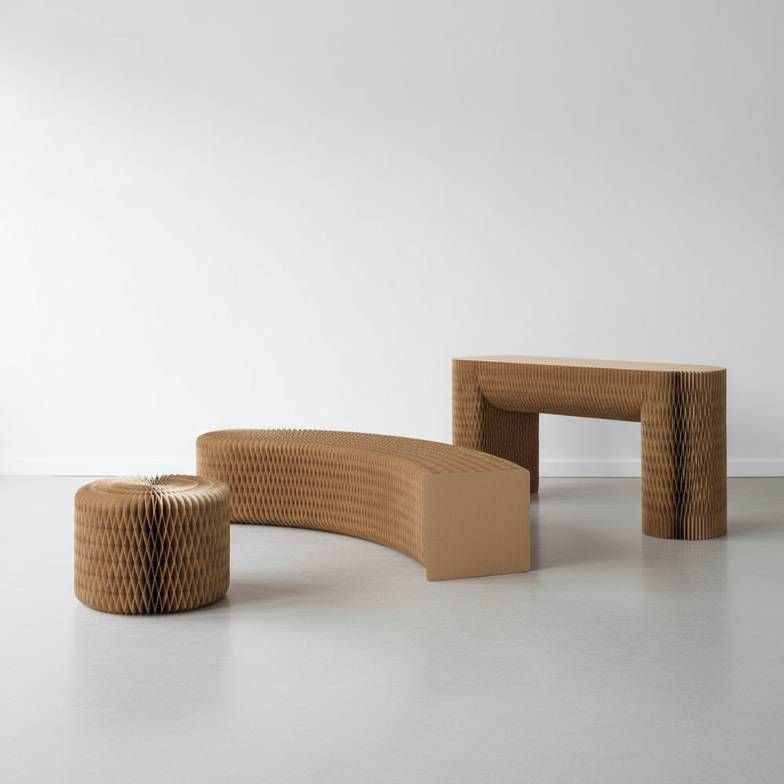
Struggling to find display solutions that are both innovative and practical? You’re drawn to the unique look of paper furniture, but the uncertainty is holding you back. Will it hold up in a busy retail space, or will it collapse under pressure, damaging your brand's image? The key to sourcing with confidence is learning how to evaluate foldable honeycomb paper furniture not just on specs, but on its suitability for your specific application.
When evaluating foldable honeycomb paper furniture, buyers should focus on matching the product's structural design, material properties, and lifecycle durability to their specific use case. Instead of prioritizing a single metric like static load capacity, a thorough evaluation considers dynamic load performance, the quality of the honeycomb cell structure, surface treatments, and the product's reusability over time.
This might sound more complex than just picking the one with the highest weight rating, but it’s how you avoid costly mistakes. Moving beyond the spec sheet and learning to "read" the product itself is the secret to getting furniture that performs reliably. Let's explore the critical questions you should be asking your suppliers.
Is a Higher Weight Capacity Always Better for Foldable Honeycomb Paper Furniture?
Buyers often come to me asking for the maximum weight limit, thinking a bigger number automatically means a better product. But when a piece of furniture is destined for a public space, a high static load rating can be misleading and create a false sense of security. The more important question is how that furniture handles the unpredictable, real-world forces of a retail or event environment.
A high static load number is a common marketing point, but it's not the whole story. To truly assess strength, you need to understand the difference between static and dynamic loads and examine the underlying structure that provides the product's resilience.
From my experience in product development, the most insightful conversations aren't about breaking records with static weights. They're about defining the use case and then engineering a structure to match. A decorative bench in a low-traffic corner has vastly different requirements than a stool at a bustling trade show booth.
Static vs. Dynamic Loads: The Real-World Difference
Let's get this straight. A static load is a stationary, unchanging weight. This is what most suppliers test and quote. For example, carefully placing weights on a stool until it deforms is a static load test. A 200kg rating sounds impressive, but it doesn't reflect how people actually use furniture.
Dynamic loads are the forces of real life. They involve movement, impact, and shifting weight. Think about:
- A customer dropping onto a stool instead of sitting down gently.
- Someone shifting their weight or wiggling.
- An accidental bump from a shopping cart or cleaning machine.
- Two people trying to squeeze onto a one-person bench.
A product with a high static rating can still fail under a much lower dynamic load if it's not designed for impact and movement. The force is concentrated and applied suddenly, which is a much tougher test for the structure. So, instead of just asking "What's the weight limit?", a better question for your supplier is, "How was this capacity tested, and how does the design account for dynamic forces?"
How to "Read" a Honeycomb Structure for Strength
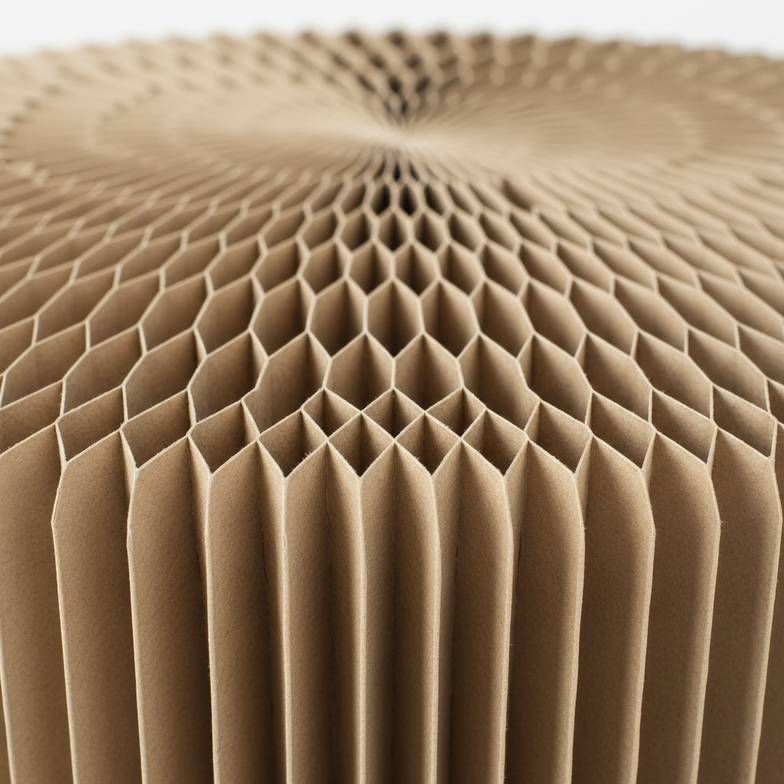
The true strength of foldable honeycomb paper furniture comes from its geometric structure. The hexagon is one of nature's strongest shapes, and when formed into a honeycomb pattern, it distributes forces across the entire piece.
When you examine a sample, don't just sit on it. Look inside:
- Cell Uniformity: Are the hexagonal cells consistent in size and shape? Irregularities create weak points where force can concentrate and cause a collapse.
- Adhesion Quality: Are the glue lines clean and strong? Poor adhesion means the layers can delaminate under stress, compromising the entire structure.
- Cell Density: A higher density of smaller cells generally creates a stronger, more rigid product that can better withstand point loads. A product with large, sparse cells may feel flimsy.
The Critical Role of End Panels and Closures
The parts that bookend the honeycomb core are just as important. The top and bottom panels (or side panels on a bench) are what interface with the user and the floor. They distribute the load into the honeycomb core.
Here's a quick comparison of common options:
| Feature | Lower-Cost Option | Higher-Performance Option | Why It Matters |
|---|---|---|---|
| End Panel Material | Thick Cardboard | MDF, Plywood, or rigid Fiberboard | A rigid end panel prevents the top layers of honeycomb cells from being crushed and provides a stable surface. |
| Closure Method | Velcro Strips | Embedded Neodymium Magnets | Magnets provide a stronger, more seamless 360-degree closure, improving overall structural integrity. Velcro can peel and weaken over time. |
| Top Cushion | None | Felt or Fabric Pad | While primarily for comfort, a fixed pad can also help distribute the user's weight more evenly across the surface. |
When you're evaluating a sample, pay close attention to these end panels. Are they robust? Are the closures strong and properly aligned? These details often separate a product designed for temporary novelty from one built for repeated professional use.
Does a Heavier Paper (Higher GSM) Mean a Stronger Product?
It’s an easy assumption to make: thicker, heavier paper must be stronger, right? This leads many buyers to focus on the paper's weight, measured in grams per square meter (GSM), as a primary quality indicator. But you could be specifying a heavy, brittle, and expensive product that performs worse than a lighter, better-engineered alternative.
The reality is, performance comes from a smart combination of materials and design. The honeycomb structure is so efficient that it can make a lighter-weight paper perform exceptionally well, while a poor structure can make even the heaviest paper fail.

In our manufacturing process, we've seen firsthand how engineering the structure provides a greater leap in performance than simply increasing paper weight. It's a system where every component—paper, glue, and geometry—works together.
The Engineering Magic of the Hexagonal Structure
Why is the honeycomb so special? When you apply force to the top of the structure (a compressive load), the hexagonal cell walls work to distribute that force outwards to all the surrounding cells. This spreads the load over a very wide area.
- Efficient Material Use: The structure provides incredible strength for its weight, which is why it's used in aerospace and high-performance engineering.
- Force Distribution: Instead of one point bearing all the load, the entire community of cells shares it. This is what prevents the paper from simply tearing or puncturing.
A well-engineered structure with uniform cells and strong glue bonds is far more critical than a high GSM number. I've seen products made with 120 GSM kraft paper outperform poorly made ones using 200 GSM paper, simply because the structure was better designed and executed.
Quality Indicators Beyond the Spec Sheet
When you get a sample in your hands, you're not just a buyer; you're a quality inspector. Open it up and look closely at the honeycomb core before you even think about sitting on it.
What to look for in a quality structure:
- Uniform Cell Shapes: The hexagons should be crisp and consistent. Deformed or crushed cells are a sign of poor manufacturing or low-quality paper that couldn't hold its shape during production.
- Clean, Strong Glue Lines: You shouldn't see excessive glue smearing or areas where the paper layers are peeling apart. The bond between each layer is what gives the honeycomb its shear strength.
- Consistent Height and Expansion: When you open the piece of furniture, it should expand evenly and stand straight. If it leans or has sections that are compressed, it points to inconsistencies in the core.
Paper Properties Beyond Weight (GSM)
While GSM isn't the whole story, the paper itself does matter. However, other properties are just as important as weight:
- Fiber Type and Length: Kraft paper, made from wood pulp with long fibers, is typically used for its high tensile strength and durability. It resists tearing and can withstand being folded and unfolded. Recycled papers might have shorter fibers and less strength, so they need to be specified carefully for the application.
- Stiffness: The paper needs to be stiff enough to form crisp hexagonal cells but flexible enough to fold without cracking. This balance is key.
- Moisture Content: Paper is sensitive to humidity. A supplier with good quality control will manage the moisture content of the paper throughout the production process to ensure a stable final product.
Instead of asking "What's the GSM?", try asking, "What type of paper do you use and why was it chosen for this design?" This opens up a more meaningful conversation about performance engineering.
How Does Foldable Honeycomb Paper Furniture Perform Beyond Day One?
You’ve sourced a piece of foldable honeycomb paper furniture that looks great and meets the budget for your launch event. But what happens next? Will it survive being packed up, stored, and redeployed for the next season? What if a customer spills coffee on it? Thinking about the entire product lifecycle is essential for calculating the true return on your investment.
A product that looks good once but quickly degrades isn't an asset; it's a recurring expense. For retail and event professionals who rely on reusable displays, evaluating for longevity and ease of maintenance is just as important as the initial purchase price.

Considering the total cost of ownership means looking beyond the sticker price. It's about how the product's design impacts your labor, storage, and replacement costs over the long run.
The Fold/Unfold Cycle: A Litmus Test for Durability
The "foldable" nature of this furniture is its biggest selling point, but it's also a potential point of failure. The paper, especially at the creases, is put under stress every time the product is opened and closed.
When evaluating a sample, test its reusability:
- Open and close it 10-15 times.
- Listen for any tearing or cracking sounds.
- Look at the main body. Does it still expand evenly, or are some sections getting stuck or crushed?
- Examine the end panels and closures. Are the magnets still seating perfectly? Is the panel showing signs of stress where it joins the paper core?
A well-made product will use paper with long, flexible fibers and a structural design that minimizes stress on the creases. Ask your supplier if they have done any cycle testing on their products. This demonstrates they are thinking about long-term use, not just a single unboxing.
Surface Treatments and Resistance to the Elements
Paper and liquids are not friends. In any public environment, spills are inevitable. Furthermore, surfaces can get scuffed and dirty from constant use.
This is where surface treatments come in. While the core may be raw kraft paper, the top surface can often be treated or made from a more resilient material. Ask potential suppliers about:
- Water Resistance: Are there options for a water-resistant coating or a waterproof top layer? This is crucial for any application where food and drinks are present. A simple spray-on lacquer can make a huge difference in stain resistance.
- Abrasion Resistance: For high-traffic applications, is the surface designed to resist scuffs and dirt? Some products use a thicker, laminated top sheet or come with felt pads that are both comfortable and easy to clean or replace.
Storage and Shipping: The Hidden Cost-Saver
Here is where foldable honeycomb paper furniture truly shines. Its ability to collapse to a fraction of its open size is a massive logistical advantage.
When calculating your total cost, factor in:
- Shipping Volume: Compare the shipping cost of a flat-packed paper stool versus a rigid, fully assembled one. The savings can be enormous, especially for large rollouts to multiple stores.
- Storage Space: How much warehouse or back-room space do you need to store your displays between seasons? A stack of 20 collapsed paper stools might take up the same space as two rigid stools.
- Handling Labor: Because the items are lightweight and compact, they are easier and faster for staff to transport, set up, and take down, reducing labor costs.
This logistical efficiency is a core part of the product's value proposition and should be a major factor in your evaluation.
Frequently Asked Questions
How do I test a sample of paper furniture myself?
Sit on it, but don't just sit. Shift your weight from side to side. Get up and sit down a few times. Fold and unfold it repeatedly (at least 10 times) to check for wear at the creases. Inspect the honeycomb cells for uniformity and the end panels for robustness.
What's the difference between magnet and velcro closures?
Magnets generally provide a stronger, more stable, and seamless 360-degree closure, which adds to the overall structural integrity. They don't wear out. Velcro is a lower-cost option, but it can lose its grip over time, collect lint, and create a less secure connection, potentially compromising the structure under load.
Can I get custom colors or branding on foldable honeycomb paper furniture?
Yes, customization is a key benefit. Many manufacturers can produce furniture using custom-colored paper to match your brand palette. Branding can be applied to the end panels via printing, decals, or even laser-etching on wood panels. Always discuss minimum order quantities (MOQs) for custom orders.
What is a typical production lead time for these products?
Lead time varies greatly depending on whether it's a stock item or a custom order. Standard products might ship in a few weeks, while a fully custom design—involving new sizes, custom paper colors, and branded packaging—could take 8-12 weeks or more after the sample is approved. Always confirm the production schedule with your supplier.
Conclusion
Successfully sourcing foldable honeycomb paper furniture requires shifting your mindset from a simple spec-sheet comparison to a holistic, application-focused evaluation. The most important questions aren't about finding the highest load capacity, but about understanding how the product is built to handle the real-world stresses of your environment. By examining the structural design, questioning the testing methodology, and considering the product's entire lifecycle, you can de-risk your purchase. This ensures you're investing in a solution that delivers on its innovative promise, providing both a unique aesthetic and practical, long-term value for your retail displays or events.
If you're ready to specify the right product for your application, our team is here to help. We can walk you through the options and help you develop a piece of furniture that meets your specific performance, branding, and logistical needs.