Flat-Pack Seasonal Decorations: How Retailers Can Plan Shipping and Storage
Struggling to get your seasonal display program rolled out without logistical headaches? You’ve meticulously planned your product assortment, but now you’re facing the daunting tas
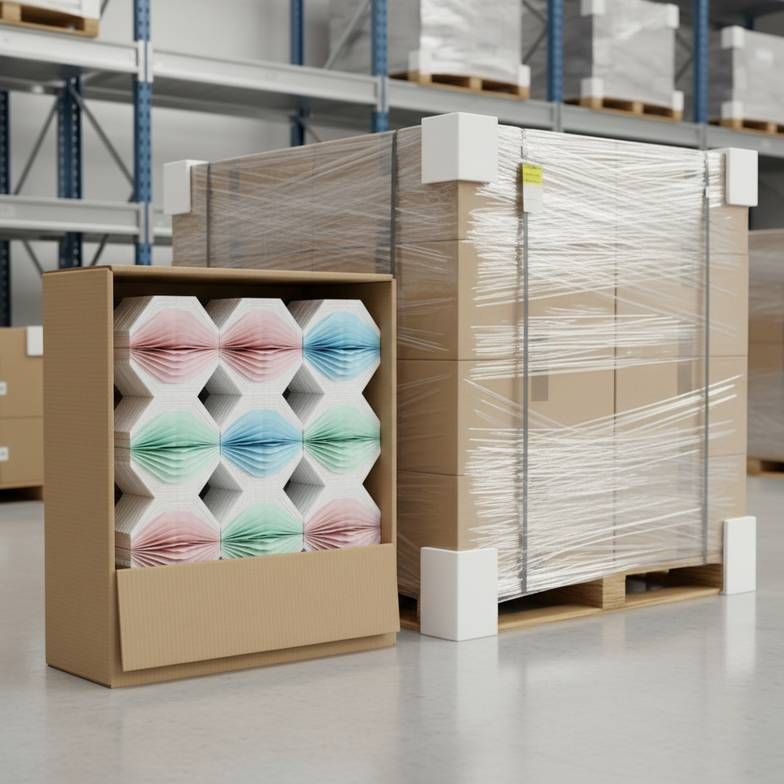
Struggling to get your seasonal display program rolled out without logistical headaches? You’ve meticulously planned your product assortment, but now you’re facing the daunting task of getting it all from the factory to hundreds of stores, all while trying to keep shipping costs from spiraling. When you focus only on minimizing freight costs, you often end up with damaged products, chaotic stockrooms, and stressed-out store staff. The solution lies in smarter logistical planning for your flat-pack seasonal decorations, looking beyond the shipping container to the entire product lifecycle.
To effectively plan shipping and storage for flat-pack seasonal decorations, you must look beyond the initial freight cost and evaluate the total cost of logistics. This means analyzing master carton dimensions, weight, and internal packaging to balance shipping density against the hidden costs of in-store labor, product damage, and storage footprint. A successful plan considers the entire journey, from the factory floor to the retail display and potential off-season storage.
Getting this balance right is the difference between a smooth, profitable season and a logistical nightmare. It’s about asking your manufacturing partner the right questions. Let’s dive into what those questions are and how to think about the answers you get.
What's the True Cost Beyond the Freight Quote?
It's tempting to choose the supplier who promises the smallest, most condensed shipping volume (CBM). A lower CBM means a lower freight bill, right? The problem is that this number doesn't tell the whole story. What sourcing teams often overlook are the significant hidden costs that pop up after the container is unloaded.
The true logistical cost of flat-pack seasonal decorations is a combination of the freight bill, the labor needed to handle the products, and the value of any items that get damaged along the way. A slightly larger, better-designed carton might actually save you money.

Dive Deeper: Uncovering the Hidden Operational Costs
From my experience working with retail buyers, the most successful seasonal programs are the ones where the sourcing team thinks like a stockroom manager. They don't just ask, "How much does it cost to ship?" They ask, "How much does it cost to deploy?"
The Cost of Unpacking and Prep Labor
Imagine two scenarios. In Scenario A, your store receives a master carton packed to the absolute maximum density. Honeycomb balls, paper stars, and garlands are all jumbled together to save a few cubic centimeters. Your retail associate now has to spend 45 minutes carefully untangling, sorting, and checking each piece for damage.
In Scenario B, the master carton is 10% larger. Inside, the decorations are neatly organized in smaller, labeled inner boxes. The associate opens the carton, grabs the inner box labeled "Large Red Honeycomb Ornaments," and has them ready for display in 10 minutes.
Now, multiply that 35-minute difference by the number of stores in your rollout. Suddenly, the "cheaper" shipping option from Scenario A has cost you hundreds of hours in payroll. When reviewing samples, always ask your supplier:
- How are items protected inside the master carton?
- Are they in individual polybags, inner boxes, or just loose?
- Can inner boxes be customized with labels or barcodes for easier sorting at our DC or stores?
The Price of Product Damage
Paper is a resilient material, but it's not invincible. Flat-pack seasonal decorations, especially intricate honeycomb structures, are vulnerable to crushing. When a carton is packed too tightly or the cardboard itself is too flimsy, the products on the bottom and corners are the first to be compromised. A crushed honeycomb ball won't open into a perfect sphere, and a bent paper star is unsellable.
A good manufacturer understands this and builds protection into the packaging. This is where you should ask for verifiable specifications, not just marketing claims.
- Ask for the master carton specifications: What is the ECT (Edge Crush Test) rating of the corrugated board? A higher rating means better stacking strength. For shipments that will be palletized, this is non-negotiable.
- Request compression test data: Some manufacturers can provide data on how much weight a carton can withstand before deforming. This tells you how safely they can be stacked in a warehouse.
- Evaluate inner protection: Is there void fill, cardboard dividers, or are the products simply pressing against each other? The few cents spent on an extra divider can save dollars in lost inventory.
A common question I get from retail buyers is about how to balance density and protection. My advice is to always prioritize product integrity. The cost of one damaged, unsellable unit is almost always higher than the fractional cost of shipping a slightly larger, better-protected box.
Are All "Flat-Pack" Decorations Created Equal?
You’ve probably noticed that the term "flat-pack" is used to describe everything from a simple die-cut paper star to a complex, meter-wide honeycomb bench. This can be misleading. Assuming all flat-pack seasonal decorations will pack, store, and perform the same way is a common pitfall in sourcing.
No, they are not created equal. The construction method, paper quality, and especially the closure mechanism have a massive impact on the product's actual packed volume, its durability, and its potential for reuse—all critical factors in your total logistics plan.

Dive Deeper: From Simple Folds to Complex Structures
When you're evaluating samples, you need to dissect how they achieve their "flat-pack" state. This will tell you a lot about how they will survive shipping and how easy they will be to use in-store.
Simple Folded vs. Honeycomb Structures
A simple folded decoration is typically made from a few layers of cardstock that are die-cut and scored. Think of classic hanging snowflakes or stars. They pack incredibly flat and are generally quite durable. Their packed volume is very close to zero.
A honeycomb structure, on the other hand, is made from dozens or even hundreds of layers of thin paper glued together. When collapsed, it's flat, but it's not paper-thin. There's still significant bulk from the sheer volume of paper and glue. This bulk needs to be protected. Puncturing or crushing a collapsed honeycomb decoration can damage multiple layers, leading to an item that won't open correctly. When sourcing these, pay close attention to the density of the paper and the quality of the glue lines.
Why the Closure Mechanism is a Big Deal
How a decoration is held open is one of the most overlooked, yet most critical, features for retail use. It affects setup speed, appearance, and whether it can be stored and reused.
Here's a quick comparison I often walk clients through:
| Feature | Magnetic Closure | Self-Adhesive Strip | Paper Clips (Included) |
|---|---|---|---|
| Setup Speed | Very Fast. Clicks into place in seconds. | Fast. Peel and stick. | Slow. Fiddly and time-consuming. |
| Appearance | Clean and seamless. | Can look messy if not aligned perfectly. | Visible and can detract from the design. |
| Reusability | Excellent. Can be opened and closed hundreds of times. | Poor. Usually a one-time use; tearing the paper is likely. | Good, but... Clips are easily lost in a busy stockroom. |
| Off-Season Storage | Ideal. Folds perfectly flat for compact storage. | Not possible. Once stuck, it can't be collapsed. | Possible. If you can keep track of the clips. |
For a visual merchandising team rolling out a display to 200 stores, magnets are a clear winner. The time saved during setup and the ability to reuse the decorations for another season or event provide a massive return on a slightly higher initial product cost. If your decorations are intended for one-time use, adhesive might be fine, but you're sacrificing any chance of off-season storage.
How Do I Plan for the Entire Product Journey?
Thinking about shipping as a single step—from our factory in China to your distribution center—is a recipe for trouble. To truly de-risk your seasonal program, you have to map out the entire logistical journey. Every handoff point is a potential point of failure.
Effective planning for flat-pack seasonal decorations involves visualizing the product's path from the pallet in your DC, to the back of a truck, onto a shelf in a cramped stockroom, and finally to the sales floor. Each stage has different handling requirements and risks.

Dive Deeper: A Stage-by-Stage Breakdown
I encourage my clients to think about packaging in layers, where each layer serves a purpose at a different stage of the journey.
Stage 1: The Ocean Voyage and DC Palletizing
This is the "macro" logistics stage. Your primary concern here is stacking strength. Your master cartons will be loaded into a container, unloaded, and then likely stacked on pallets in your warehouse.
- The Question to Ask: "What is the ECT rating of your master carton and can it withstand being stacked [X] high on a pallet?"
- What to Look For: A strong outer carton (the "master carton") is your first line of defense. This is where the ECT rating is critical. It prevents the products at the bottom of the pallet from being crushed under the weight of those on top. This is the foundation of your entire logistics plan.
Stage 2: Breaking Down Pallets for Store Distribution
Once at the DC, pallets are broken down, and cartons are sent to individual stores. The master carton may now be handled by itself, tossed into the back of a delivery truck with other merchandise.
- The Question to Ask: "Are the products protected inside the master carton, or will they shift and collide during transit?"
- What to Look For: This is where inner boxes or cardboard dividers become essential. They prevent the contents from shifting and damaging each other. If you're shipping assorted flat-pack seasonal decorations in one master carton, labeled inner boxes make it easy for DC workers to pick and pack orders for specific stores without opening everything.
Stage 3: Survival in the Store Stockroom
Store stockrooms are notoriously chaotic and short on space. Your beautifully packed cartons will be opened, and items will be prepped for the floor.
- The Question to Ask: "How quickly can a store associate identify, access, and assemble these decorations?"
- What to Look For: This is all about efficiency.
- Clear Labeling: Is the product name, color, and size printed on the inner box or polybag?
- Easy Assembly: Does it use magnets for quick opening? Are instructions clear if needed?
- Protection for Individual Items: If a honeycomb ball is dropped, will its individual packaging protect it? A simple polybag can prevent scuffs and moisture damage.
Stage 4: Off-Season Storage and Reuse
If you plan to reuse your decorations, the storage phase is where quality really shows. Paper is susceptible to environmental changes.
- The Question to Ask: "How should these be packed for long-term storage to prevent damage from humidity, light, and compression?"
- What to Look For: Advise your stores to keep the original inner and master cartons. Store them in a climate-controlled area. The primary risks are:
- Color Fading: From exposure to sunlight or harsh warehouse lighting.
- Glue Failure: High heat or humidity can weaken the glue in honeycomb structures.
- Deformation: Storing items flat, in their original boxes, prevents them from losing their shape. Never store an open honeycomb ball.
Frequently Asked Questions
What’s more important: carton CBM or carton weight?
Both are important, but for different reasons. CBM (cubic meters) primarily determines your ocean freight cost. However, carton weight (especially the gross weight of a master carton) is a critical factor for handling and safety. A carton that is too heavy may require two people to lift or violate workplace safety rules, adding hidden labor costs.
How can I test a sample for good packaging?
Don't just look at the product; abuse the packaging. When you receive a sample, drop the carton from waist height. Stand on it (if it's a master carton). Open and close the decoration 10 times. Does the packaging protect it? Does the closure mechanism feel durable? This simple physical test can tell you more than a spec sheet.
What questions should I ask my supplier about long-term storage?
Ask them directly: "What is the recommended procedure for off-season storage?" A good partner will have advice on this. Specifically, ask about the paper's resistance to humidity, whether the dyes used are prone to fading, and if the glue is rated for a wide temperature range. Always request to keep the original cartons for repacking.
Can custom packaging really save my business money?
Absolutely. While custom-sized inner boxes or printed labels might add a few cents to the unit cost, they can save dollars in labor downstream. Faster sorting at the DC, quicker unpacking in the stockroom, and reduced product damage all contribute directly to the profitability of your seasonal program.
Conclusion
Ultimately, smart logistical planning for flat-pack seasonal decorations comes down to shifting your focus from a single number on a freight quote to the total cost of ownership. By considering the hidden costs of labor, the risk of damage, and the full journey your products will take, you can make more strategic sourcing decisions. The key is to work with a manufacturing partner who understands these challenges and can help you design a product and packaging solution that is both efficient to ship and easy to deploy. When you start asking about ECT ratings, closure mechanisms, and inner packaging, you're no longer just buying a decoration; you're investing in a successful season.
If you’re planning your next seasonal assortment, let's talk. We can help you analyze these trade-offs and develop a collection that delights your customers and supports your operational goals.