Eid and Ramadan Retail Displays: Choosing Honeycomb Centerpieces, Lanterns and Backdrops
Planning your seasonal campaign, but worried about getting the displays right for the holy month? A poorly chosen decoration can lead to logistical nightmares, budget overruns, and
Planning your seasonal campaign, but worried about getting the displays right for the holy month? A poorly chosen decoration can lead to logistical nightmares, budget overruns, and inconsistent branding across stores. The key is to see the choice of Eid and Ramadan retail displays not just as a creative decision, but as a strategic one based on function, logistics, and timing.
Choosing the best Eid and Ramadan retail displays involves matching the product format to your specific use case. Consider the trade-offs between visual impact, budget, and logistical needs. For large windows, use backdrops. For tables, use centerpieces. Always verify dimensions, closure mechanisms, and packaging with your supplier.
Now that you have the basic answer, let's dive into the critical details that separate a successful campaign from a stressful one. This isn't just about picking pretty things; it's about making smart, commercially sound decisions. I'll walk you through the key questions you should be asking your supplier to avoid common pitfalls.
How Do You Match Decoration Type to Display Location?
You've fallen in love with the look of a huge, intricate paper backdrop for your Ramadan promotion. But you need to decorate 200 stores, many with limited space. How do you avoid choosing a product that looks great in a photo but is impossible to roll out at scale?
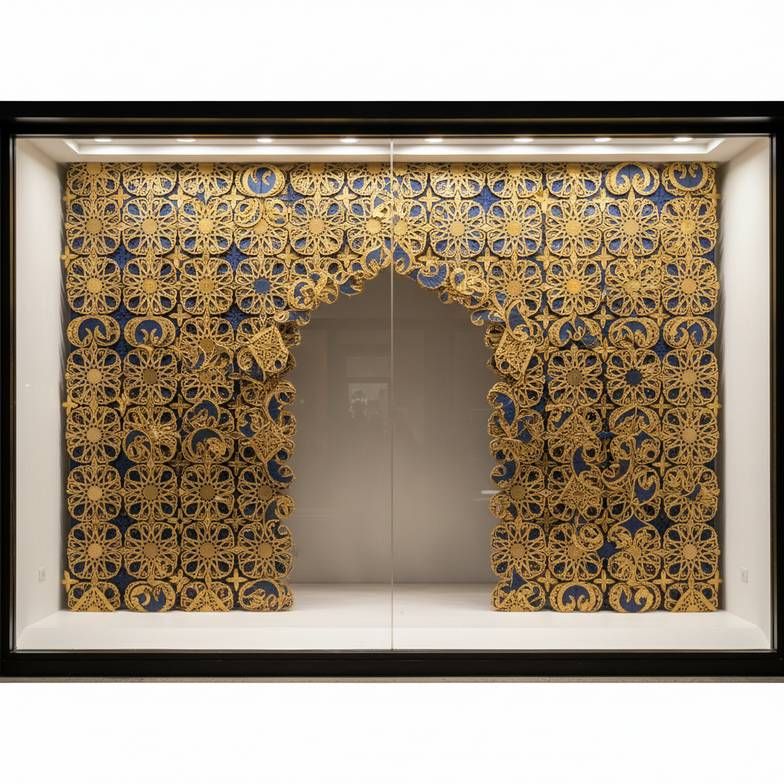
You must match the decoration's scale and format to the display context. Large-format backdrops are for high-impact flagship windows, while smaller honeycomb centerpieces and lanterns are better suited for tabletop displays, shelf merchandising, and large-scale multi-store rollouts where space and installation time are limited.
Dive Deeper
In my experience helping brands plan their seasonal assortments, the most common mistake is choosing a "hero" product without considering the reality of its different store formats. A decoration that works wonders in a 1,000-square-foot flagship store is often impractical for a 100-square-foot mall kiosk. This is the "impact versus practicality" trade-off.
One Collection, Multiple Contexts
Your goal is a cohesive look, but that doesn't mean using the exact same product everywhere. A better approach is to use a coordinated collection of products designed for different spaces.
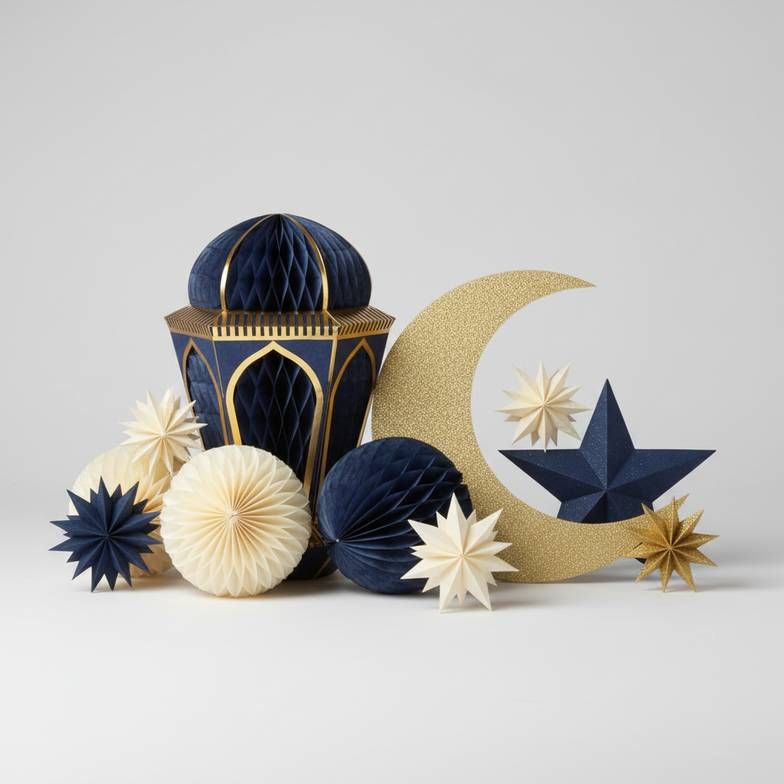
- Flagship Windows & Entrances: This is where you go for maximum impact. Large honeycomb backdrops, oversized hanging moons and stars, or even custom paper structures create a powerful first impression. Here, budget and installation complexity are secondary to visual wow-factor.
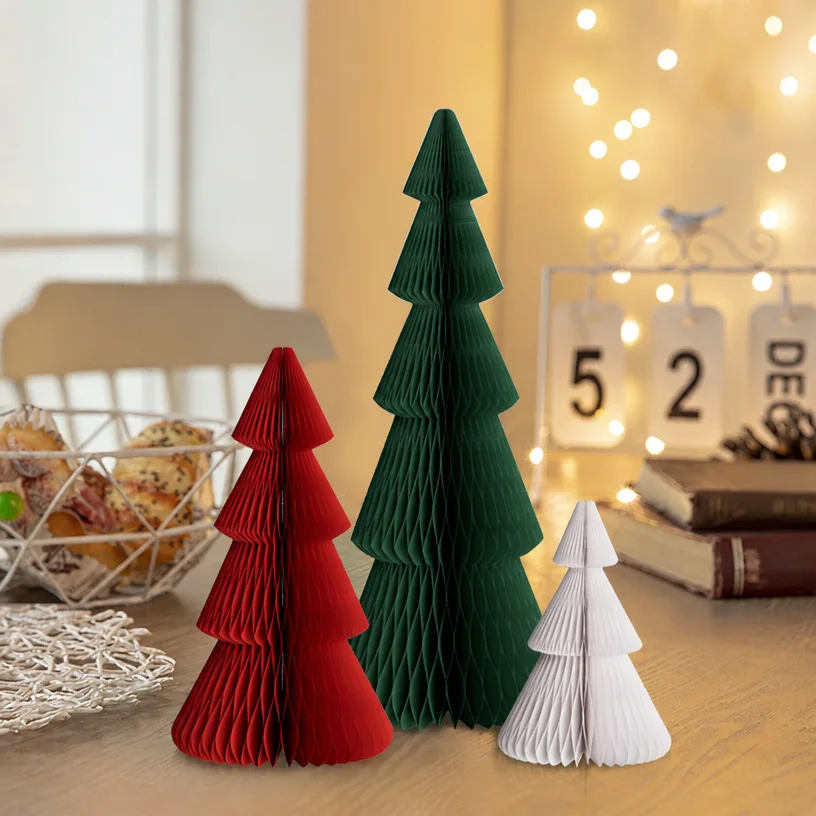
- In-Store Tables & Promotional Zones: These areas need decorations that are self-supporting and don't overwhelm the merchandise. Honeycomb centerpieces, freestanding paper lanterns, and smaller decorative trees work best. They add thematic flair without creating clutter.
- Multi-Store Rollouts: For campaigns spanning dozens or hundreds of locations, logistics are king. The ideal products are compact for shipping, lightweight, and incredibly easy for store staff to assemble in minutes. Small hanging ornaments and simple fold-open centerpieces are perfect.
I remember a client who initially wanted a massive 6-foot hanging star for all 300 of their locations. We had to gently point out that shipping and storing these would be a nightmare. We ended up developing a collection: the giant star for their top 10 stores, and a coordinated set of smaller 1-foot stars and tabletop pieces for the rest. They got the brand consistency they wanted without the logistical headache.
Key Questions for Your Supplier
To make the right choice, ask your supplier these questions:
- "What are the folded dimensions and weight of this product?" (This determines shipping cost).
- "What are the fully opened dimensions?" (This determines if it will physically fit in your space).
- "Does it require any special tools or multiple people for assembly?" (This determines ease of installation for store staff).
What Operational Details Impact the Total Cost of Eid and Ramadan Retail Displays?
You found a supplier with a fantastic unit price, and you're ready to place a big order. But are you forgetting the hidden costs? Shipping, storage, damaged goods, and installation time can quickly inflate your budget, turning a great deal into a financial headache.
The unit price is just the beginning. The true total cost of Eid and Ramadan retail displays is heavily influenced by operational details like folded dimensions (affecting shipping volume), the closure mechanism (determining reusability and ease of use), and individual packaging (ensuring a smooth rollout).
Dive Deeper
A frequent conversation I have with sourcing managers is about looking beyond the price on the quotation sheet. The most successful buyers I work with think in terms of "total cost of ownership." They analyze how a product's physical attributes will impact their budget from the factory floor all the way to the store floor.
Folded Dimensions are a Cost Lever
The magic of honeycomb decorations is their ability to fold flat. This is not just a neat feature; it's a major cost-saving mechanism. Ocean freight is charged by volume (cubic meters), so a product that folds down to 5% of its open size is dramatically cheaper to ship than one that only folds in half.
- Always ask for two sets of dimensions: The open size (for your visual merchandising plan) and the folded size (for your logistics plan).
- A product that ships compactly also costs less to store in your warehouse and is easier to distribute to individual stores.
The Closure Mechanism: A Critical Detail
How a honeycomb decoration opens and closes is one of the most overlooked but critical specifications.
| Closure Type | Best For | Pros | Cons |
|---|---|---|---|
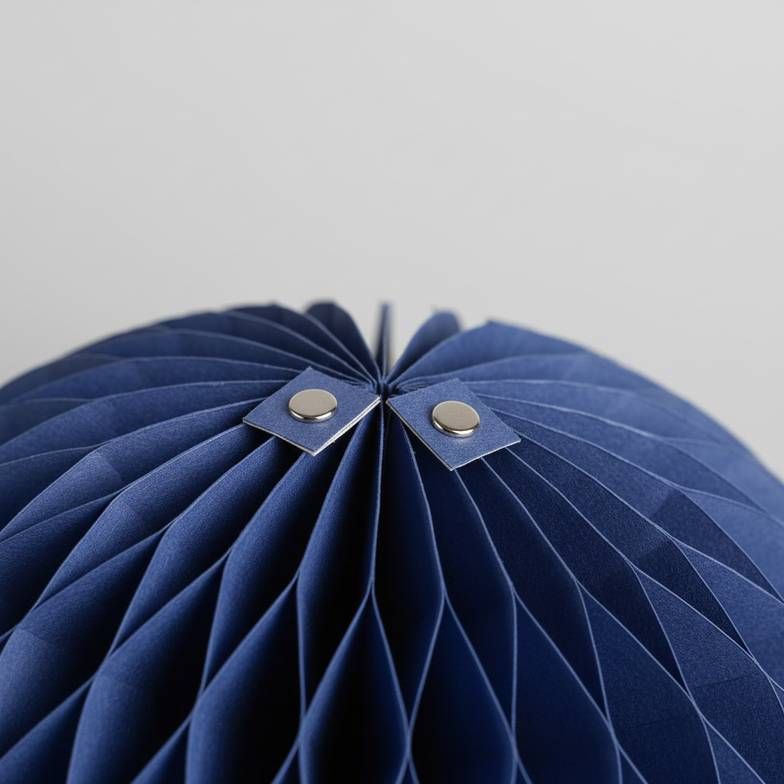
| Magnets | Reuse, quick setup | Durable, clean look, allows for flat storage after use | Higher unit cost, magnet quality varies |
| Double-Sided Tape | One-time use campaigns | Low cost | Can tear paper when removed, not reusable |
| Paper Clips | Extreme budget constraints | Very cheap | Fiddly, time-consuming for staff, can look messy |
What buyers often forget to specify is the quality of the magnets. For larger or heavier decorations, you need strong neodymium magnets to prevent the piece from popping open or sagging. A supplier trying to cut costs might use weaker ferrite magnets, which could fail in a warm store environment. Ask for magnet specifications and test them on your samples.
Packaging for a Seamless Rollout
How the product is packed is part of the product itself.
- Individually Poly-bagged with Instructions: For a multi-store rollout, this is non-negotiable. Each decoration should be in its own bag with a simple, visual instruction card. This prevents store staff from having to guess at assembly, saving time and reducing damage.
- Master Carton Dimensions: Knowing the size and weight of the master cartons helps your logistics team plan warehouse space and shipping to stores.
Thinking through these details transforms a purchase from a simple transaction into a strategic logistical plan.
How Do You Ensure Visual Consistency Across Your Ramadan Collection?
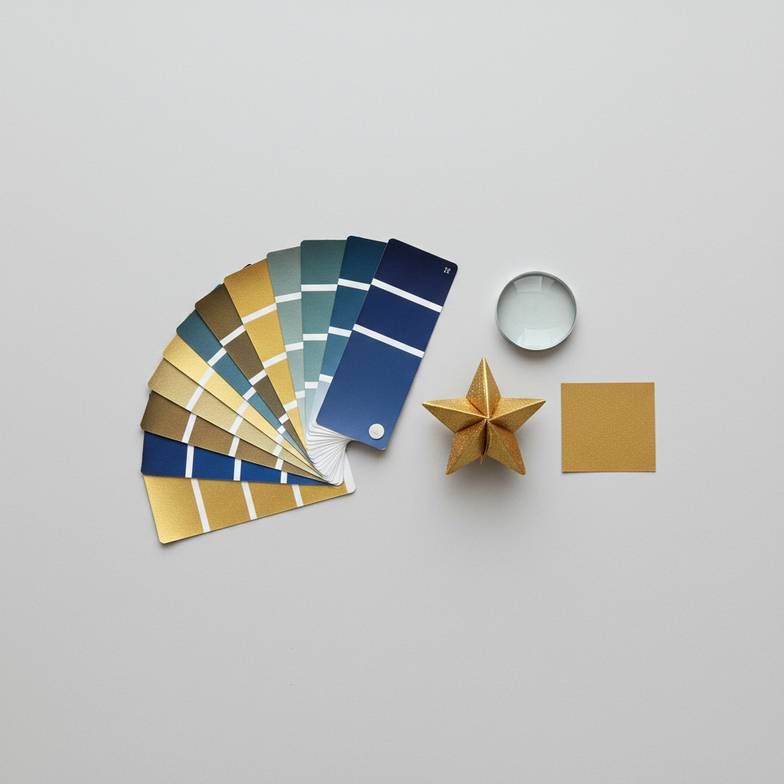
You approved a perfect sample of a golden honeycomb lantern. It's exactly the color you wanted. Two months later, the bulk order arrives. The lanterns are perfect, but the matching moon centerpieces are a slightly different shade. How do you prevent this brand-damaging mismatch?
To ensure visual consistency, you must go beyond approving a single sample. You need to discuss and verify your supplier's process for color matching across different paper batches and product formats (e.g., lanterns, centerpieces, backdrops) that are part of the same collection.
Dive Deeper
"Why don't these colors match?" is a painful question that often comes too late—after the goods have already landed. As a manufacturer, I can tell you that achieving perfect color and structural consistency across thousands of units and multiple product types is a significant operational challenge. It doesn't happen by accident.
The Challenge of "The Same Color"
Paper is dyed in large batches called lots. Just like with fabric or paint, there can be very slight variations in color from one dye lot to another.
- Dye Lot Variation: If your lanterns are produced in May from one batch of paper and your centerpieces are produced in June from another, there could be a minor difference in shade.
- Paper Stock and Texture: The same ink color can appear different on different types of paper. A glossy, coated paper will reflect light differently than a matte, uncoated paper, making the color seem brighter or duller.
A good supplier mitigates this risk by planning production carefully. For a single client's collection, we will forecast the total amount of paper needed and procure it from a single dye lot to ensure maximum consistency.
Critical Questions for Your Supplier's QC Process
Empower yourself by asking detailed questions about their process before you sign the purchase order.
- "Will all items in my collection be produced using paper from the same dye lot?"
- "How do you control color against my approved Pantone reference or physical master sample during production?"
- "Can I receive one pre-production sample of every single item in my collection at the same time for a side-by-side approval?" This is the most crucial step. Don't approve items one by one. You need to see the whole family together.
Beyond Color: Structural and Finish Consistency
Visual consistency isn't just about color.
- Honeycomb Cell Density: A denser honeycomb structure (more cells per inch) looks more solid, premium, and holds its spherical or half-spherical shape better. A loose structure can look flimsy and cheap. Specify the look you want.
- Glue Lines and Assembly: Look closely at the samples. Are the glue lines clean? Does the decoration open symmetrically? Poor assembly quality can make even the best materials look bad.
Insisting on this level of detail isn't being difficult; it's good business. It ensures the vision you approved is what actually appears in your stores.
Why is the Timeline the Most Critical Factor for Eid and Ramadan Retail Displays?
Ramadan has a fixed start date. Unlike other retail promotions, it's a deadline set by the lunar calendar, not your marketing department. A shipping delay isn't an inconvenience; it's a complete campaign failure. Are you building enough buffer into your production and shipping schedule?
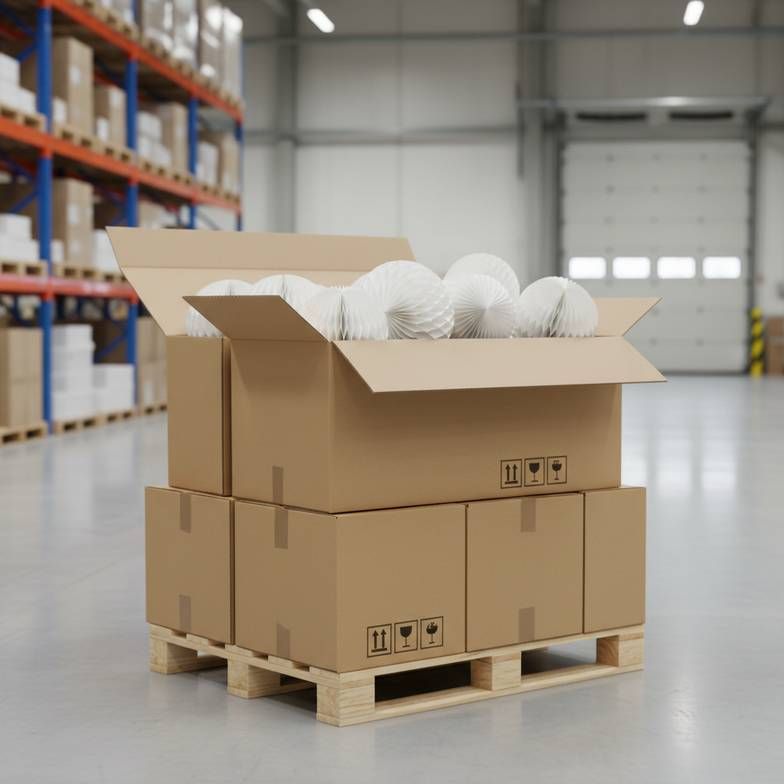
For fixed-date events like Ramadan and Eid, the sourcing timeline is the single most non-negotiable variable. You must plan backward from your absolute "in-store" deadline, factoring in sufficient time for design, sampling, mass production, quality checks, and international logistics to manage your Eid and Ramadan retail displays successfully.
Dive Deeper
Of all the risks a buyer needs to manage, time is the most unforgiving. You can negotiate on price. You can compromise on a specific shade of green. You cannot, however, negotiate with a shipping vessel that has already sailed or a holiday that has already started. The most common point of failure I see for seasonal campaigns is underestimating the total time required from concept to in-store.
A Realistic Backward Timeline
Let's build a sample timeline, working backward from your "Go Live" date. Assume your decorations must be in all stores and ready to install one week before Ramadan begins.
- 1 week before launch: Final delivery to all stores.
- 2-3 weeks before launch: Goods arrive at your central warehouse/distribution center.
- 6-8 weeks before launch: Goods are on a ship. (Sea freight from Asia to Europe/North America takes 4-6 weeks, plus buffer).
- 9-10 weeks before launch: Production is finished, packed, and passes final quality inspection.
- 14-16 weeks before launch: Mass production begins.
- 16-18 weeks before launch: You approve the final pre-production samples. (Do not skip this!)
- 20-24 weeks before launch: You finalize your designs, specifications, and issue the purchase order to your supplier.
This is a five-to-six-month process. Rushing any of these stages invites disaster. The biggest delays are often caused by slow internal decision-making on the buyer's side during the design and sampling phase.
Hidden Timeline Killers
Be aware of these common pitfalls:
- Factory Holidays: Plan around major holidays in your supplier's country, like Chinese New Year, which can shut down factories for 2-3 weeks.
- Sample Revisions: Each time you request a change to a sample, you add 1-2 weeks to your timeline for making and shipping the new version.
- Customs Delays: Always add a buffer week for your shipment to clear customs. A documentation error can hold up a container for much longer.
The golden rule is to communicate your deadlines clearly and upfront. The first thing you should tell a potential supplier is, "I need these goods in my warehouse by [Date]." A reliable partner will tell you honestly if your timeline is realistic and will work with you to create a production schedule to meet it.
Frequently Asked Questions
What's a typical MOQ for custom Ramadan decorations?
The Minimum Order Quantity (MOQ) varies greatly by product complexity and size, but for custom colors or shapes, you can expect MOQs to start at 500–1000 units per design. This is because manufacturers need to cover the cost of setting up machinery and sourcing custom-dyed paper.
Are magnetic closures better than adhesive tape?
For retail displays, magnets are generally superior. They allow for quick, clean assembly by store staff and enable the decorations to be folded flat and potentially reused, increasing their value. Adhesive tape is a lower-cost, one-time-use option but can damage the paper upon disassembly.
How can I be sure the colors will match across different products?
The best way is to request pre-production samples of every item in your collection at the same time. This allows you to review them side-by-side before approving mass production. Also, ask your supplier if they can produce your entire order using paper from a single dye lot.
What's the difference between honeycomb paper and regular paper decorations?
Honeycomb paper is a specialty material constructed from layers of paper glued together in a specific pattern. When opened, it expands into a three-dimensional, cellular structure. This makes it strong, lightweight, and allows it to fold completely flat, which is a major advantage for shipping and storage compared to regular die-cut paper.
How far in advance should I order for a seasonal campaign?
For a major fixed-date campaign like Ramadan or Christmas, you should begin the sourcing process 5-6 months before your desired in-store date. This provides adequate time for design, sampling, production, shipping by sea, and domestic distribution without having to pay for expensive air freight.
Conclusion
Choosing the right decorations is about much more than aesthetics; it's a crucial exercise in project management and risk mitigation. The most successful Eid and Ramadan retail displays come from a strategic approach. It starts with matching the product type to the specific display location, from flagship windows to small tabletops. It requires you to look beyond the unit price and scrutinize the operational details—like folded dimensions and closure types—that determine your total cost. Most importantly, it demands a disciplined approach to ensuring visual consistency and, above all, a realistic timeline that works backward from Ramadan's fixed start date.
At Mypaperbloom, we specialize in helping retail brands, importers, and visual merchandisers navigate these challenges every day. If you're planning your next seasonal campaign, contact our team to discuss how we can help you create a beautiful and logistically sound collection.